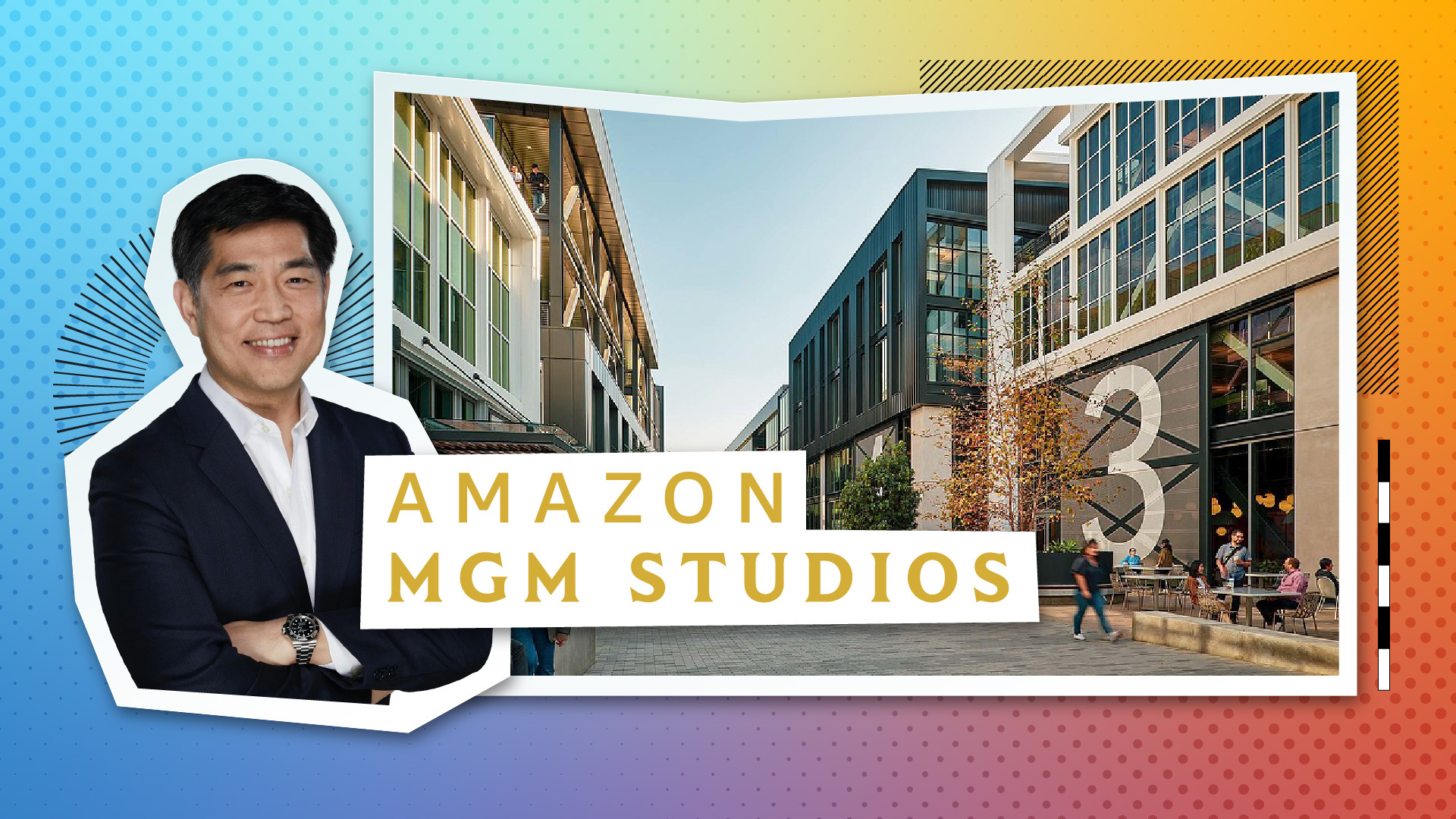
Amazon MGM Studios has launched an internal division called AI Studio to build proprietary AI tools for film and TV production. Led by Vice President Albert Cheng, the unit operates under a "two pizza team" philosophy with a small group of product engineers and scientists, and plans to open a closed beta to select industry partners in March 2026.
According to Reuters, the initiative targets what Cheng calls "the last mile" between consumer AI tools and professional filmmaking requirements—the gap between what existing AI can produce and the granular control directors need for cinematic content.
Targeting "The Last Mile": Bridging consumer AI and professional filmmaking
Cheng described the challenge Amazon is addressing: existing AI video generation tools produce impressive results for consumer applications, but lack the precision and integration professional filmmakers require. AI Studio's tools focus on three core capabilities:
Character consistency across shots. Maintaining the same character appearance, lighting, and performance quality across multiple generated clips—a persistent challenge in AI video generation.
Integration with industry-standard creative tools. Building workflows that connect with existing production pipelines, VFX software, and post-production systems rather than requiring entirely new toolchains.
Director-level control over AI-generated elements. Giving filmmakers fine-grained control over composition, motion, lighting, and narrative pacing rather than relying on text prompts alone.
The tools aim to reduce production costs and shorten timelines while maintaining creative control—positioning AI as an accelerator rather than a replacement for traditional production methods.
Early Collaborators: Stromberg, Nayyar, and Brady testing beta versions
Amazon has partnered with three notable collaborators for early testing:
Robert Stromberg (director of "Maleficent") and his company Secret City
Kunal Nayyar ("The Big Bang Theory") and Good Karma Productions
Colin Brady, former Pixar and ILM animator
According to Reuters, these partnerships signal Amazon's focus on attracting established filmmakers and production companies rather than positioning the tools exclusively for internal Amazon MGM projects. The closed beta launching in March 2026 will expand this testing group to additional industry partners.
House of David Season 2: Proof of concept with 350+ AI-generated shots
Director Jon Erwin's House of David Season 2 serves as a proof of concept for AI-assisted production at scale. According to Reuters, Erwin used a stack of over 15 AI tools—including Midjourney, Runway, Kling, Magnific, and Topaz—combined with traditional VFX to create 350+ AI-generated shots, up from 73 in Season 1.
The production tackled ambitious sequences including 100,000 warriors charging into battle, scenes that would have been prohibitively expensive or logistically impossible using traditional methods. We covered the production workflow in a previous edition, detailing how Erwin's team combined multiple AI models with conventional VFX to achieve cinematic quality.
The House of David workflow highlights both the potential and the friction points Amazon's AI Studio aims to address. Erwin's team needed to manually stitch together outputs from 15+ different tools, manage consistency across models, and integrate AI-generated elements with traditional footage—exactly the "last mile" challenges Cheng described.
Framing and Friction: "Expanding creative risk" amid 30,000 layoffs
Amazon frames AI Studio as expanding creative possibilities rather than replacing workers. According to Reuters, Cheng stated that "AI can accelerate, but it won't replace, the innovation and the unique aspects that [humans] bring."
However, this messaging sits alongside Amazon's recent workforce reductions. GeekWire reports that Amazon has cut roughly 30,000 corporate employees since October 2025, with CEO Andy Jassy citing AI-driven efficiencies as a contributing factor.
The tension between "AI as creative accelerator" and "AI as cost reduction tool" reflects broader industry debates. While AI Studio's tools may genuinely expand what filmmakers can achieve within budget constraints, the same capabilities could pressure traditional VFX roles, production crew positions, and post-production workflows.
Timeline and Next Steps: Beta results expected May 2026
Amazon expects to share initial results from the closed beta in May 2026. According to Reuters, the company has not announced pricing, licensing models, or whether AI Studio tools will be available outside Amazon MGM productions.
Key questions remain:
Will AI Studio tools integrate with third-party production pipelines? Or will they require Amazon-specific infrastructure?
What level of creative control will directors actually have? The gap between "text prompt" and "director-level control" is substantial.
How will AI Studio handle IP and rights management? Especially given ongoing legal battles over AI training data and copyright.
The March 2026 beta launch will provide more concrete answers. For now, AI Studio represents Amazon's bet that the next competitive advantage in streaming content production comes from proprietary AI tools that reduce costs while maintaining (or expanding) creative ambition.
The Next Frame: Major studio adoption signals industry shift
Amazon MGM's AI Studio launch marks a significant shift in how major studios approach AI in production. Rather than relying on third-party tools or waiting for the technology to mature, Amazon is building proprietary systems tailored to professional filmmaking requirements.
This approach mirrors strategies in other industries where early AI adopters built internal tools before commercial solutions emerged. If AI Studio delivers on its promise of "last mile" capabilities—character consistency, tool integration, and director-level control—it could establish Amazon as a production technology leader, not just a content distributor.
For filmmakers and VFX professionals, AI Studio represents both opportunity and uncertainty. The tools may unlock creative possibilities previously limited by budget or logistics. They may also accelerate the industry's shift toward AI-assisted workflows, with implications for traditional production roles and career paths.
Amazon expects to share initial results in May 2026. Until then, House of David Season 2 stands as the most visible example of where this technology is heading—and what it takes to get there.


