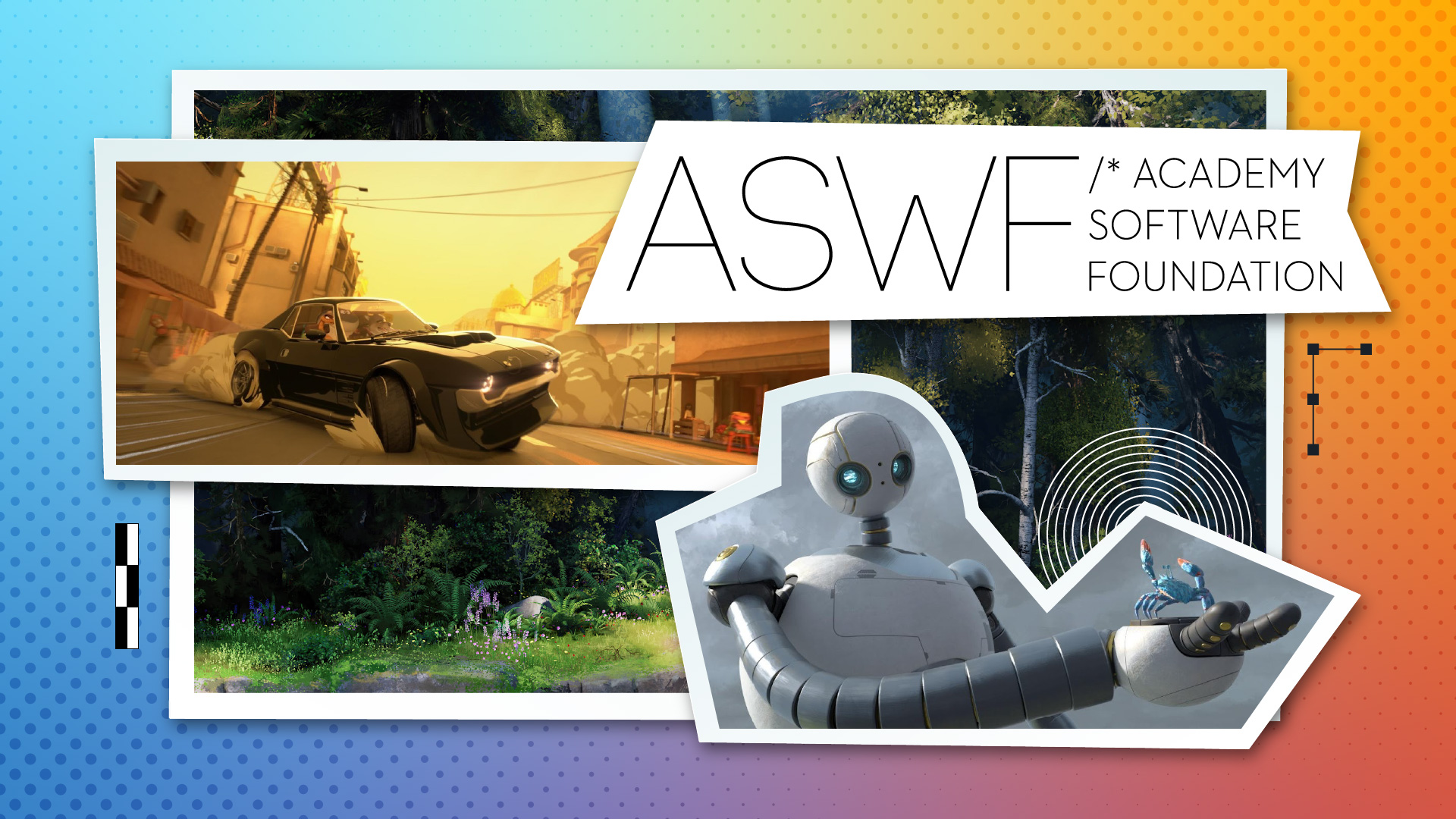
DreamWorks Animation's MoonRay renderer — the path-tracing engine behind every DreamWorks feature film since 2019 — has joined the Academy Software Foundation as an official hosted project. For VFX and animation professionals, this moves a battle-tested studio renderer into neutral, community-governed territory, opening the door to serious adoption well beyond DreamWorks' own walls.
MoonRay has been open source for a while. The meaningful shift here is the step up to ASWF hosting — the same governance model that underpins tools like OpenColorIO, OpenEXR, and MaterialX, all now standard fixtures across the industry's pipeline.
What's in the Vault: MoonRay has real production credentials — the renderer has a direct line to The Wild Robot, The Bad Guys 2, and every DreamWorks animated feature for the past six-plus years.
Under New Management (Sort Of)
The practical change is how MoonRay will be developed and governed going forward.
According to the announcement, MoonRay will now be maintained and further developed under ASWF with contributions from the global open source community. DreamWorks Animation — already an ASWF member — will continue providing ongoing support and dedicated engineering resources.
That last part matters. Rendering tools that lose their core maintainer team tend to stagnate quickly. Knowing DreamWorks remains actively involved while ASWF provides neutral stewardship addresses the biggest concern that comes with depending on a studio-originated tool.
For production teams evaluating external dependencies, ASWF hosting means:
Open development processes with transparent roadmaps and community-driven priorities
Vendor- and studio-neutral governance, reducing the risk of one organization's internal priorities derailing the tool
Lower friction for contributions — pipeline engineers can upstream patches, tool vendors can target the renderer without negotiating direct relationships with DreamWorks
Educational alignment — academic programs building curriculum around real production tools now have a clearly sanctioned, neutral home to point students to
What MoonRay Actually Is
MoonRay is a production path-tracing renderer — a CPU and GPU-capable system that handles both stylized and photorealistic output, with the full set of features production teams expect: AOVs, LPEs, distributed rendering, and a Hydra Render Delegate (hdMoonRay) that plugs into any DCC tool with USD Hydra support for interactive preview rendering.
That last point is particularly relevant for studios already invested in USD-based pipelines — Hydra compatibility means MoonRay can slot into existing DCC workflows without requiring custom integrations from scratch.
What separates MoonRay from other open source render options is simply where it came from: it was built inside a major Hollywood animation studio and refined over years of demanding production use, not assembled by committee or maintained primarily as a demo tool.
Where This Fits in Your Pipeline
The honest answer is: it depends heavily on your setup.
For large facilities and studios:
MoonRay's multi-year feature film track record gives it credibility most open source renderers lack at this scale
The realistic adoption path is probably a secondary renderer — test it on a single sequence, evaluate pipeline compatibility, then scale from there
Studios that want to own their rendering stack without building from scratch now have a strong starting point, with an active core team still in place
For mid-sized studios and indie pipelines:
No per-core licensing is a meaningful cost advantage for smaller operations
Integration, however, is non-trivial — you'll need pipeline engineering time and rendering expertise to get meaningful results
MoonRay is most likely to click immediately for teams already running Linux-heavy, open source stacks
For tool vendors and developers:
ASWF hosting makes MoonRay a viable rendering backend to support without the dependency risk of a single-studio project
The Hydra delegate path provides a clean integration surface for DCC and pipeline tools
For specifics on supported platforms, licensing terms, and documentation depth, the openmoonray.org project site is the authoritative starting point.
How to Train Your Renderer
The second part of the news may ultimately be more useful for practitioners than the press announcement itself.
DreamWorks Animation CTO Bill Ballew will keynote ASWF's Open Source Days in Los Angeles on July 19–20, with a talk titled "How to Train Your Renderer: MoonRay's Journey from DreamWorks' Dragons to the ASWF."
According to the announcement, Ballew will cover:
The technical challenges of "breaking out of the studio" — decoupling a proprietary renderer from internal build systems and dependencies
Strategy and lessons learned in building a sustainable open source community around a production tool
Why ASWF's role is considered "vital" for MoonRay's path forward
For anyone dealing with rendering pipelines, tool development, or open source strategy in animation and VFX, this session has the potential to offer concrete, hard-won insight that a press release can't. It's also likely to reveal roadmap clarity and community-building plans that will determine how fast MoonRay picks up non-DreamWorks contributors.
Reading the Credits
The real measure of this announcement won't come from the press release — it'll come from job postings and show credits over the next few years.
ASWF hosting makes serious, broad adoption of MoonRay possible in a way that ad-hoc open sourcing does not. Whether that potential converts to actual adoption depends on how quickly the documentation matures, how actively DreamWorks and new contributors maintain the roadmap, and whether mid-sized facilities start testing it in production.
The tools to watch it happen are all public: ASWF project communications, the MoonRay GitHub repository, and Ballew's Open Source Days keynote in July. If you're in Los Angeles that week, it's worth the room.


