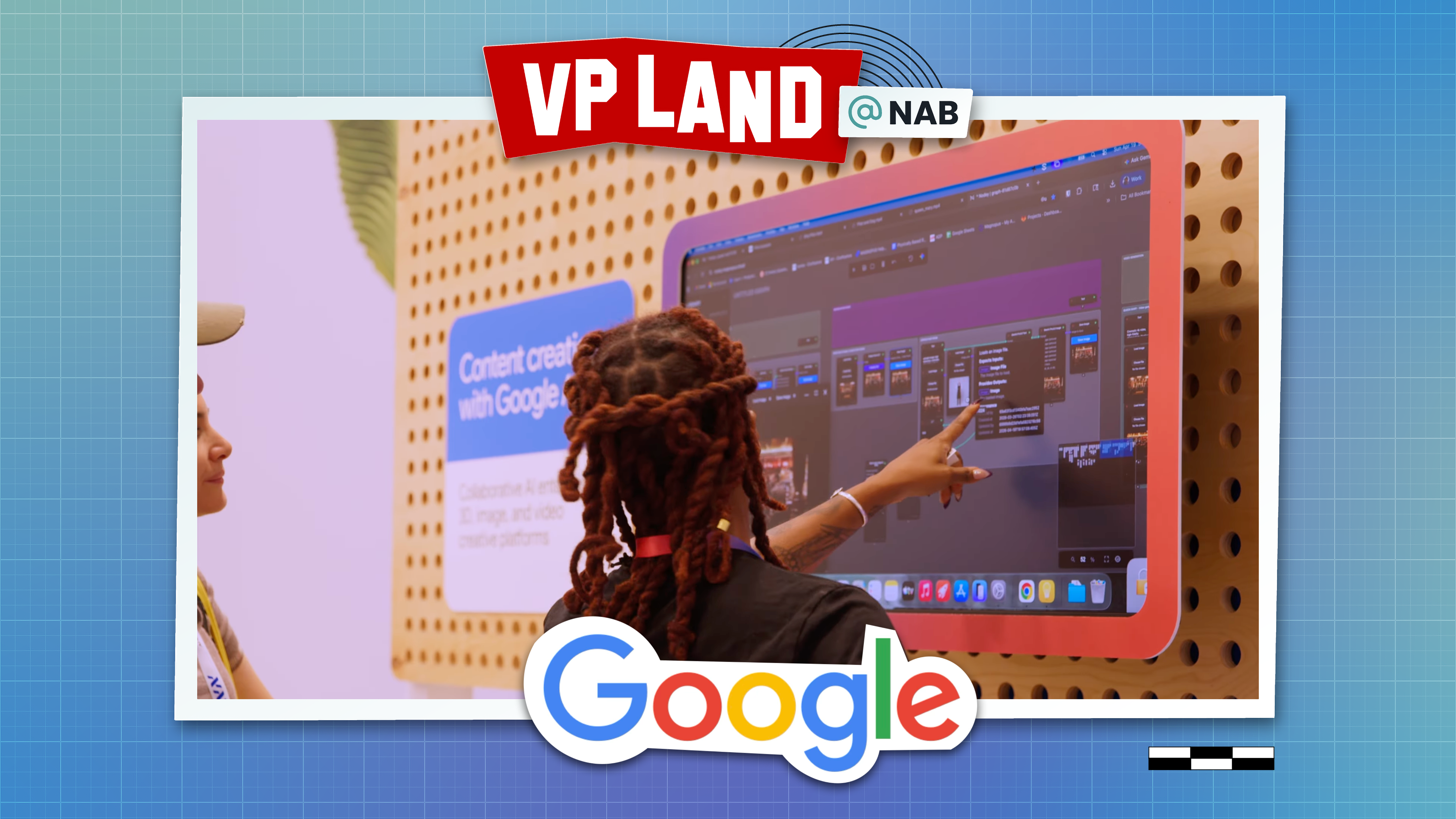
Google laid out its media and entertainment AI strategy at NAB 2026 with Anshul Kapoor, Director of Media and AI. The approach is straightforward: bring AI to the tools professionals already use, rather than requiring them to learn a new interface.

Avid integration. Google's AI models now run inside Avid's editorial tools, letting editors access capabilities like automated transcription, smart search, and AI-assisted assembly without leaving their timeline. The partnership targets the reality that most professional editors are not going to switch away from their NLE.


ComfyUI on Google Cloud. Media companies running ComfyUI for generative workflows can host the entire pipeline on Google Cloud, accessing Veo, Gemini, and Nano Banana models while keeping all content inside their own VPC. Google recommends cloud hosting over local deployment for both compute capacity and security compliance, since content never leaves the customer's data protection perimeter.

Search as a backbone. Google showed a universal search capability that indexes every asset in a media library — video footage, transcripts, metadata — and makes it searchable across the organization. Fox Sports uses the system as both a productivity tool for editors and a revenue-generation tool for sales teams finding specific clips for advertisers.

Agentic workflows ahead. Lin said the next 12 months will focus on two areas: more capable autonomous agents that can chain multi-step creative tasks, and tighter security controls so media companies can deploy those agents with confidence around their most valuable assets. Partnerships with existing tool vendors will expand, following the Avid and ComfyUI pattern.

Takeaway. Google's positioning is infrastructure, not interface. The company wants to be the AI engine behind the tools filmmakers already trust, with enough security and control that enterprise media companies will actually adopt it.

Reply

Avatar

or to participate

Keep Reading