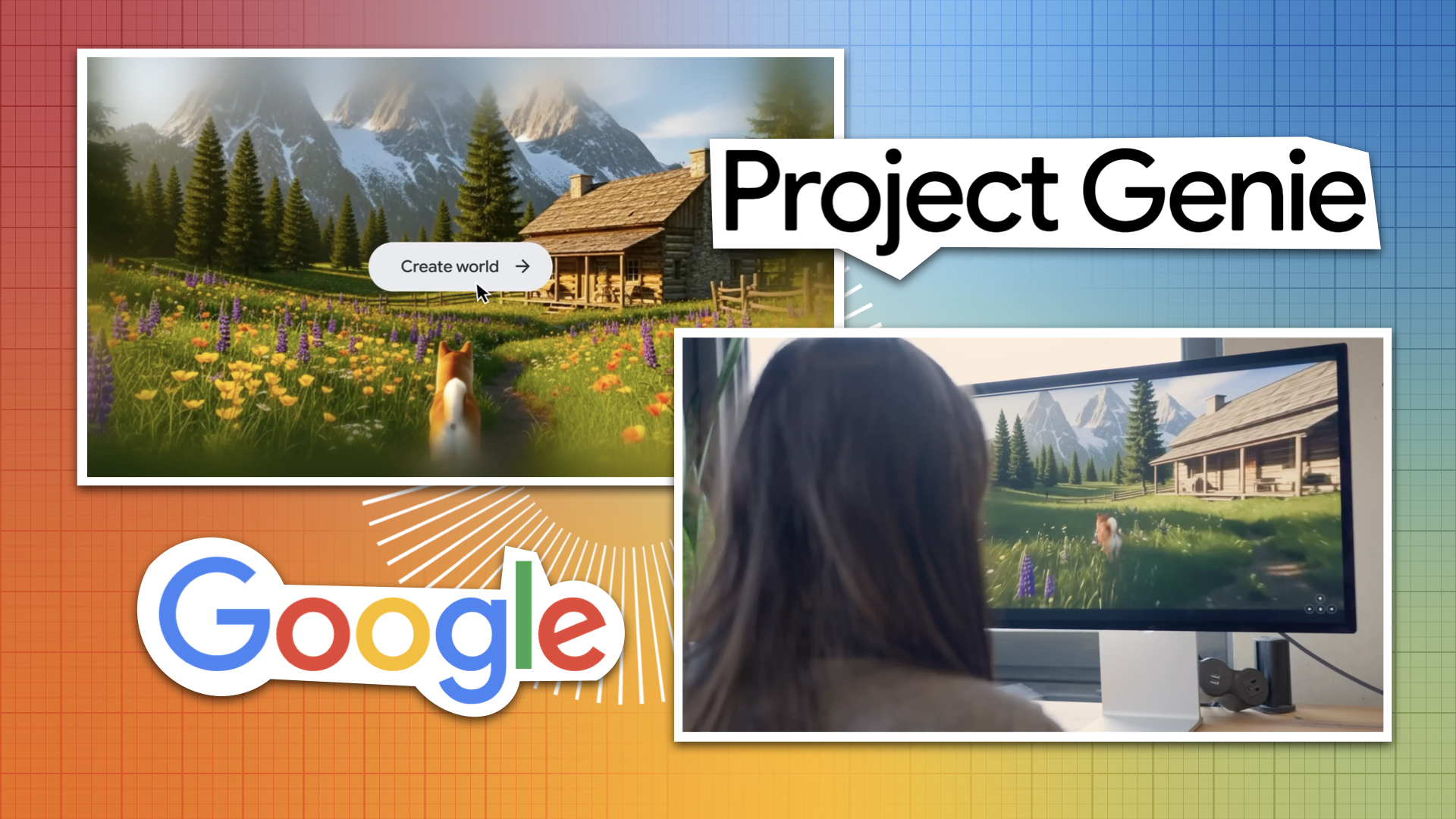
What Makes This Different from Video Generation
The key distinction is interactivity and consistency. Video models generate footage you watch. World models generate environments you control.
Genie 3's architecture is autoregressive, creating the world frame by frame based on descriptions and user actions. When you turn around and return to an area you visited 30 seconds ago, the model remembers what was there. Changes you make, like painting on a wall, persist when you look away and return.
This is fundamentally different from Google's own AI filmmaking tools like Flow, which uses Veo to generate video sequences you watch rather than environments you navigate. Flow produces footage; Genie produces worlds.
Current Limitations
Google is transparent about Project Genie's experimental status:
60-second sessions: Generation is currently limited to one minute, though the world remains consistent throughout
720p resolution: Not yet production quality
Physics inconsistencies: Characters sometimes walk through walls or solid objects
Control lag: Character responsiveness can be inconsistent
No promptable events: The ability to change weather or introduce new characters mid-session, demonstrated in the Genie 3 research preview, is not yet available in Project Genie
"We don't think about [Project Genie] as an end-to-end product that people can go back to everyday," Shlomi Fruchter, a research director at DeepMind, told TechCrunch. "But we think there is already a glimpse of something that's interesting and unique and can't be done in another way."
Why Google is Building World Models
DeepMind frames world models as a stepping stone toward AGI. The reasoning: artificial general intelligence requires systems that can navigate the diversity of the real world, not just master specific environments like Chess or Go.
World models let AI agents train in an unlimited curriculum of simulated environments, learning to predict how actions affect outcomes. This is also why Google sees applications beyond entertainment:
Robotics training: Test autonomous systems in realistic simulated scenarios before real-world deployment
Education: Let students explore historical eras or scientific concepts interactively
Pre-visualization: Generate explorable environments for creative concepting
The compute requirements explain the 60-second limit. Because Genie 3 generates worlds autoregessively, each user session requires dedicated hardware. "When you're using it, there's a chip somewhere that's only yours and it's being dedicated to your session," Fruchter explained.
The Competitive Landscape
Project Genie enters a heating market for world models:
World Labs (Fei-Fei Li's startup) released its commercial product Marble
Runway has launched world model capabilities alongside its video generation tools
AMI Labs (from former Meta chief scientist Yann LeCun) is focusing on world model development
Google's approach differs by putting research directly in consumer hands. The $250/month AI Ultra subscription effectively filters for users who will provide serious feedback, while generating training data at scale.
What This Means for Filmmakers
For media professionals, Project Genie offers a preview of where interactive content is heading:
Pre-visualization: Generate explorable environments for mood boards and pitch concepts. Walk clients through a world rather than showing them stills.
Concepting: Explore dozens of environment variations quickly. Remix existing worlds to test different directions.
Interactive content: The technology hints at a future where "playable" experiences become as easy to create as video.
The 60-second limit and quality constraints mean Project Genie is not production-ready. But it demonstrates capabilities that will mature. If you're tracking where AI content creation is heading, this is worth experiencing firsthand.
Access
Project Genie is available now to Google AI Ultra subscribers (18+) in the United States at labs.google/projectgenie. Google AI Ultra costs $250/month and includes access to Veo 3, Flow, and other advanced tools we've previously covered.