Character Control: Moving Beyond Clip Generation
Hedra's approach to AI video differs from simple clip generators. Lingelbach explains they're working to fundamentally re-architect these models to reason more jointly about scenes, character history, and personality consistency.
We've been thinking a lot about can we actually make a system that can more jointly reason over things. Like what's your intentionality in the scene? Like what did they do in the last scene? Even give like a personality to a character within a video that can be consistent so that it doesn't feel like I'm just generating something that new every time.
Michael Lingelbach, CEO, Hedra
The goal is creating characters with persistent traits—like someone who's always afraid of water and moves away when near the ocean. This level of personality control could enable more sophisticated interactive storytelling experiences.
Interactive Video's Moment: Real-Time Character Direction
Lingelbach believes 2024 will be the year interactive video gains mainstream traction. Hedra's focus on running models quickly positions them for what he sees as the next evolution in content creation.
I think this is the year that interactive video is going to have its heyday. I think what we really care about is can we actually make like an interactive, realistic-feeling character that you could connect with.
Michael Lingelbach, CEO, Hedra
This vision extends to directing AI actors with language in real-time, creating dynamic storytelling experiences that respond to user input rather than following predetermined scripts.
Expanding the Creator Economy: Enablement Over Replacement
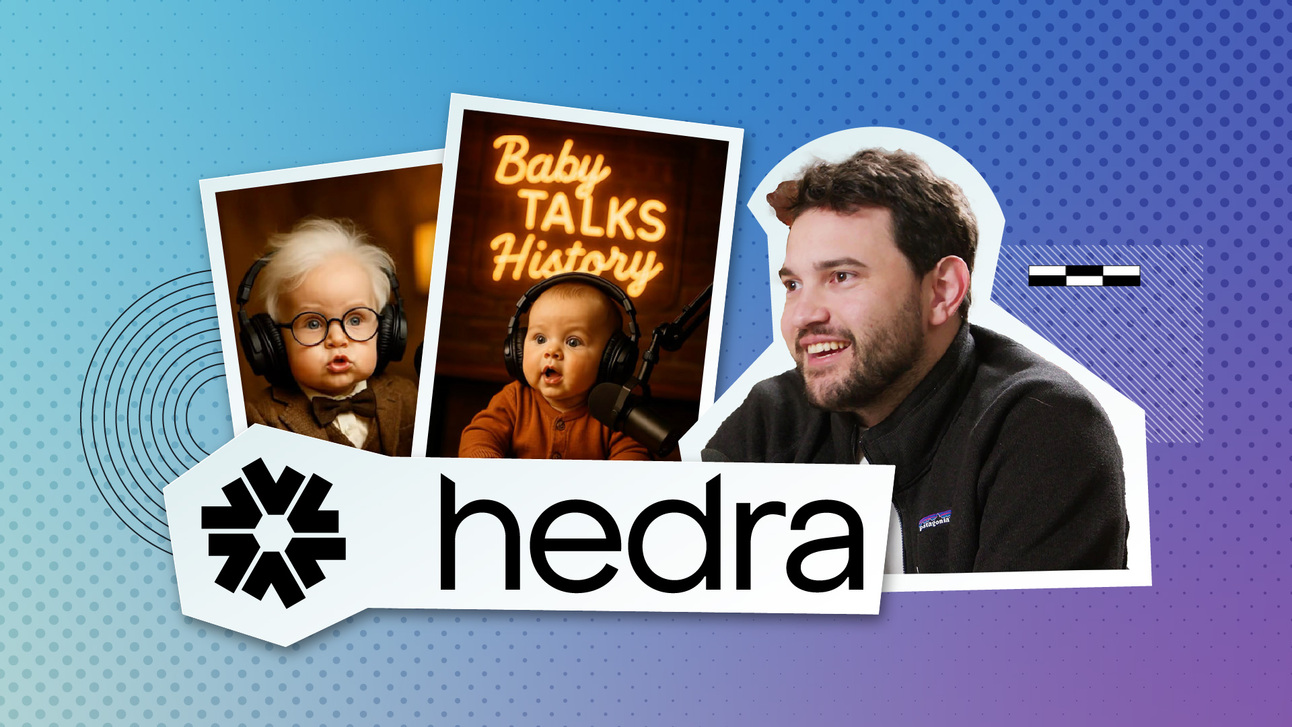
When asked about AI's impact on human actors, Lingelbach positions Hedra as expanding creative opportunities rather than eliminating them. He points to success stories like the Neural Viz and The Monoverse content that started on Hedra and gained massive TikTok followings.
I don't think AI is going to replace humans in Hollywood. I think that what you're seeing with AI is you're seeing an emergence of like new types of entertainment. I don't want to replace actors. I want to enable people that were not creatives or not filmmakers historically, to be able to come and use this technology and bring their ideas to life.
Michael Lingelbach, CEO, Hedra
His vision focuses on lowering barriers to content creation, allowing more people to move from concept to production quickly without requiring traditional filmmaking skills or resources.
Streamlining the Workflow: One Platform for All Media Generation
The current AI filmmaking process often requires juggling multiple tools—generating images, creating videos, then using separate platforms for character dialogue. Lingelbach sees this fragmentation as a key problem to solve.
According to him, Hedra already provides access to "all of the best image video and audio generation models in one place," with plans to integrate even more sophisticated interaction methods beyond text prompting.
I think prompting from just language alone is, it's underspecified, right? I think there are ways that I want to like mark up content, if you like, almost like some of the early motion brush approaches.
Michael Lingelbach, CEO, Hedra
Ethics and Moderation: Building Responsibility Into the Platform
Hedra has implemented celebrity filters and content moderation from day one, including protections against nudity, extreme violence, and hate speech. Lingelbach expresses pride in capturing market share before platforms without these safeguards could establish themselves.
The upcoming AI Transparency Act will mandate that AI-generated content includes synthetic IDs and verification methods—requirements Hedra is already preparing to meet. However, Lingelbach acknowledges the broader challenge as open-source models become available without built-in protections.
I do think, though, as these open source models come out, like open source models will always follow the leading edge models. And they're gonna come out without filters. And I think that puts a lot of responsibility and burden on the platforms to implement better moderation systems.
Michael Lingelbach, CEO, Hedra
Market Evolution: From Experimentation to Production
At AI on the Lot, Lingelbach observed a shift in industry attitudes toward AI video technology. The conversation has moved beyond skepticism about whether the technology will mature to practical questions about implementation and workflow integration.
I think, now, people aren't skeptical that the technology's gonna get there. I think we're like in the middle of that transition, which is a really exciting time.
Michael Lingelbach, CEO, Hedra
As AI video tools mature from experimental curiosities to production-ready platforms, companies like Hedra are positioning themselves as the infrastructure for a new entertainment ecosystem—one that expands creative possibilities rather than limiting them to traditional gatekeepers.