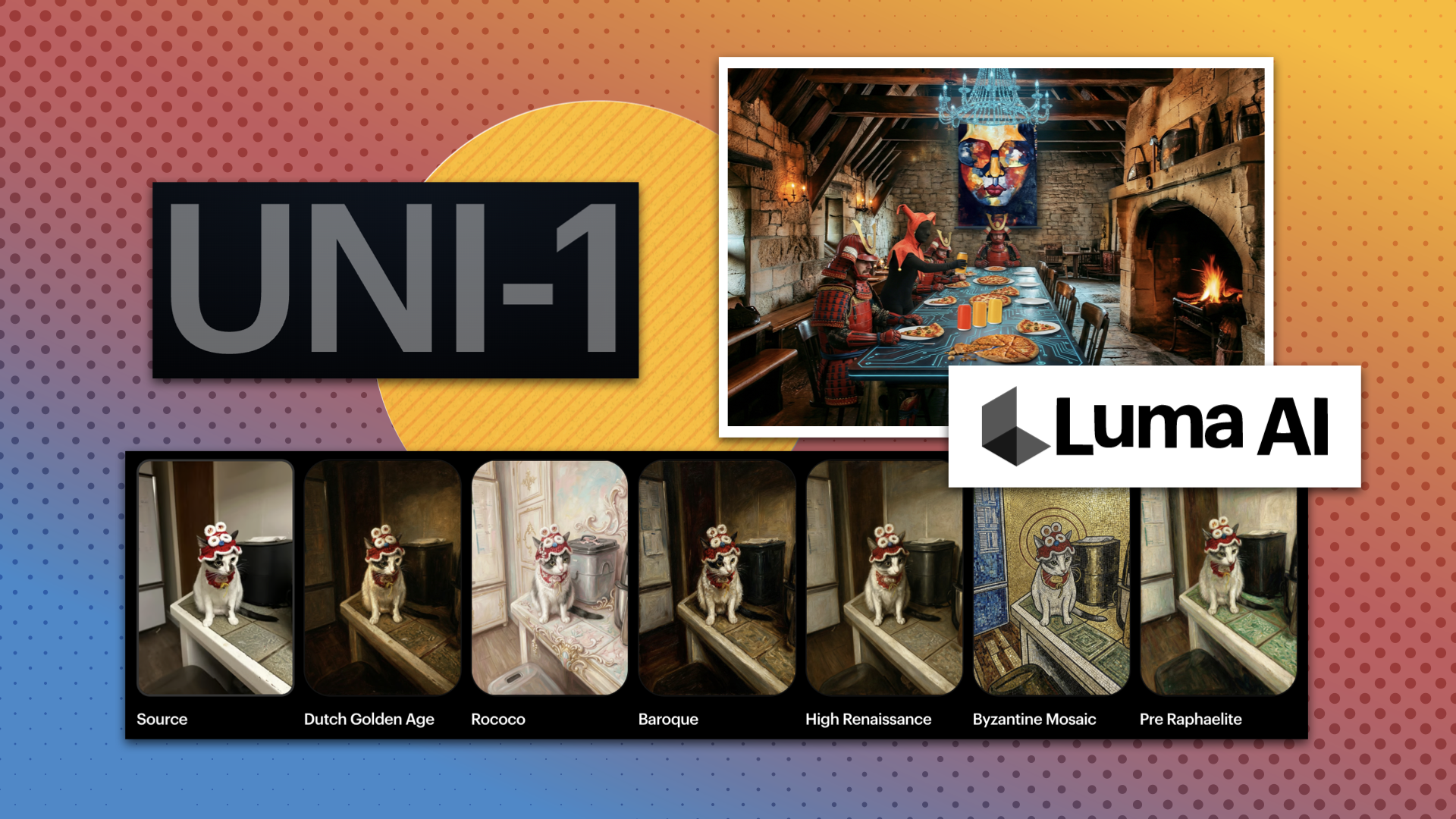
Luma Labs launched Uni-1, their first unified understanding and generation model, combining understanding and generation in a single model for the first time. Rather than separating the tasks of understanding images and generating them, Uni-1 combines both in a single decoder-only autoregressive transformer. The result: a model that thinks and renders in the same forward pass.
The architecture enables structured reasoning before and during image synthesis. Uni-1 represents text and images in a single interleaved sequence, acting as both input and output. This unified approach achieves leading performance on RISEBench (Reasoning-Informed Visual Editing) and ODinW-13 (open-vocabulary dense detection). CEO Amit Jain describes the capability as enabling models to "think in language and imagine and render in pixels or images," which Luma calls "intelligence in pixels."
Luma's journey has been linear: scene reconstruction, then 3D generation, then video diffusion. Uni-1 is the next step. As the company notes in their announcement, "generation without understanding has a fundamental ceiling." This model removes that ceiling by building understanding directly into the generation process.
Thinking and Rendering: How Uni-1 Works
The architecture is a decoder-only autoregressive transformer that represents text and images in a single interleaved sequence. Uni-1 can perform structured internal reasoning before committing to visual output. This means the model doesn't just generate pixels. It reasons about what should exist in a scene, how elements relate spatially and temporally, and what cultural context matters.
The model demonstrates three core capabilities:
Intelligent: Common-sense scene completion, spatial reasoning, world knowledge, and the ability to research and present information
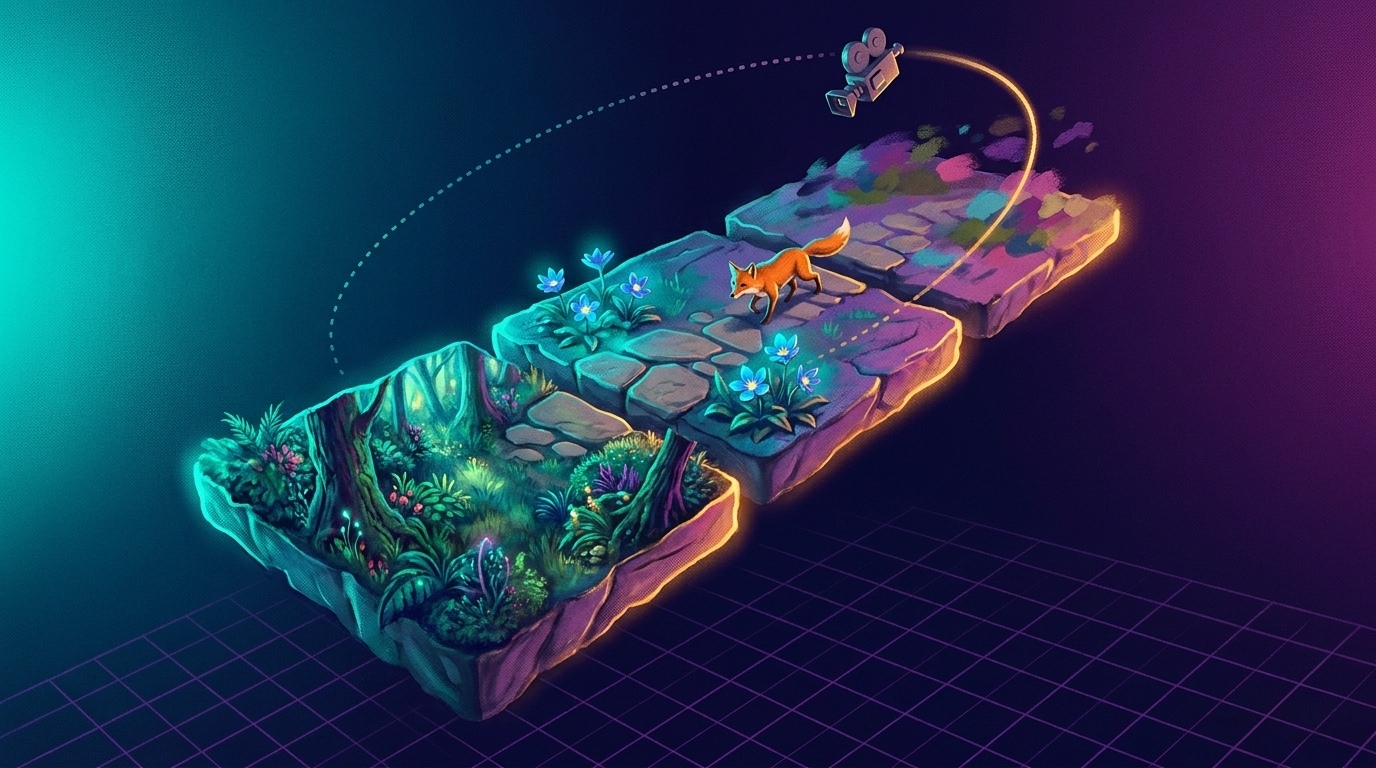
Directable: Reference-guided generation, visual instructions, code, sketches, and multi-turn refinement
Cultured: Deep understanding of millions of styles, humor, and cultural context
This last capability is particularly relevant for creative professionals. Uni-1 can generate culture-aware visuals across aesthetics, memes, and manga styles, understanding not just visual patterns but the cultural context behind them.
Luma Agents: The Platform Built on Unified Intelligence
Uni-1 powers a new product: Luma Agents, an agentic platform for end-to-end creative work across text, image, video, and audio. Unlike single-purpose tools, Luma Agents coordinate across multiple AI models to plan, generate, and refine content in a single workflow.
The platform integrates with Luma's own Ray 3.14, Google's Veo 3 and Nano Banana Pro, ByteDance's Seedream, and ElevenLabs voice models. Agents maintain persistent context across assets, collaborators, and iterations, similar to how coding agents self-evaluate and improve their work.
According to TechCrunch's exclusive coverage, Luma Agents are already working with major creative agencies and brands. Publicis Groupe, Serviceplan, Adidas, Mazda, and Saudi AI company Humain are using the platform for production work.
Real-World Impact: From Campaign to Localization in 40 Hours
The most concrete evidence of Luma Agents' capability comes from a real production case. A $15 million, year-long advertising campaign was transformed into multiple localized ads for different countries in 40 hours for under $20,000. The output passed the brand's internal quality controls.
This isn't a theoretical benchmark. It's a workflow that would have required weeks of traditional production work, compressed into two days. The cost savings are significant, but the speed is what matters most for creative teams working against tight deadlines.
Availability and the Road Ahead
Luma Agents are now publicly available via API, rolling out gradually. The platform will expand to audio and video output in subsequent model releases, extending the unified intelligence approach beyond static images.
We've covered Luma closely over the past year: their Hollywood Dream Lab launch, natural language video modification, and an interview with CEO Amit Jain on their video-to-video Modify tool. Uni-1 is a different kind of move: not a new feature on an existing product, but a structural rethinking of how understanding and generation work together.
Tools that can reason about creative intent before rendering will change how workflows are structured. How quickly creative teams integrate that capability is the open question.