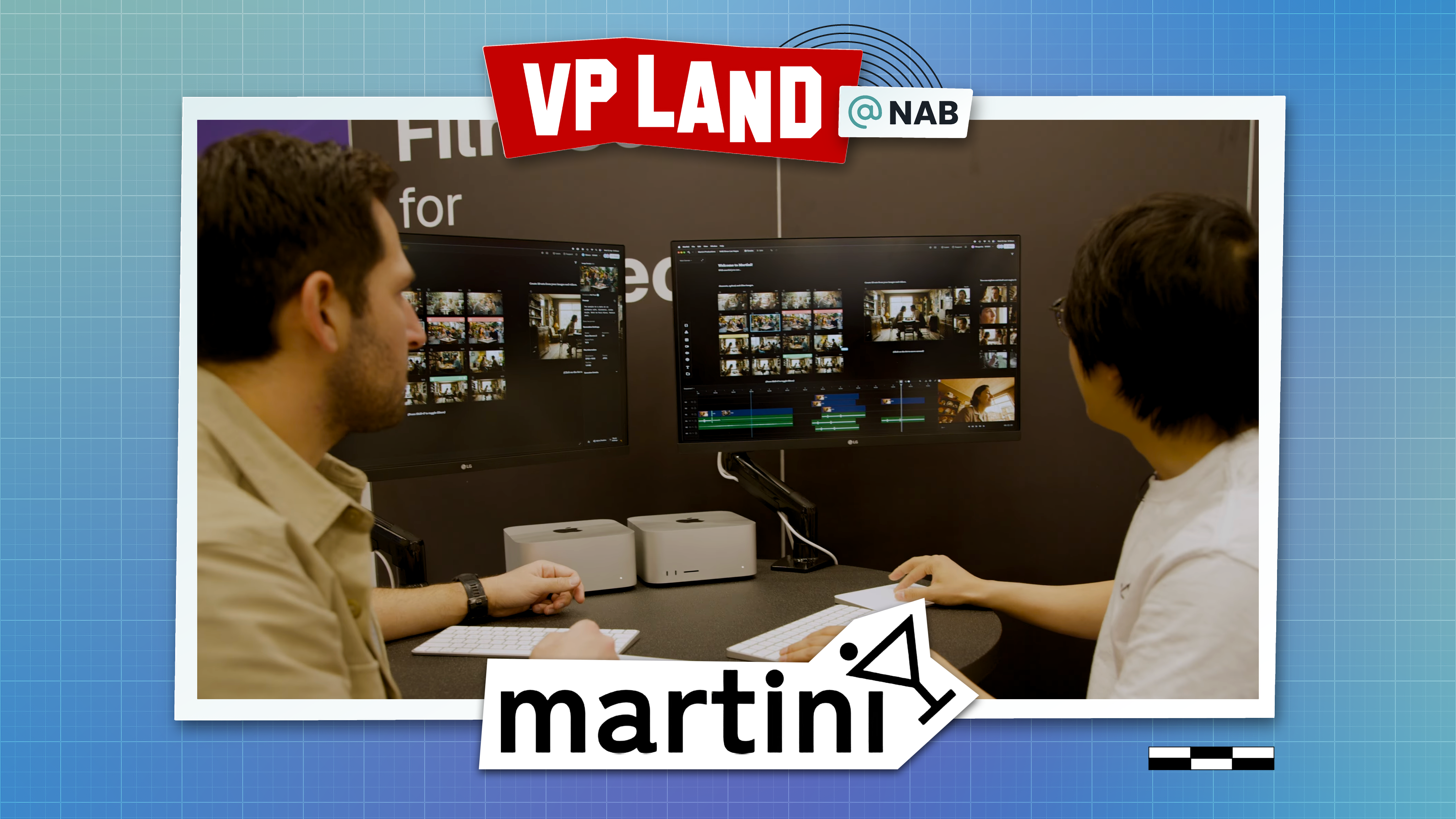
The timeline approach addresses a specific pain point in AI-assisted production. Teams using individual generation tools face a workflow bottleneck: generate on one platform, download, import into an NLE, discover missing shots, return to the generation tool. Martini collapses that loop by keeping generation and sequencing in the same environment. When the sequence is ready, users export an XML file compatible with any major NLE.
Step Into Set: 2D-to-3D Scene Exploration
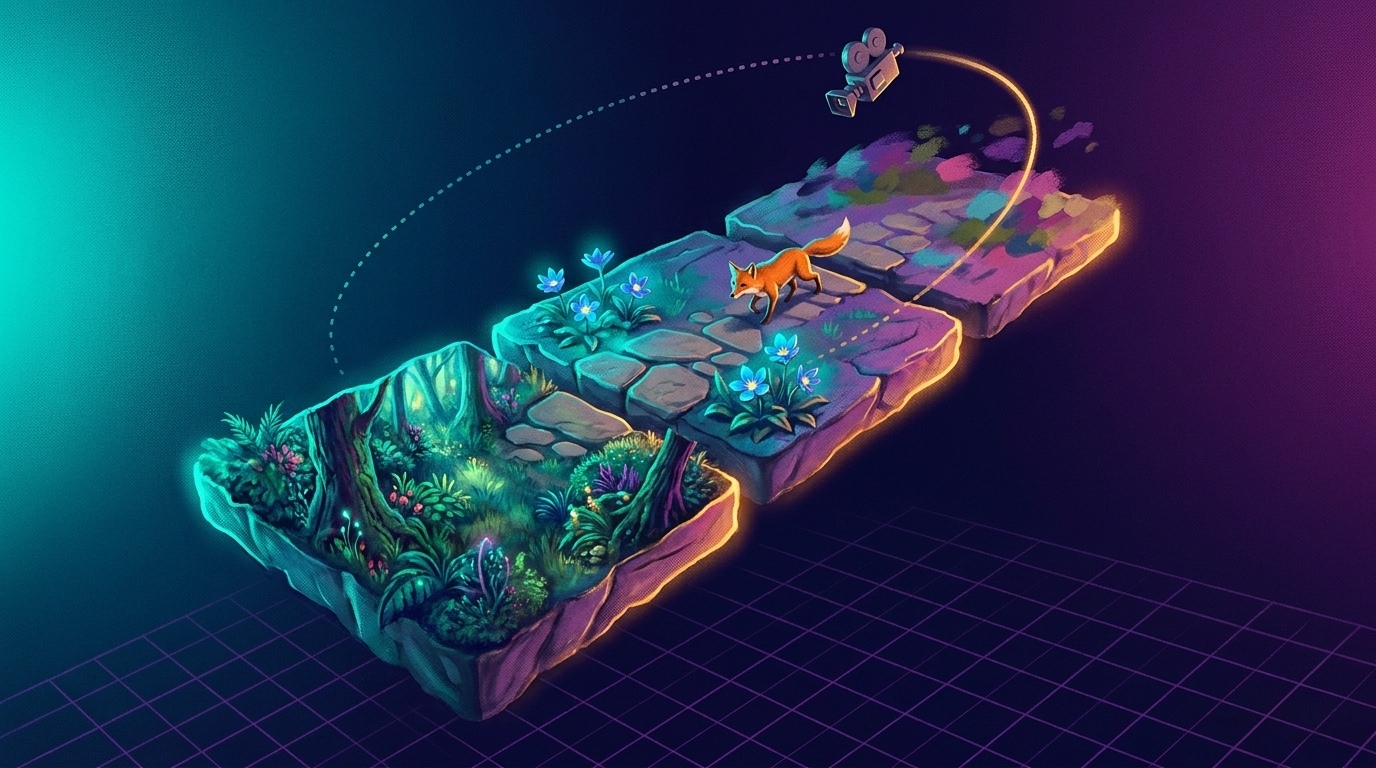
The platform's standout feature is Step Into Set, which converts any image (photograph or AI-generated) into an explorable 3D environment. The process takes roughly 10 minutes and extracts characters into body meshes, allowing users to reposition the camera, change lens settings, and find specific angles.
This targets a real production problem. Current multi-shot video models like Kling 3.0 can generate camera angle changes, but achieving a specific artistic composition through prompting alone remains difficult. Step Into Set lets filmmakers find the exact angle they need visually, then either use the rendered frame for storyboarding or feed it as a starting frame into video generation models like Kling or Seedance.
The extracted character meshes can also serve as reference images for other models, creating a workflow where filmmakers build consistent character assets once and reuse them across different generation tools.
Claude MCP Integration
Martini has built an MCP (Model Context Protocol) integration that connects Claude AI agents directly to the platform. Teams can configure custom Claude instances that understand their prompting preferences and production style. A director, editor, or production designer can ask their Claude agent to generate storyboards, produce multiple variations of a shot, or iterate on a scene, and the results appear directly on the shared board.
The company encourages users to build their own AI tools and agents while using Martini as the production interface. The founder described the platform as handling the "heavy engineering" of real-time collaboration, proxy generation, and video syncing, while leaving creative-specific AI workflows to individual teams.
Subject Nodes and Cross-Model Consistency
Martini introduces Subject Nodes, an abstraction layer for character, prop, and location references that works across multiple AI video models. Rather than rebuilding character references for each generation tool, users create a subject once and Martini adapts the reference format for whichever model is being used, whether Kling, Seedance, or others.
Scale and Pricing
The platform is designed to handle up to a thousand nodes on a single board without performance degradation, addressing a limitation of existing node-based editors that slow down around 50 to 100 nodes. For large productions working on complex scenes, this could eliminate the need to split projects across multiple boards.
Martini offers three pricing tiers: a free tier with access to all features (generation requires credits), a $30 per month plan, and a $150 per month plan. The credit system uses "olives" as the currency for generation operations.