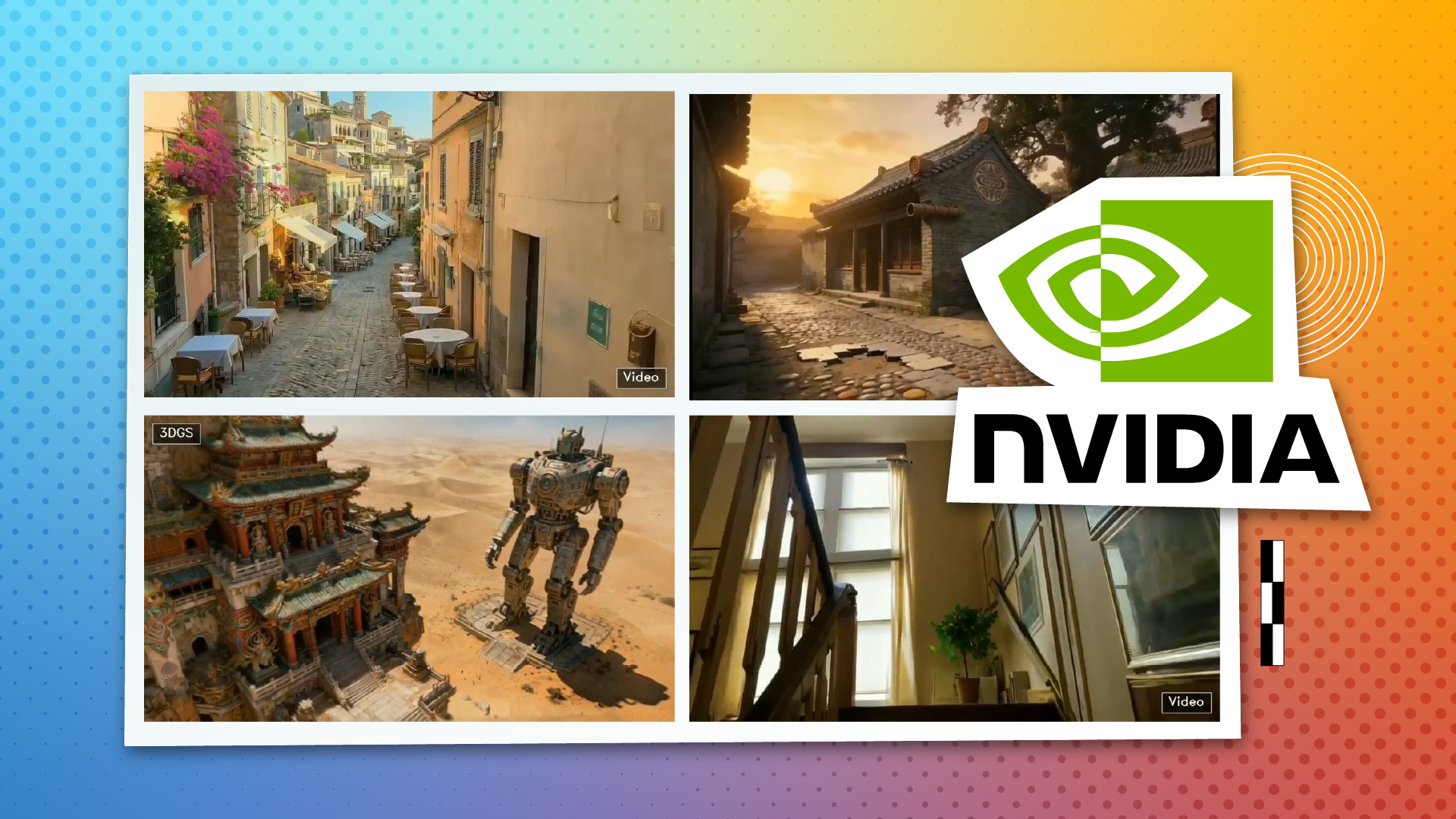
That pass is the part worth flagging. Most existing generative 3D pipelines either run lengthy per-scene optimizations or stitch together view-consistent frames with iterative refinement. A feed-forward approach trades some fidelity for speed and predictability, which matters for any workflow that needs to iterate on a shot before committing render time.
The Two Problems It Targets
According to the project page, the team focused on two limits in current generative 3D work.
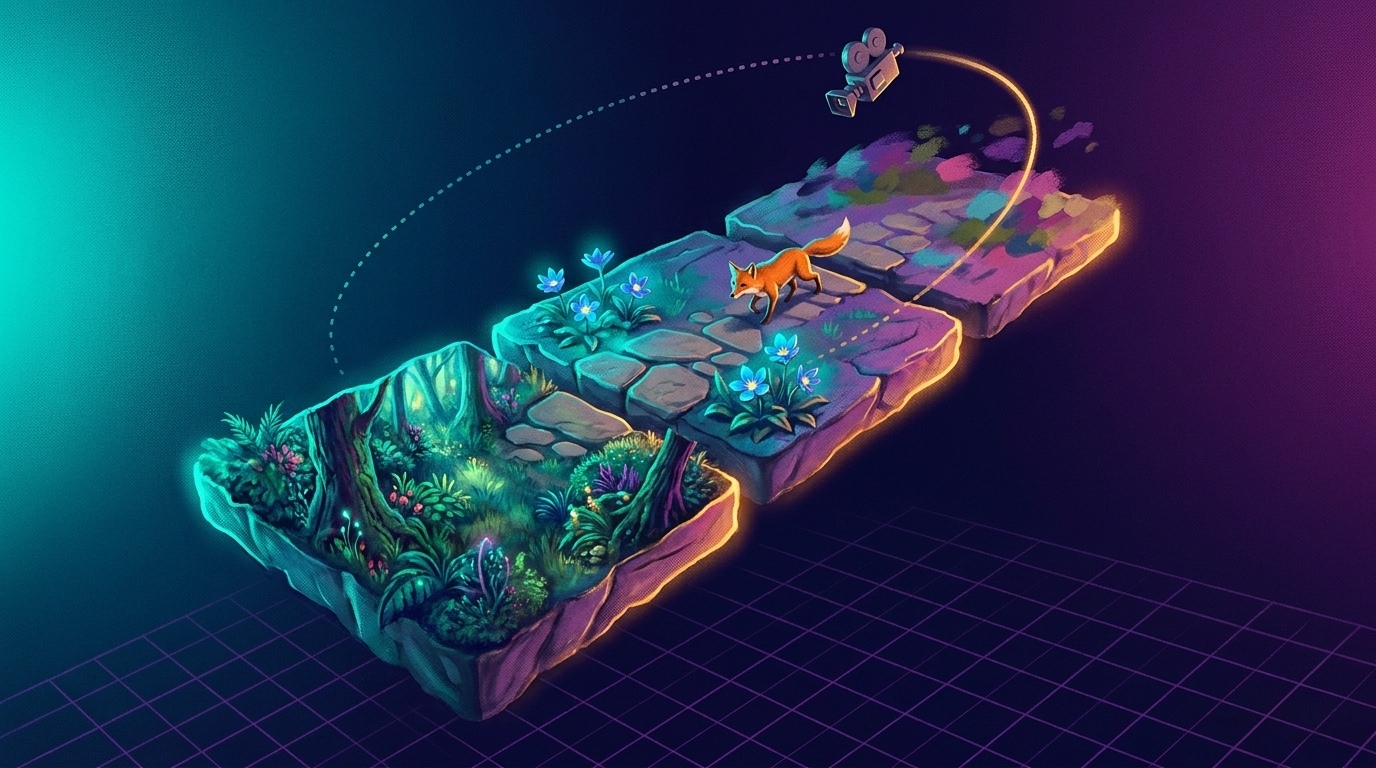
Spatial forgetting is when a model loses track of geometry it has already produced. Walk a virtual camera away from a corner of a room and back, and the corner shifts. For previs or virtual production, that breaks any shot that revisits a location.
Temporal drift is the slow accumulation of errors across long sequences. A scene that looks coherent for the first few seconds becomes unstable as the camera moves further, with surfaces warping or content morphing between frames.
Both problems compound on long-horizon shots, which is exactly the case filmmakers care about. Lyra 2.0's design aims to keep geometry stable across extended camera moves rather than only across short clips.
Where This Lands for Production
The output is a 3D scene, not a video, which is the practical distinction. A reconstructed environment can be loaded into a real-time engine, rendered from new angles, or used as a backdrop in an LED volume workflow. That is a different use case than text-to-video tools, which lock in a single camera path at generation time.
Lyra 2.0 remains research code rather than a product. NVIDIA has not announced a release window or licensing terms, and the project page positions the work as a step toward generative world models rather than a shipping tool. The relevant question for VFX and virtual production teams is when feed-forward 3D generation reaches enough fidelity to sit alongside photogrammetry, Gaussian splats, and hand-built environments in a previs pipeline.
What to Watch Next
Generative 3D is moving from single objects toward navigable environments, and the Lyra line is one of several research efforts in that direction. The combination of camera-controllable generation and fast 3D reconstruction is the workflow shape that maps cleanly onto how shots are actually planned. Whether the output quality holds up under production lighting and asset standards is the next test.