The scope has expanded. Pixera now handles any LED installation: concert stages, corporate events, broadcast studios, architectural displays. The same engine drives all of them.
Interactive Content That Responds to the Real World
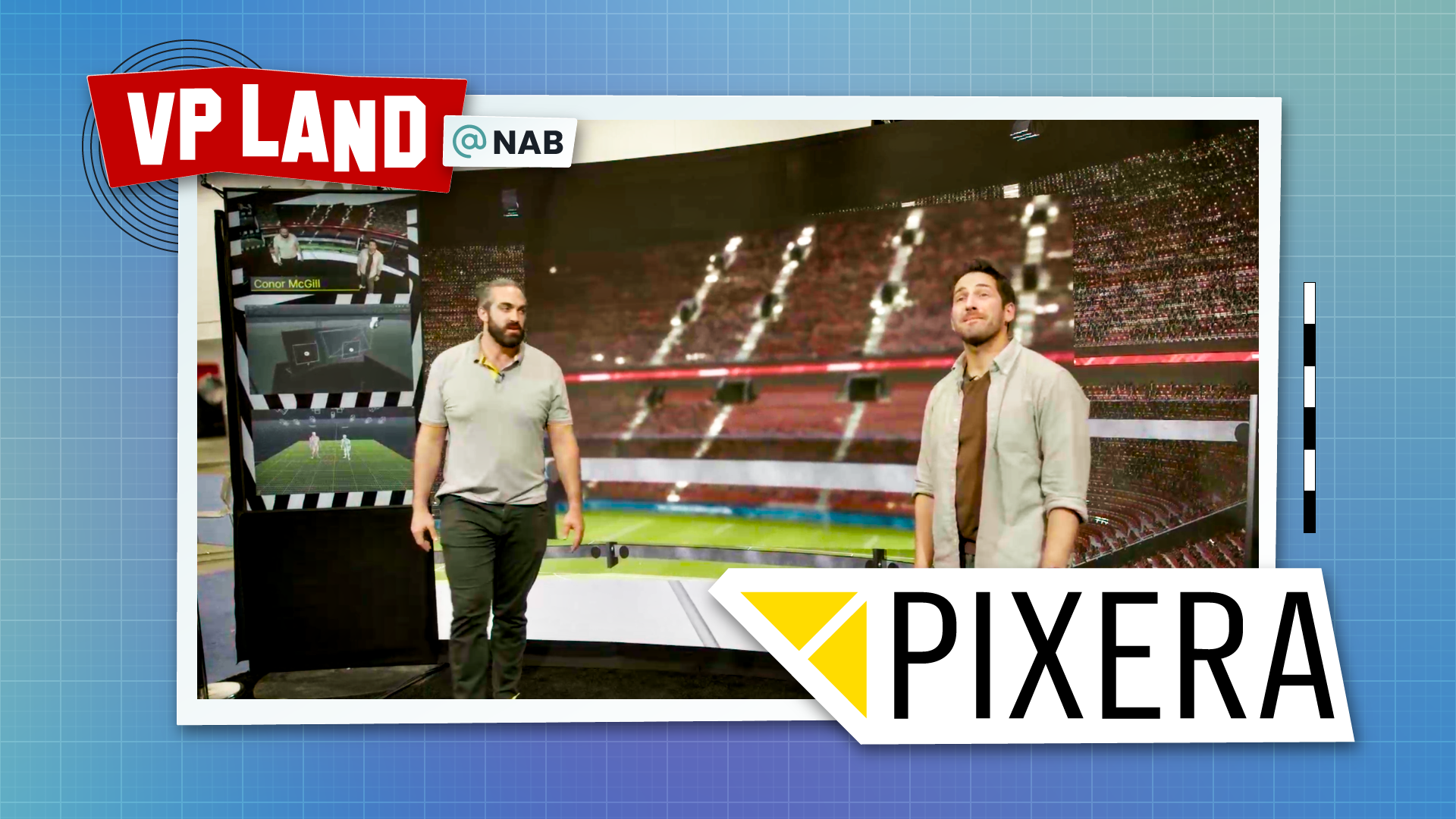
The demonstration at NAB focused on interactivity. McGill showed content on an LED wall that responded to a physical ball being thrown at it. The wall detected the impact and triggered visual effects at the exact point of contact.
This works through sensor integration. Pixera connects to external inputs including motion sensors, cameras, and custom hardware. When a sensor detects an event, Pixera triggers the corresponding content in real time on the LED surface.
The use cases range from concert visuals that react to performer movement to corporate installations where visitors interact with branded content by touching or approaching the display.
Pixel Mapping and Content Management
Pixera includes pixel mapping tools that let operators assign content to specific sections of an LED wall or across multiple walls. The mapping interface handles irregular shapes, curved surfaces, and multi-panel arrays.
Content management happens in a timeline-based editor. Operators can pre-program sequences, cue live content changes, and blend pre-rendered video with real-time rendered elements. The timeline supports layering, so a background environment, a mid-ground effect, and a foreground interactive element can all run independently.
Virtual Production Backgrounds
For film and TV, Pixera renders photorealistic environments on LED volumes. The engine handles camera tracking, color accuracy for on-camera talent, and real-time adjustments to lighting and perspective. The goal is to replace green screen with environments that look correct on camera and provide realistic lighting on set.
Pixera runs on NVIDIA RTX hardware. The rendering pipeline supports Unreal Engine integrations for teams that want to build environments in Unreal and drive them through Pixera.
Pixera unifies LED wall content, virtual production rendering, and interactive event experiences under one real-time platform.