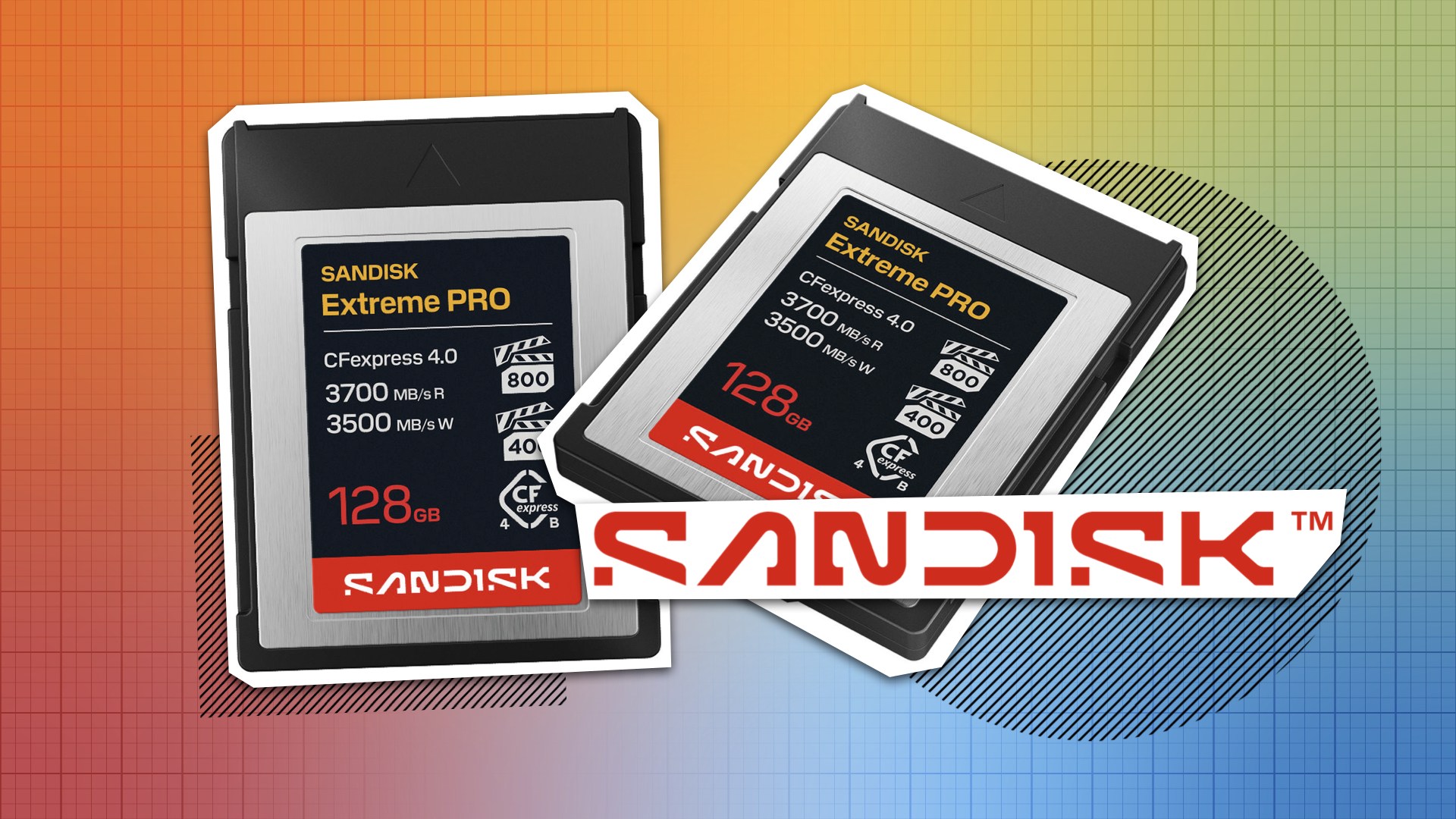
SanDisk lists the 2TB and 4TB capacities as the fastest tier, with 4000 MB/s burst reads, 3800 MB/s burst writes, and 3100 MB/s minimum sustained writes. The 4TB model carries the product code SDCFEB-4T00-GN4NN. Smaller capacities run at lower sustained-speed tiers.
High-Res Headroom: Video Performance Guarantee ratings determine which resolutions and codecs the card can handle without dropping frames.
The 1TB through 4TB capacities are certified to VPG1600, meaning a minimum sustained write speed of 1600 MB/s. That rating is what pushes these capacities into 8K and 12K territory for the high-bitrate RAW and ProRes variants that saturate lower-tier cards.
The smaller capacities land at different tiers:
128GB to 400GB models: VPG800 or VPG400 ratings, sufficient for 4K and 6K acquisition
1TB to 4TB models: VPG1600 rating, cleared for 8K and up to 12K footage
8TB model: Included in the top capacity tier for long-form and multi-camera productions
SanDisk positions the line for 4K, 6K, 8K, and up to 12K workflows, covering current cinema cameras that output RAW formats at those resolutions.
Built for the Set: Durability, power management, and backwards compatibility round out the spec sheet.
SanDisk rates the cards for drop endurance up to 5 meters. The company's SmartIdle technology manages power draw during periods of inactivity, which matters for handheld and battery-powered camera rigs where thermal performance and runtime are constrained.
Legacy XQD camera bodies can read the new cards via firmware updates from select manufacturers, preserving workflows for productions still running older Sony and Nikon XQD-compatible bodies. RescuePRO Deluxe recovery software ships with every card, and SanDisk covers the line with a limited lifetime warranty.
Wrap Report: Higher sustained write speeds and 8TB capacities reshape what's practical to capture in-camera.
The 3100 MB/s minimum sustained write on the top tier lines up with the bitrates that next-generation cinema cameras are producing at 8K and 12K, where compressed RAW formats can push past what VPG400-class cards handle. The 8TB ceiling changes day-to-day ingest math on productions shooting long takes or multi-camera coverage, where swapping cards mid-setup is friction that DITs work hard to avoid.
For productions already on CFexpress Type B, the upgrade path depends on camera support for the faster sustained speeds. For crews moving up from XQD, the firmware-based backwards compatibility offers a migration route without replacing camera bodies.