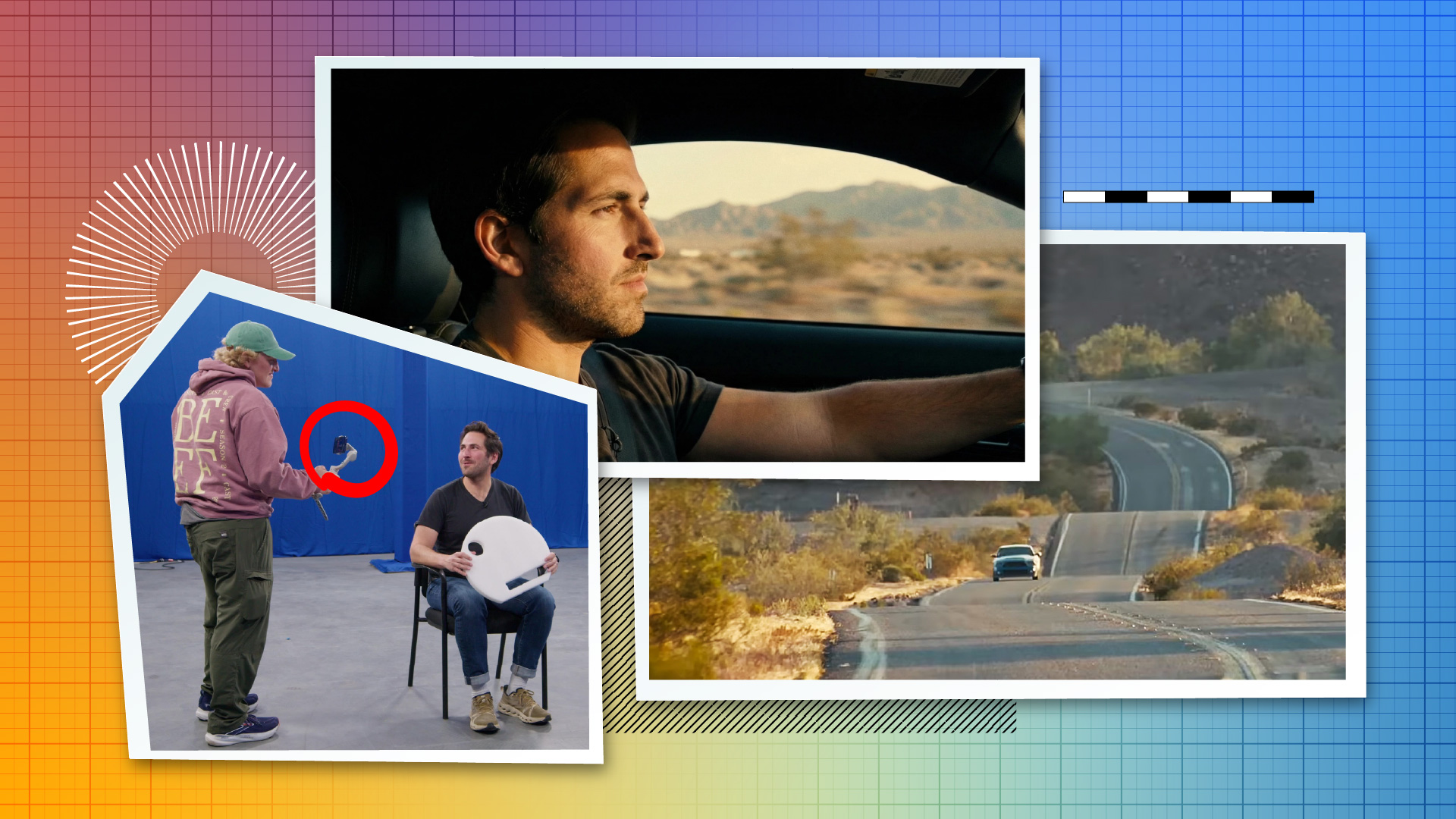
At the 24th Annual VES Awards, we asked artists, supervisors, producers, and creators one question: how are you actually using AI right now? The answers cut across the full spectrum, from practical pipeline tools to bigger questions about authenticity, ownership, and what the technology still can't do.
The consensus: AI is a workflow tool, not a creative replacement
Across the board, the people we spoke with see AI as an accelerator for the tedious parts of the job. Green screen keying, retopology, subtitle generation, scene cut detection — the unglamorous work that eats time. Corridor Crew's Wren Weichman, Sam Gorski, and Niko Pueringer were enthusiastic about tools that handle busy work, while being clear that AI hasn't produced anything with a point of view that interests them yet.
Adam Savage (Tested, MythBusters) and others kept returning to the same phrase: you still need a human with a great idea behind it.
The Wizard of Oz at Sphere: what a real production deadline does to AI tools
The most detailed account came from the team behind The Wizard of Oz at Sphere: Ben Grossmann, Glenn Derry, Matt Dougan, and Dr. Irfan Essa. They described a production that became a pressure cooker. The stakes were high (you can't mess up the Wizard of Oz at 16K), the timeline was real, and the AI tools had to mature fast. What the team was working with at the start looked completely different six months in. The payoff: artists sitting in the kitchen saying they'd done in an hour what used to take a month.
Richard Taylor of Weta Workshop and Martin Hill (Weta FX, Stranger Things) both pointed to the same pattern. The VFX industry has been through this before, from optical to miniatures to CG, and the tools always change while the craft survives.
The issues people are watching
Actor replication came up unprompted. Jerry Bruckheimer acknowledged it's on his radar. Studios with B2B film work are staying cautious specifically because proof of ownership over AI-generated imagery remains unresolved, even as their consumer-facing operations use AI as aggressively as possible.
The celluloid angle was unexpected. One of the Sphere VFX leads made the case that AI is actually accelerating a return to film: as digital imagery becomes ubiquitous, celluloid signals authenticity. Joseph Kosinski (F1: The Movie) and others noted audiences are responding to that. Nolan selling out Odyssey IMAX screenings a year out is the proof point.
The synthesizer analogy came from the Sklar Brothers (Randy and Jason), whose father was a studio musician in the early 80s. The musicians panicked about synths. They were fine. The musician is the art, not the tool.
Radost Ridlen and Sean Findley from Severance closed out with the version of this that applies to VFX: cool if it's a tool artists can use, not cool if it phases work out.