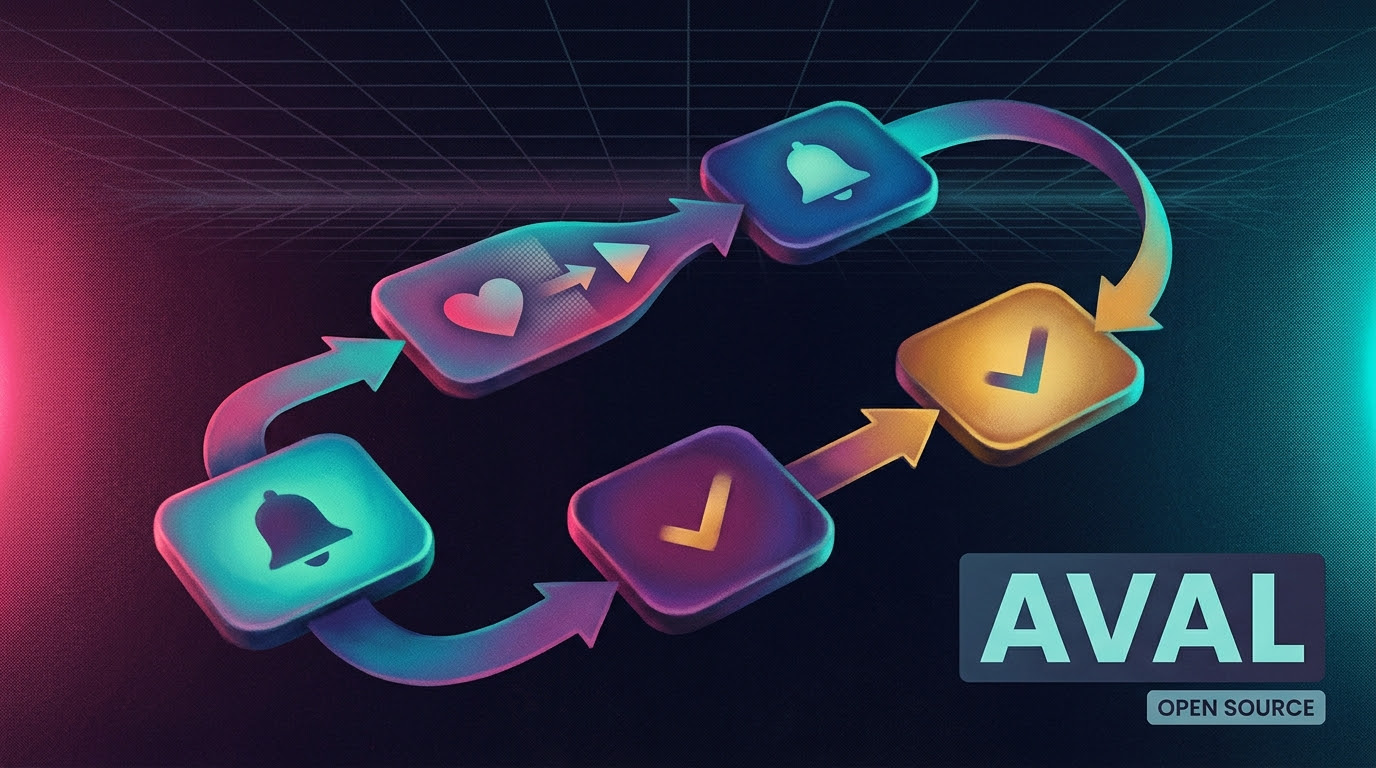
The format pairs a compiler with a web renderer built on WebCodecs and WebGL2
Aval ships in two parts. A compiler produces the asset, and a web renderer plays it in the browser.
The runtime decodes with WebCodecs and renders with WebGL2, keeping the decoder timeline moving forward across loop seams instead of seeking backward. Barashkov calls these "seekless loops," and points to low CPU overhead and small file sizes as the payoff, describing the format as suited to small icons designed and animated in Blender.
For browsers that lack the required APIs, or for users with reduced-motion settings, Aval falls back to host-owned markup that the developer supplies. That progressive fallback keeps the underlying content available when the interactive layer cannot run.
Aval is an open source answer to Airbnb's Lava
Barashkov framed the project as a response to work he could see but not use. Airbnb built a similar format called Lava, a compact 3D animated icon format with transparent backgrounds designed for its app interface.
"Then, a little over a year ago, Airbnb created Lava for almost exactly the same purpose. That gave me hope," Barashkov wrote. "But Lava was never released as open source. So I decided to build my own, with AI."
For motion designers who build broadcast and interface animation, that positions Aval alongside the tooling we covered in Maxon One's Cinema 4D and Redshift updates, but aimed at the web runtime rather than the render.
Built solo with an AI coding agent
"This is probably the craziest thing I've ever built with Codex," Barashkov wrote, referring to OpenAI's coding agent. He said the format had been a years-long goal that never penciled out before AI-assisted development.
"Before AI, building it would have taken months of work. I could never justify that investment for a noncommercial open source project," he wrote.
A single designer shipped a compiler, a web runtime, and a new asset format, matching a capability that a company the size of Airbnb kept internal. AI-assisted coding is what made that solo effort feasible, according to Barashkov.
An early preview, not a production dependency
Aval is a technical preview, and Barashkov said he will keep polishing it in the coming days. Its runtime depends on WebCodecs and WebGL2, so behavior varies by browser, and the fallback path matters for anyone shipping to a broad audience.
For teams already exporting icon and micro-animation sequences from Blender, the release offers a way to keep those animations interactive and lightweight on the web without waiting for a proprietary format to open up. Whether Aval attracts contributors past the preview will determine if it becomes a dependable option or a well-documented experiment.