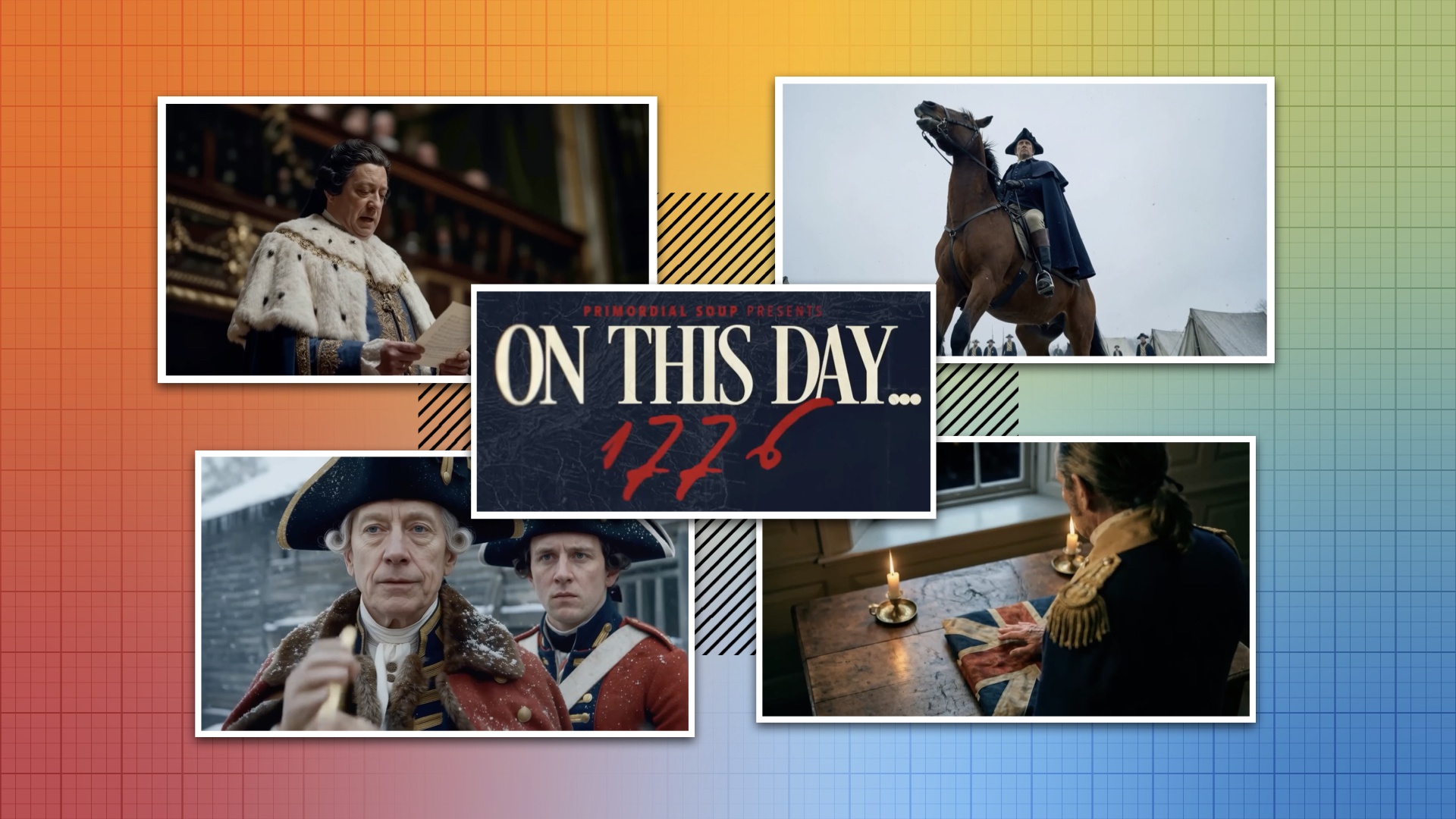
Ben Bitonti, president of TIME Studios, stated in the announcement that the project demonstrates "what thoughtful, creative, artist-led use of AI can look like, not replacing craft, but expanding what's possible."
Industry Context: A-list director enters the AI filmmaking conversation
Aronofsky brings significant credibility to AI-generated content. The director of Black Swan, Requiem for a Dream, and The Whale now positions himself at the intersection of established filmmaking and emerging technology.
This partnership was publicly discussed at Google I/O 2025, where Aronofsky and Google DeepMind CEO Demis Hassabis held a conversation about AI-assisted storytelling. Primordial Soup had previously produced Ancestra, a short film directed by Eliza McNitt that we covered in detail when it premiered at the Tribeca Film Festival in 2025. That film combined live-action with AI-generated imagery of cosmic events and the microscopic world. Google DeepMind has continued this filmmaker partnership approach, most recently premiering an AI short at Sundance 2026.
The series arrives as Hollywood continues wrestling with AI's role in creative production. By using union actors and maintaining a traditional production structure, Aronofsky's approach attempts to find middle ground between pure AI automation and conventional filmmaking.
Reception and Release: Weekly drops aligned with historical anniversaries
Public reaction has been divided. Supporters point to the cost-effectiveness of AI for historical dramatization and the preservation of union labor standards. Critics have questioned the aesthetics of AI-generated visuals and the appropriateness of using the technology for historical storytelling.
The release strategy adds an educational dimension: each episode drops on the exact 250th anniversary of the event it depicts, continuing weekly throughout 2026. This "of-the-moment" approach mirrors how events would have unfolded for colonists living through the Revolution.
January 1 episode: The Grand Union Flag raising
January 10 episode: Thomas Paine and Common Sense
Ongoing releases: Weekly episodes timed to 1776 anniversaries throughout the year
The Backlash: Online critics pan AI visuals as "slop"
The trailer and first episodes drew sharp criticism across social media, with viewers targeting the visual quality of the AI-generated imagery.
On X (formerly Twitter), users called the series "the most evil thing I've ever seen" and "embarrassing." One commenter wrote: "I've seen anons on Twitter make better AI videos." Another added: "No one should support this. Not only because it's AI, but because it looks horrible."
Kotaku's review was blunt: "People's faces look like they're melting even when they're not moving... the camera pans and zooms like it's being controlled by a drunken sloth." The publication concluded the project "fails spectacularly" as a test of whether an auteur filmmaker can bend AI tools to creative ends.
Industry reaction was similarly harsh:
Critics pointed to hallmark AI artifacts: unnatural camera movements, exaggerated close-ups, copy-pasted soldiers in battle scenes, and faces described as "plastic-like." The uncanny valley effect dominated viewer reactions on both YouTube and social platforms.
Defenders argue the project represents "artist-led" AI use rather than full automation, and that the technology could democratize historical storytelling by making period content financially accessible. Whether audiences will accept this tradeoff remains unclear.
What This Means for Filmmakers: Testing a labor-friendly AI production model
On This Day... 1776 offers a real-time case study in AI filmmaking at a professional level. For media professionals evaluating AI tools, the project demonstrates one potential structure: AI handles visual generation while humans retain creative control, voice performance, writing, and post-production.
The union voice actor component is particularly notable given ongoing industry debates about AI and performer rights. Whether this hybrid model becomes a template for AI-assisted production or remains an isolated experiment will become clearer as the series progresses through 2026.
For independent filmmakers, the takeaway may be practical: AI visual generation could make historical or period content accessible to smaller budgets, provided production teams can maintain quality standards that satisfy audiences accustomed to traditional filmmaking craft.