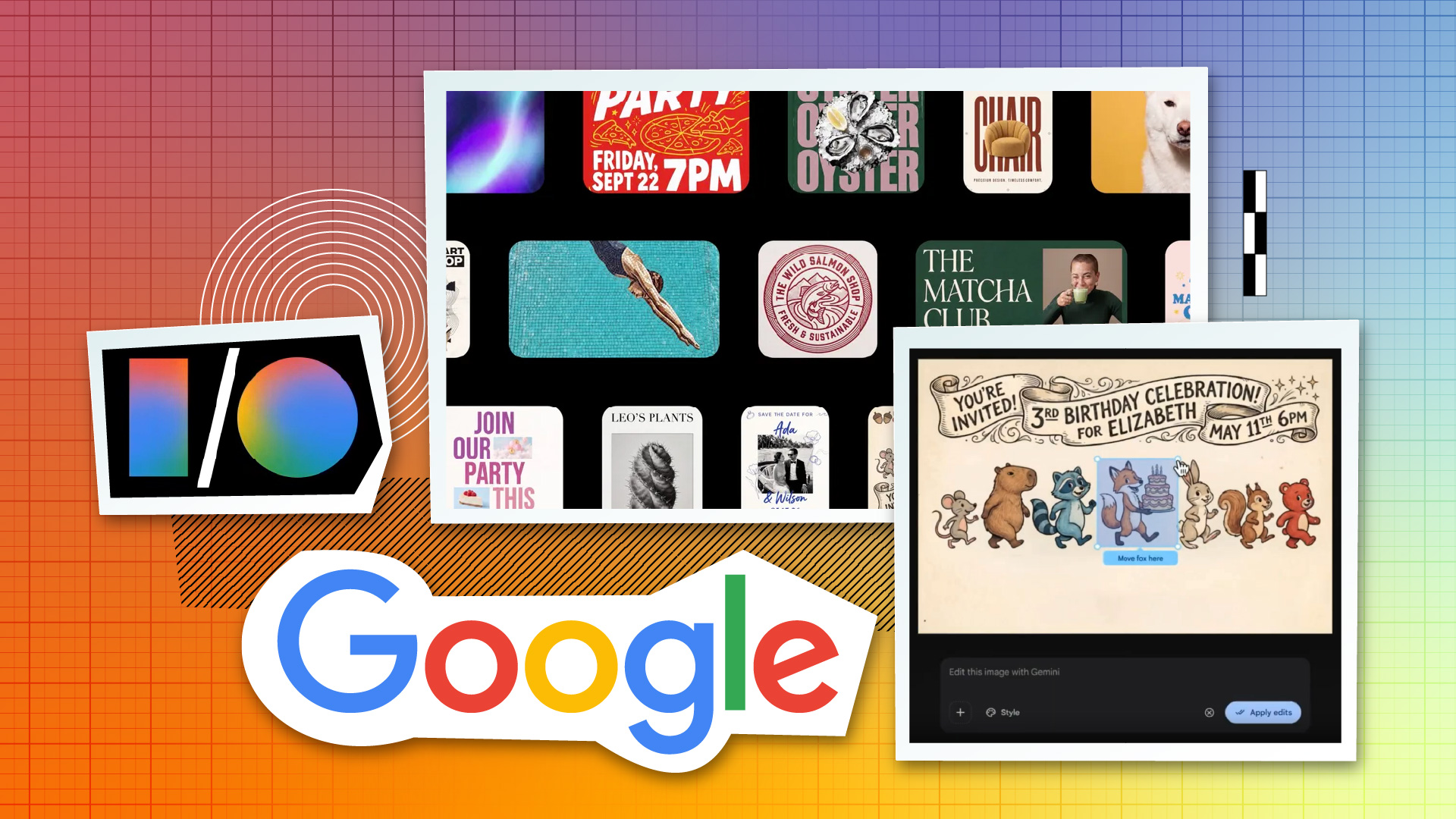
Google's new image tool treats your photo like a set — not a canvas. Announced at I/O 2026, Google Pics is built around one central idea: every element in an image is an editable object, not a locked-in collection of pixels.

That framing matters more than the name.

The Object Problem: Prompt-only editors are fast but notoriously bad at surgical revisions.

The familiar loop goes like this: you generate something close, try to fix the 20% that's off, and the whole composition drifts. A new sky means a new image. A wardrobe swap becomes a regen. The art direction you finally landed? Gone.

Google Pics, announced at I/O 2026, is Google's direct answer to that. According to Google's official I/O notes, Pics "treats every element as an individual object rather than a flat static image." The result, Google claims, is the ability to create, swap, or refine specific details with more control — without blowing up the rest of the scene.

What Pics Actually Does: It's built for editing as much as generating.

Pics runs on Nano Banana, Google's latest Gemini 2.5 Flash–based image model. According to Google's Workspace update blog, the tool is designed to help you "create just about anything with precise creative control." In practice, that means:

  • Generating from a blank canvas via text prompt

  • Editing existing photos — not just AI-generated ones

  • Targeting specific elements to swap or refine without touching the rest of the image

That last capability is where Pics separates itself from a standard text-to-image generator. We've covered how Google was already experimenting with conversational image editing in AI Studio — chat-based edits like "move the subject closer" or "darken the background." Pics looks like the next layer: those edits now anchored to object-level understanding from the model up, not bolted on top of a flat generation.
On Set, Not On Canvas: Object-awareness changes what creative teams can actually do with an AI image tool.

For filmmakers, designers, and production marketing teams, the practical applications map directly to real workflow pain points:

  • Versioning without starting over — change a product color, swap a prop, or adjust background dressing for a regional campaign without regenerating the full composition

  • Protecting art direction across edits — lock in the lighting and mood while only altering a specific costume piece, sign, or set element

  • Working with real photography — Pics can edit existing photos, which opens it up for unit stills cleanup, rough location concepts, or quick set extension mockups where AI-generated assets would look out of place

None of this has been demonstrated publicly yet. Google hasn't released UI screenshots or a full walkthrough, so we don't know whether the interaction model leans toward Photoshop-style selections, a conversational edit flow, or something hybrid. What's confirmed is the underlying claim: the model represents images as distinct objects, not as captions on a flat bitmap.

Inside the Stack: Pics is the image layer in a Gemini creative ecosystem that now covers video, music, and stills.

Pics fits a pattern we've been tracking. When we covered Lyria 3, Google's music generator built SynthID watermarking and production-relevant controls into the Gemini ecosystem. Veo handles video. Now Pics handles image creation and editing. All three are being threaded through Workspace, AI Studio, and the Gemini app.

It's also worth noting the connection to 3D world-building workflows we've written about. Pics isn't positioned as a 3D tool, but object-level image representation is exactly the kind of foundation that matters if you're eventually bridging 2D concept work into 3D environments — something the broader industry is actively pushing toward.

What to Watch For: The object-aware claim is the right idea; real-world consistency will be the real test.

Until trusted testers share concrete examples, the questions worth tracking are:

  • Granularity — Can Pics meaningfully target "the reflection in the window" or "the logo on the mic," or does control stay coarse?

  • Consistency across versions — Can it maintain a character, product, or environment across multiple variants without drift? That's critical for campaigns and episodic key art.

  • Real-photo behavior — Object awareness is easier to claim on synthetic scenes. How well does it parse and edit actual photography?

  • SynthID watermarking — Google has applied SynthID to Lyria 3 outputs, but the current I/O sources don't explicitly confirm whether Pics outputs carry consistent watermarking. That gap matters for broadcast and campaign pipelines.

Getting Access: Pics is live for testers now, with a broader Workspace rollout due later this summer.

Per Google's I/O 2026 announcement:

  • Now: Available to trusted testers (no public application or waitlist details provided)

  • Later this summer: Rolling out to Google AI Pro and Ultra subscribers in Workspace

There's no mention yet of consumer-tier access through the standard Gemini app, standalone pricing outside Workspace, or regional restrictions.

Scene Direction, Not Spell-Casting: If Google delivers on object-aware editing, Pics narrows the gap between AI generation and real production tools.

The shift from "write a prompt and hope" to "select an object and change it" is exactly what creative teams have been waiting for. Whether Pics holds up in real preproduction and marketing workflows depends on how precise and stable that object-level control actually is once it's in testers' hands. We'll be tracking closely when examples start to surface — particularly around character consistency and how the tool handles real-world photography beyond synthetic scenes.

Reply

Avatar

or to participate

Keep Reading