The latest Denoised covers the AI tools and stories shaping mid-2026 production: an open-source pipeline that builds full 3D scenes from a single image, Netflix's new in-house GenAI animation studio, a pair of DeepMind drops ahead of Google I/O, and the latest round of AI marketing backlash.

We dig into Image Blaster's Claude Code-driven 3D world generator, break down Netflix's INKubator job listings, run through Google's mouse-pointer demo and the Fabula story tool, and unpack why a real Monet painting got dragged for looking AI-generated.

Quick Take

Tooling is getting more specific while reception is getting more complicated. Image Blaster shows what a single developer can ship with Claude Code, World Labs, and fal.ai. Netflix is spinning up an entire animation studio for GenAI workflows. Google's DeepMind is pitching an AI mouse pointer and a story-structure sidekick. Meanwhile, a Monet painting labeled "AI" gets called slop, and Sony's Xperia camera launch melts in real time. The tools are arriving faster than the audience's willingness to accept them.

What We Explored: DeepMind's AI Mouse Pointer and Fabula Story Tool

Ahead of Google I/O, DeepMind dropped two demos that point at where Gemini is heading. The first is an AI-aware mouse pointer. We previously covered the demo, which pairs voice with cursor gestures so Gemini can act on whatever the user is pointing at. Point at a to-do list, say "add emojis," and the system runs the edit. Point at an address, ask for directions, and Maps loads with your location plugged in.

Why this matters for production tools: The bottleneck on agentic workflows in apps like DaVinci Resolve or Blender has been visual context. Claude Code can drive Resolve, but it cannot reliably see what it is doing, so it flies blind on anything beyond simple node graphs. A pointer-plus-voice combo is a step toward the two-way feedback loop those workflows need.

Addy's take: The same interaction model would unlock complex software like Blender for non-experts. Point at a vertex, say what you want, let Gemini handle the operator path.

The second drop is Fabula, a story-writing sidekick. We previously covered its research preview, developed in collaboration with playwrights and screenwriters and grounded in story-structure references. Fabula does not write stories for you. It builds the scaffolding: beats, character structure, hierarchy. Then you fill it in.

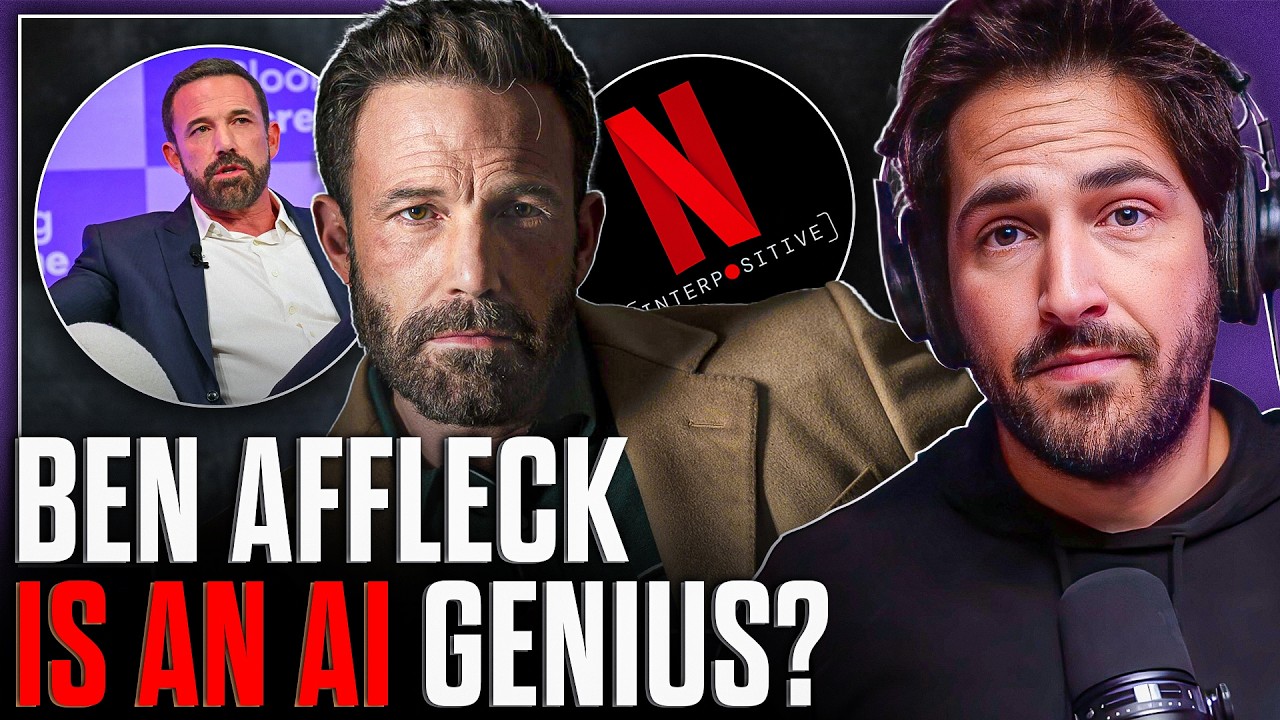
The fair critique, which we echo from Ben Affleck's comments on the Joe Rogan show, is that any tool trained on conventional story structure will pull toward the median. Asymmetrical work like Memento or Pulp Fiction does not come out of beat sheets. For YouTube verticals, episodic content, and any pipeline where volume matters more than originality, Fabula maps cleanly. For breaking the form, it is just the AI version of the screenwriting handbook.

What We Broke Down: Image Blaster's Single-Image 3D Pipeline

This was the segment that "blew my mind," in Addy's words. A developer named Nicholas Neilson released Image Blaster, an open-source toolkit that takes one input image and outputs a full navigable 3D scene with models, lighting, physics, and sound effects. The orchestration runs through Claude Code, with World Labs handling the 360-degree environment generation and fal.ai APIs hitting individual mesh and image generation models.

What ships with it:

  • A companion app for viewing and posing the generated objects

  • Built-in physics, so generated objects can be tossed around the scene and bounce off other geometry

  • Sound effect generation tied to object interactions

  • Open-source code, downloadable from the project repo

The practical angle: This is previs work for solo operators. Build the world in seconds, block the camera, then feed clean 3D-rendered passes into a video model for final pixel. The thesis we keep coming back to is that mid-2026, text-to-video alone does not give you the control real production needs. Traditional 3D control plus generative finishing is the workflow that actually clears the bar.

The bigger signal: A single developer shipping this with Claude Code, World Labs, and fal.ai is the more interesting story than any individual model release. The composability is what matters.

What We Debated: The Monet Test and Sony Xperia's AI Camera Mess

Two stories from the same week capture how audiences react to anything labeled AI, even when the label is wrong.

An X user (@dioscuri) posted a cropped image online and claimed it was AI-generated in the style of Monet, then asked commenters to detail what made it inferior to a real Monet. The replies poured in: harsh edges, no soft color blending, no symbiosis between elements, no sense of space, "borked nonsense." The image was a crop from an actual Monet. We previously covered the underlying research showing that viewers systematically downgrade aesthetic assessments of work labeled AI, regardless of what it actually is.

Sony Xperia walked into the same buzzsaw on purpose. The phone account launched its new AI Camera Assistant with a marketing post showing before-and-after photos where the "after" images looked dramatically worse: blown-out highlights, crushed shadows, the kind of overprocessed look that defines AI slop. The internet had a field day. The next day, Sony posted a clarification. We covered the walk-back: the feature does not actually edit photos after capture. It suggests four creative direction settings before the shutter fires. Auto-exposure with scene-aware suggestions, in other words. The clarification makes the feature defensible. The launch post had already tanked the perception.

The pattern across both stories: The AI label is now load-bearing on its own. The Monet test shows it negatively biases evaluation even on objectively skilled work. The Xperia launch shows that even useful features can read as slop when the marketing assets are wrong. For anyone shipping AI-assisted tools to creators, the lesson is that demos and copy matter as much as the tech.

The shift to watch: We see 2026 as a vibe shift, where most skeptics have moved from outright dismissal to wanting to understand what these tools actually do. The window for marketing AI features with carelessness is closing.

What We Questioned: Netflix Spins Up INKubator as an In-House GenAI Studio

The bigger institutional move is Netflix's. We previously covered INKubator, Netflix's new internal animation studio built around GenAI-native production pipelines. Most of what is publicly known has been pieced together from job listings: long-term technology strategy focused on "GenAI enabled workflows, artist tooling, and scalable, secure multi-show environments," with initial output aimed at animated shorts and specials using experimental GenAI-native pipelines.

What is significant about this: This is not a department inside an existing team. This reads as a full studio spin-up. Netflix already runs in-house production on a small percentage of its slate (Blue Eye Samurai is the example we keep returning to, with a reported $100 million-plus animation budget). INKubator looks structured to figure out the production methodology before pushing anything into the main streaming queue.

Why animation first: Animation is the easier proving ground for GenAI today. Live action carries more thorny problems (talent likeness, on-set capture, IP). But animation has its own AI-resistant challenges: squash and stretch, mouth exaggeration on dialogue, the kind of expressive performance that goes beyond puppeteering. Video-driven character control gets you a generic puppeted performance. Real animation needs training data and control surfaces that can exaggerate motion in service of a story beat.

The cost question driving this: If a series in the Blue Eye Samurai cost range can be made with a meaningful percentage of GenAI shots, the studio math changes. INKubator is where Netflix figures out that ratio.

What We Closed With: Disney's Muppet Mocap Animatronic

A small story that we couldn't not flag: Disney's rebrand of the Aerosmith Rock 'n' Roller Coaster into a Muppets attraction includes a new Scooter audio-animatronic, and the programming workflow is genuinely interesting. We covered the breakdown showing that Imagineering motion-captured a real Scooter puppet, performed by a human puppeteer, then mapped that mocap data onto the animatronic. The puppet wore a mocap suit and facial markers tracked the mouth and expressions.

The result is a permanent robot that carries the hand-driven performance characteristics of the original puppet. It is a clean example of using capture tech to preserve craft, rather than replace it.

Bottom Line: Specific Tools Are Winning, Marketing Is Still Hard

The episode's connecting thread is that specific, composable tools and methodologies are showing up faster than the audience and marketing layers can keep up.

  • Image Blaster shows what one developer can ship by composing Claude Code, World Labs, and fal.ai. The composability is the story.

  • DeepMind's Mouse Pointer and Fabula point at where Google is heading with two-way visual context and scaffolded creative tools. Useful for high-volume content; less useful for breaking the form.

  • The Monet test and Xperia's backlash show that the AI label is doing heavy lifting on its own. Viewers downgrade work labeled AI; bad marketing assets can sink useful features.

  • Netflix's INKubator is the institutional bet that GenAI animation pipelines are ready for a dedicated studio, starting with shorts and specials.

  • Disney's Muppet mocap is the counter-example: capture tech in service of preserving a craft performance, not replacing it.

The pattern: the tools are getting more useful and more specific, but trust and reception are still the harder problems to solve.

Tools & Platforms:

  • Image Blaster: Open-source single-image 3D pipeline using Claude Code, World Labs, and fal.ai

  • Fabula: DeepMind's Gemini-powered story-structure assistant (research preview)

  • Gemini AI Pointer: Google DeepMind's voice-plus-cursor interaction demo

Projects & Studios:

News & Analysis:

Reply

Avatar

or to participate

Keep Reading