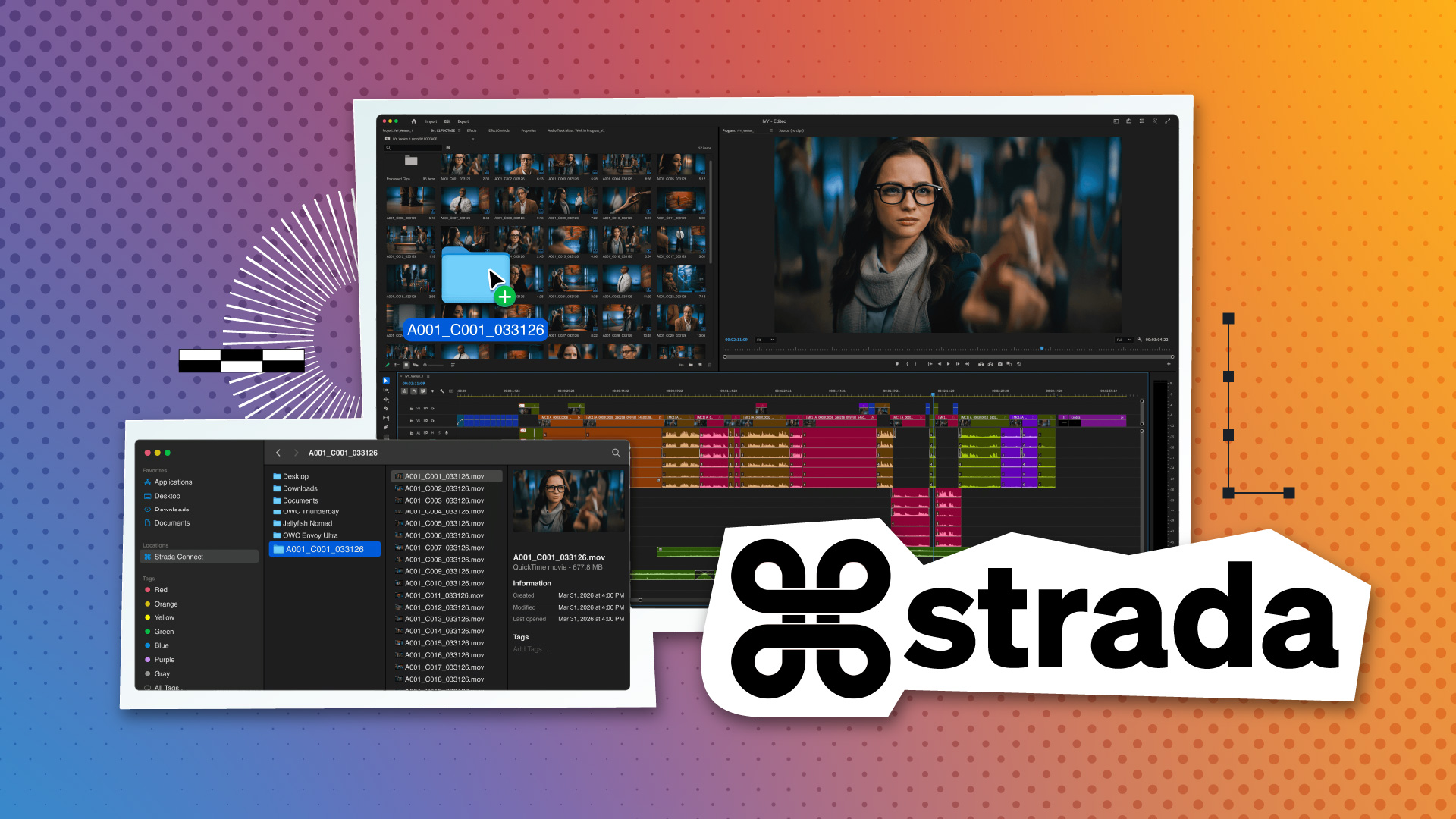
Strada has released Strada Connect, a peer-to-peer platform that lets distributed filmmakers open and edit large media files sitting on each other's local storage without pushing anything through a cloud bucket first. Remote drives mount as virtual local volumes, which means an editor in Los Angeles can pull assets off a DIT's camera card in Budapest as if the card were plugged into their own machine.

The launch continues Strada's effort to rethink how post teams share working footage. Founder Michael Cioni has been building toward a model where the cloud acts as a traffic signal rather than a warehouse, a thesis he walked through in his conversation with VP Land on media workflows and iPhone filmmaking.

How Connect Works

Connect sits on top of the same streaming foundation Strada introduced with its Agents product earlier this year. Agents installs a lightweight service on a local machine or NAS that exposes the contents of attached storage as a virtual drive to authorized users. Connect takes that architecture and points it outward, extending the virtual-drive model to collaborators working from separate locations, ISPs, and time zones.

Files never upload in the traditional sense. When a remote editor opens a clip, Connect streams the bytes needed for playback or scrub, caching locally as the session continues. The master asset stays on its origin drive. Our earlier coverage of how Strada Agents turns local hard drives into personal cloud storage breaks down the plumbing in more detail.

What It Replaces

For teams used to camera-to-cloud workflows, Connect offers a different tradeoff. Services like Signiant's direct-to-cloud camera ingest and LucidLink's expanded web and mobile access still rely on a central cloud tier that holds the active project. Connect skips that tier entirely. There are no per-gigabyte transfer fees, no monthly storage charges tied to project size, and no sync step where someone waits for a 2 TB offload to finish before cutting.

The tradeoff is that the origin machine has to stay online and reachable during the collaboration window. For productions with always-on NAS gear or a dedicated ingest station on set, that is a familiar condition. For a solo operator running a laptop in airplane mode between flights, it is not.

Who It's For

Strada is aiming Connect at small and mid-size productions, documentary crews, agencies, and post houses that move working footage between a handful of specialists rather than hundreds of seats. The pitch lines up with what the company previewed ahead of NAB, which VP Land covered in our pre-show roundup alongside new camera tech and workflow tools from other vendors. Cioni also demonstrated the Agents architecture on the show floor at NAB 2025, which is the direct technical lineage for what Connect now exposes.

Pricing is structured around the number of connected agents and concurrent collaborators rather than storage volume. That inverts the usual cost curve: a team cutting a 10 TB feature pays the same as one cutting a 500 GB short, provided the seat count matches.

Reply

Avatar

or to participate

Keep Reading