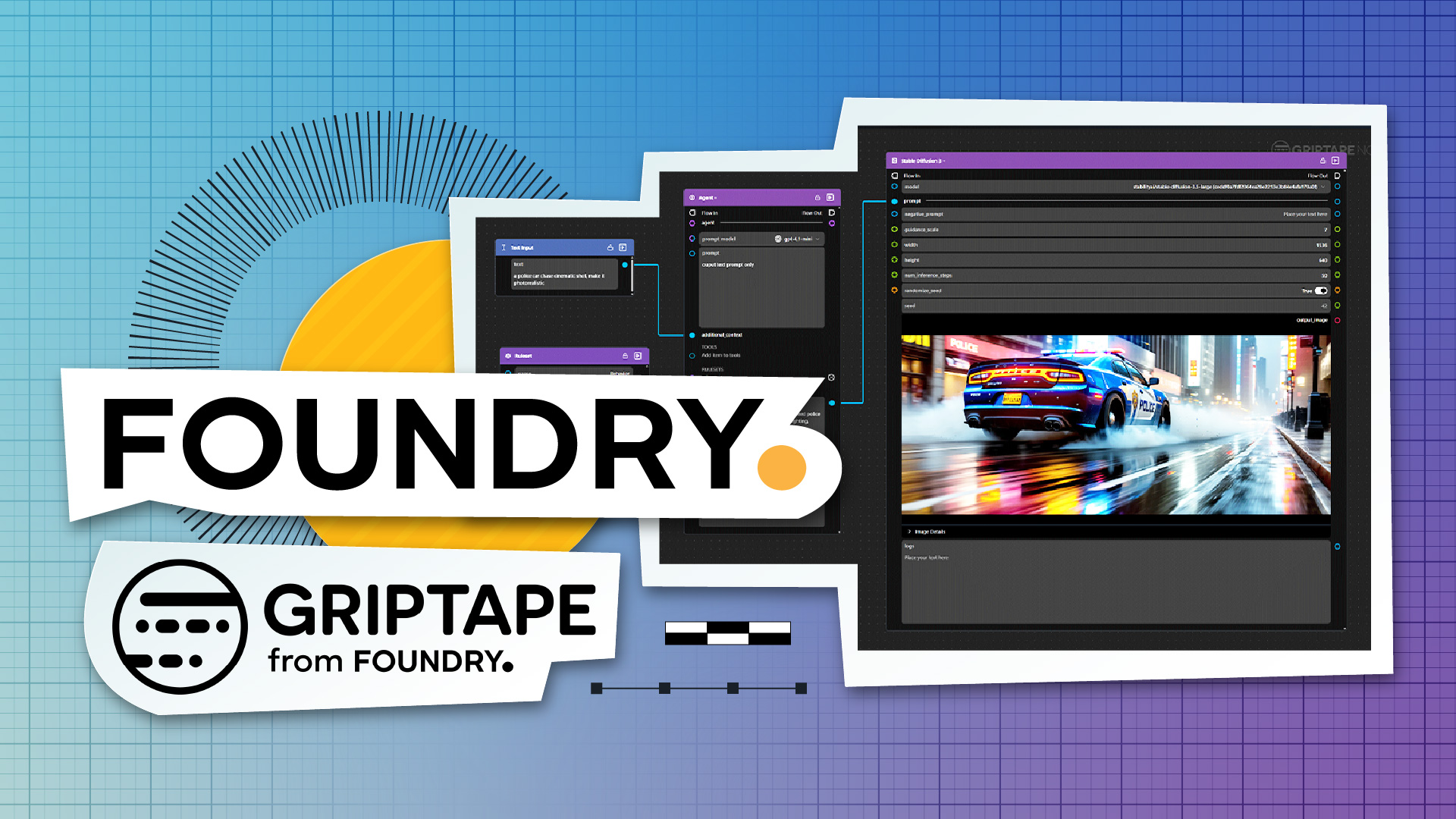
Unlike conversational AI interfaces, Griptape enables creation of autonomous agents that can support complex tasks within the platform and across the broader pipeline—a critical distinction for production environments where workflows need to be repeatable, auditable, and integrated with existing tools.
Foundry's AI Strategy Evolves
This acquisition represents the next phase of Foundry's AI roadmap. The company began investing in AI and machine learning in 2021 with the release of CopyCat, an AI-powered feature within its creative tools. That was AI inside individual applications. Griptape represents AI orchestration across entire pipelines.
Foundry will integrate Griptape with Nuke, the industry-standard compositing software used in virtually every major VFX production. This integration is significant: it means the company that owns your compositing software will also control how AI models communicate with each other in your pipeline.
"We are building the AI-first pipeline of the future—and Griptape is a critical piece of that foundation to accelerate our roadmap," said Jody Madden, CEO of Foundry. "By bringing Griptape into Foundry, we can provide the tools our customers want to realise their creative vision more efficiently, while retaining control."
What This Means for Studios
The acquisition reflects a broader industry shift: studios are moving from asking "should we use AI?" to "how do we manage multiple AI models securely?" Griptape's open-source Python framework and visual interface address both technical teams and artists, reducing the barrier to building AI-driven workflows without requiring deep machine learning expertise.
For VFX and animation pipelines specifically, the ability to orchestrate multiple models within a single, auditable framework addresses production realities: security requirements, integration with existing render farms and production management systems, and the need for repeatable, traceable workflows.
"Foundry is the natural home for Griptape," said Kyle Roche, Founder and CEO of Griptape. "Their deep history in VFX and Animation combined with their industry-leading products provides the perfect platform to scale our technology and reach every major studio globally."
The Broader Picture
This acquisition is part of a larger consolidation trend in AI tooling for creative industries. We previously covered Adobe's acquisition of Invoke, which followed similar logic: control the infrastructure that connects creators to AI models.
The difference with Foundry is scale and entrenchment. Nuke is not a new tool—it's the established standard in VFX pipelines globally. Integrating AI orchestration into Nuke means studios won't need to adopt a separate platform; they'll orchestrate AI within the tool they already use daily. That's a significant competitive advantage and a meaningful shift in how AI will be deployed across production pipelines.
Foundry has also previously explored the VFX-to-virtual production boundary with Nuke Stage, signaling the company's broader strategy to position Nuke as the central hub for both post-production and real-time workflows. Adding AI orchestration to that ecosystem reinforces Nuke's role as the connective tissue in modern production pipelines.
What Happens Next
Foundry will continue developing Griptape's open-source framework while integrating it with Nuke and other Foundry products. The company has not announced specific timelines for Nuke integration or pricing models for enterprise deployments.
For studios already running Nuke, the acquisition means AI orchestration capabilities will arrive inside workflows they already use daily—without adopting a separate platform. Foundry has been building toward an AI-first pipeline since 2021; Griptape is the piece that connects the models to the work.