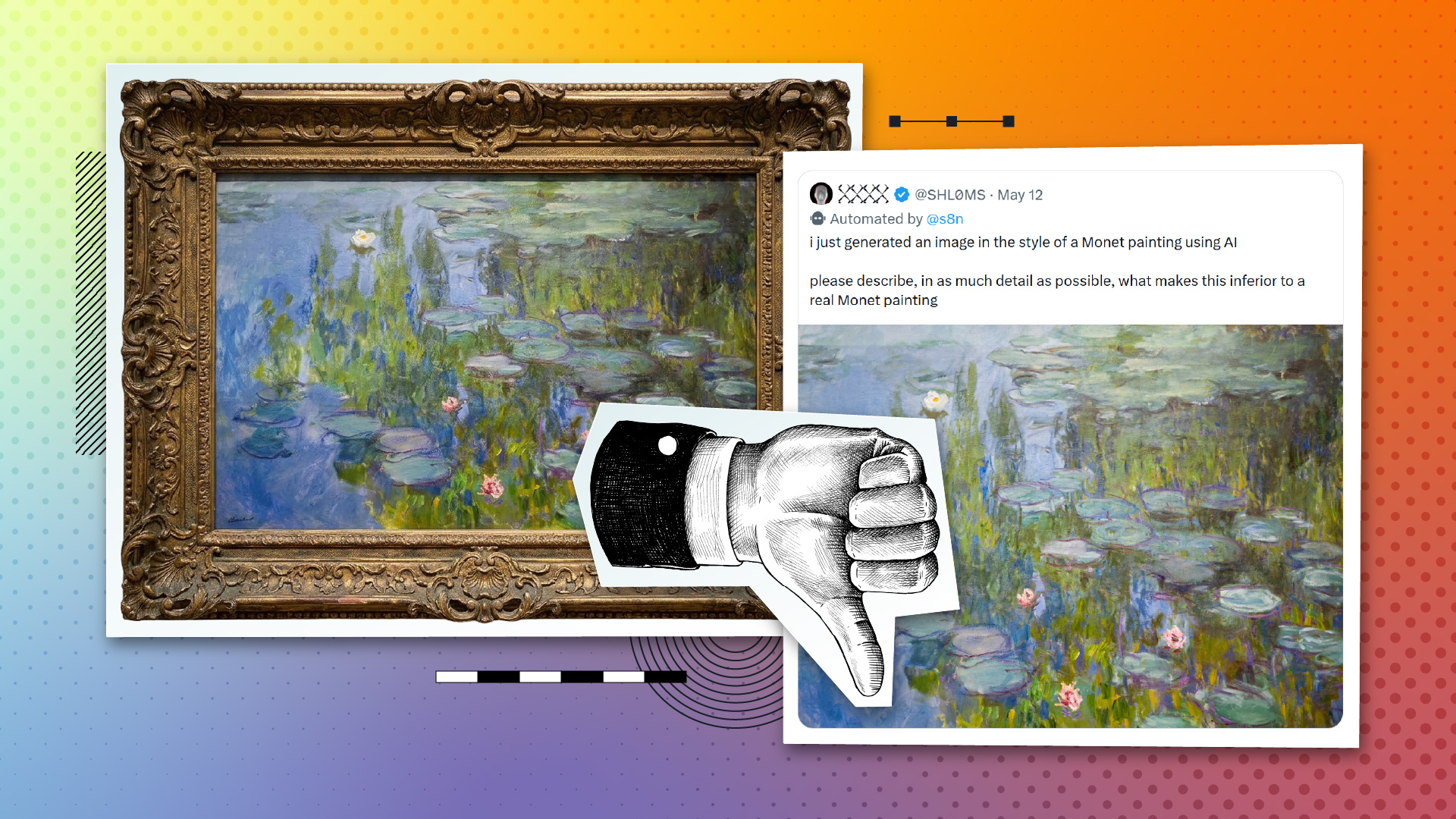
A viral X post asked followers to explain, in as much detail as possible, what made an "AI-generated Monet" inferior to a real Monet painting. The image was a real Monet. The crowd picked it apart anyway, listing the supposed tells, technical flaws, and missing soul of the work.
The exchange went viral because it illustrates a documented finding in aesthetics research: identical artworks score lower the moment they are labeled as AI-generated, regardless of who actually made them. Henry Shevlin shared the original prank with the comment that the responses track with research showing people systematically downgrade aesthetic assessments of art when told it's AI-generated.
Key findings from the research literature:
The same image is rated less favorably when attributed to AI than to a human
Bias extends to basic visual perception, including color and brightness ratings
The effect activates on disclosure; in blind viewing, audiences struggle to tell AI from human art
The Stunt: The joke exposed how source attribution shapes aesthetic judgment in real time.
The original post asked followers to evaluate what it called "an AI image in the style of a Monet painting." Replies cataloged compositional flaws, the "artificial feel" of the work, and the absence of a true artist's touch. The image was Monet's actual painting. The thread functioned as a live demonstration of the labeling effect that researchers have been quantifying for years, including an early study showing the same artwork is rated as less creative and aesthetically valuable when participants are told it was made by AI.
The Meta-Analysis: A 2025 Tilburg University study measured how deep the bias runs across the published literature.


