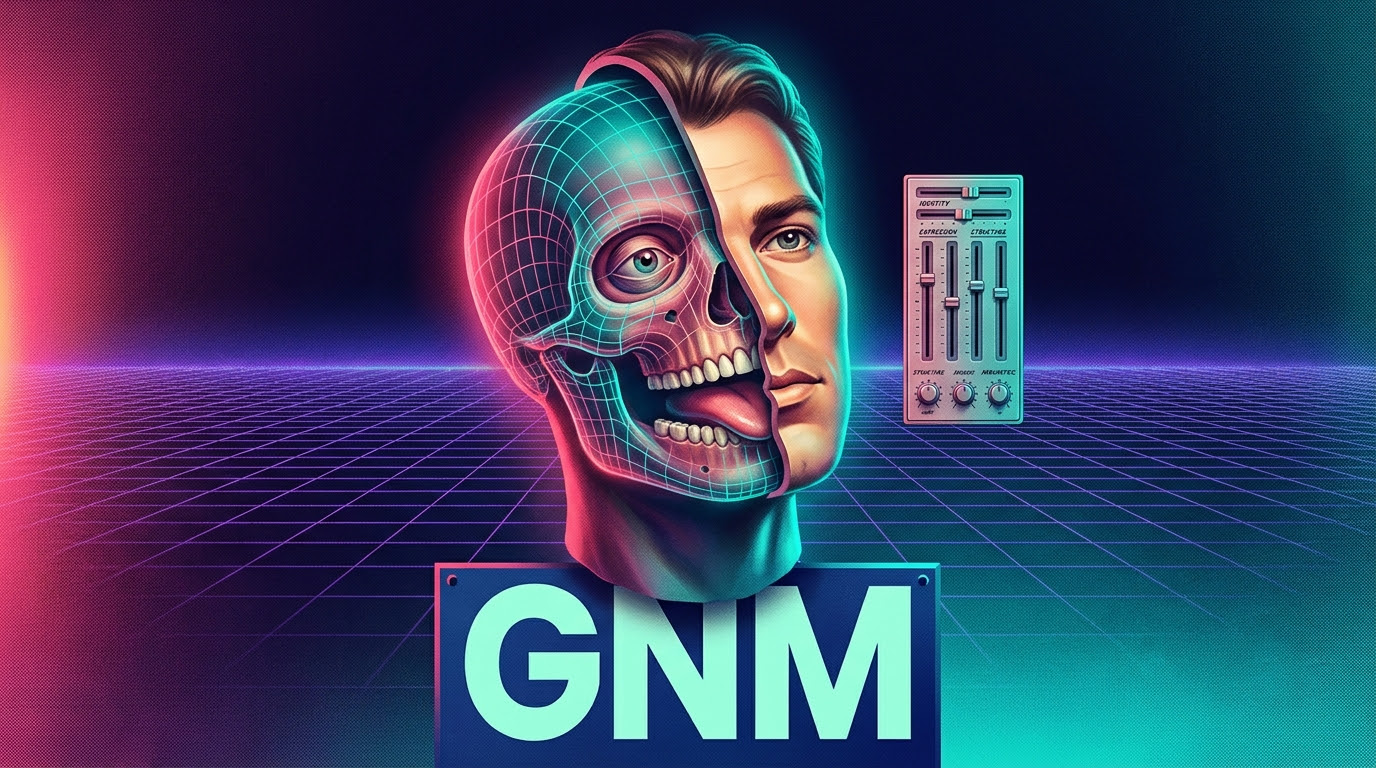
The model generates male and female heads across a range of ethnicities, and it exposes internal anatomy that most face rigs leave out. Controllable eyeballs, teeth, and a tongue matter for close-up character work, dialogue, and any shot where the inside of the mouth reads on camera.
This is a statistical model, not a generative AI tool. It produces heads by sampling learned parameters from scan data, which keeps the output anatomically consistent and directly editable instead of hallucinated.
Apache 2.0 and four-framework support make it pipeline-ready
The license is the part that changes who can use it. GNM Head ships under Apache 2.0, which covers both non-commercial and commercial use, so a studio or a tool vendor can build it into a shipping product without a research-only restriction.
It also supports the frameworks technical artists and researchers already work in: NumPy, JAX, PyTorch, and TensorFlow, plus semantic parameter sampling. That range lets teams drop the model into existing character or perception pipelines rather than rebuilding around it.
Meta made a comparable move when it open-sourced MHR, its parametric human model, alongside SAM 3D. GNM Head narrows that idea to the head and pushes far deeper on facial control.
A free Blender importer already puts GNM Head in artists' hands
Community tooling arrived with the model. Nathan Dickson, a rigging lead whose credits include the Student Academy Award-winning short "Student Accomplice," released a free GNM Head Importer for Blender 5.1 and up. The add-on exposes sliders for ethnicity, gender, and expression with a live viewport update.
A Houdini path is in progress as well. David Eschrich, Global Head of 3D at Zoic Studios, built a GNM Head digital asset, though it was not publicly available at launch.
Open-source graphics tooling like this has become a recurring thread; we covered the ASWF Open Source Days schedule, where Blender and OpenPBR work shared the stage.
The head is the first model, with a full human suite on the roadmap
GNM Head is the starting point, not the whole plan. Google positions GNM as an open ecosystem of parametric human models and perception stacks, and the project describes a roadmap that "includes releasing a comprehensive suite of statistical models complemented by perception and analysis technology." Google Senior Research Scientist Stylianos Ploumpis confirmed further releases are coming but said the company could not yet say what or when.
Google was direct about the model's limits. The current training data uses binary gender categories and four broad demographic groups, and the company acknowledged it "does not fully represent the spectrum of gender identities or the full diversity of the global population," with a detailed report promised.
For VFX and virtual production teams, an Apache-licensed, scan-based head model with this depth of control is a usable building block for digital humans, background crowds, and avatar systems, and it is available on Google's GitHub repository.