GENERATIVE AIfal Worlds Is fal's New Platform for Directing AI-Generated Worlds in Real Time
VP LandOct 25, 2026 · 3 min read
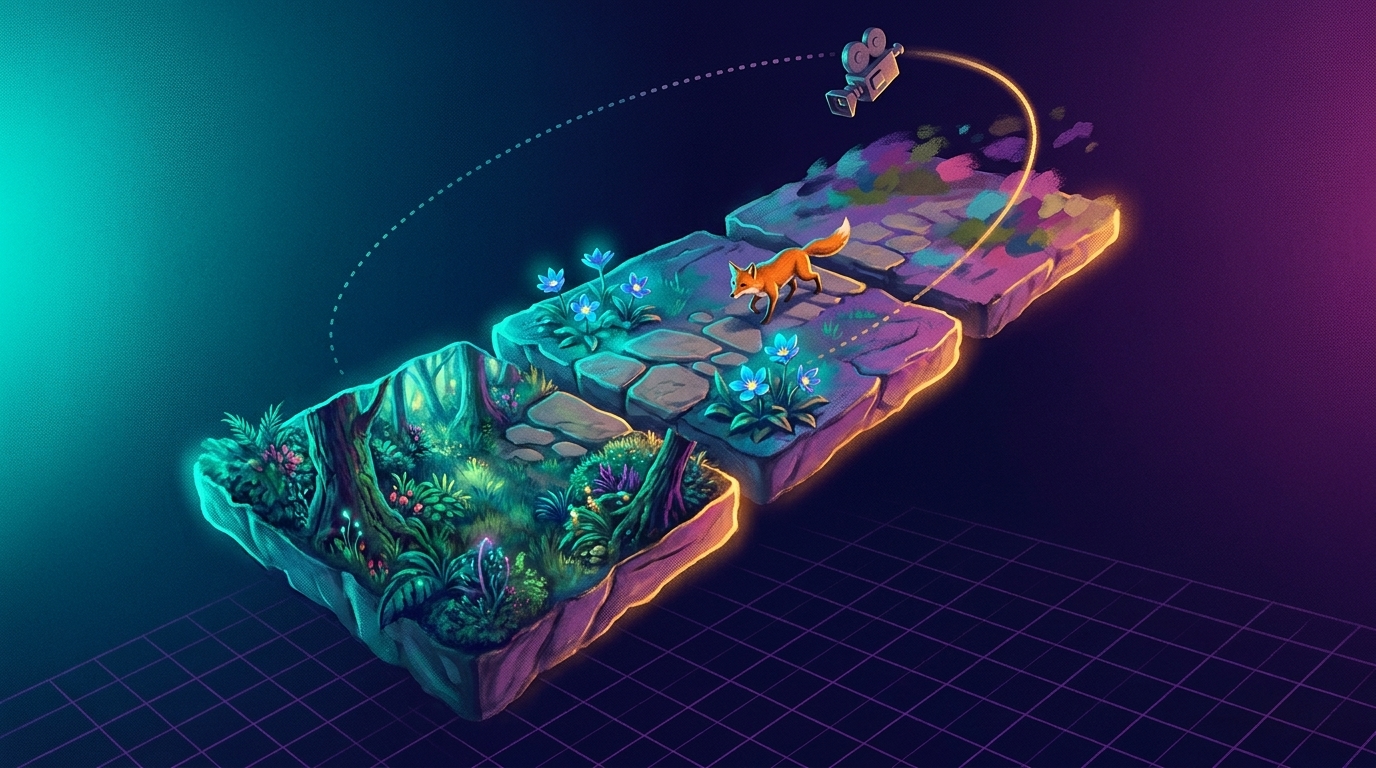
fal launched fal Worlds, a platform where users direct scenes and explore AI-generated environments that respond to their actions in real time, using world models from several companies. Creative teams can steer live-generated video from one page, and fal's material describes the output as streamed video, with no mention of exported 3D geometry.
- Four models listed. The Worlds page lists H3 Max Director, which extends H3 Max, fal's post-trained variant of MiniMax H3, plus H3 Max Reference Director. It also lists Lingbot World 2 from Robbyant and Abot World from Alibaba.
- Two control styles. The Director models take prompts and references, and Reference Director is built around image references. Lingbot World 2 and Abot World are listed with movement and camera controls.
- A dedicated inference engine. fal says Worlds runs on its World Model Accelerator. The company describes it as purpose-built for world models, with low-latency inference and real-time streaming.
- H3 Max Director predates the platform. The model already powers fal.live, fal's experimental AI livestream, and developers can call it from their own apps.
- Director sessions are capped. Public H3 Max Director sessions run up to 2 minutes. Longer sessions are being enabled gradually for approved use cases.
Worlds lists prompt-directed and camera-controlled world models on one page
The fal Worlds page carries the labels walkable, directable, and explorable, and lists four models:
- H3 Max Director (fal). Directs a continuous world with prompts and references.
- H3 Max Reference Director (fal). Directs a world guided by image references and prompts.
- Lingbot World 2 (Robbyant). Explores interactive worlds with movement and camera controls.
- Abot World (Alibaba). Explores interactive worlds with movement and camera controls.
fal's listing for its World Model Accelerator describes deploying a Python WebRTC app and connecting through the fal playground or a browser application.
Interactive world models have also reached the public through Google's Project Genie, which lets anyone explore AI-generated worlds.
H3 Max Director streams video you can redirect mid-session, with a 2-minute public cap
According to fal's H3 Max Director page, the model generates one unbroken video stream and holds its context over time. You send new directions while it runs instead of between clips.
The page lays out how a session works:
- Session setup. A session is a WebRTC peer connection. The first message sets the world prompt, 480p or 768p resolution, and a 16:9, 9:16, or 1:1 aspect ratio, all fixed for the session.
- Segments. Segments run 10 seconds by default and can be set from 5 to 15. Each segment continues from the last one.
- Memory. The model keeps 12 prior segment prompts by default, up to 50. fal says a higher setting holds a longer story, and a lower one lets the stream turn more sharply on each direction.
- Audio. Director generates 32 kHz audio in the same pass as the 24 fps picture, and the audio arrives on its own live track.
fal claims that faces, wardrobe, geography, and the running plot survive directions that change the scene entirely.
fal's page lists $0.08 per second of generated video as the list price that followed a launch discount, and every session bills a 60-second minimum. Sessions open from the client that plays the stream, which in practice means a browser and fal's JavaScript client, with a backend hosting the proxy that keeps the fal key off the page.
fal points to voting livestreams, branching games, and voice direction as uses
fal's reference build is the fal.live livestream, where every channel is a single H3 Max Director session. Viewers vote on what happens next, and the model receives the winning option while the current scene is still playing. fal says one session serves a channel's whole audience.
The Director page also cites these patterns:
- Games. Offer a choice and send the selected option as the next direction. The branch lands as the next beat of the same scene.
- Live commerce. A host can work audience questions into the broadcast while it runs. Viewers can push prompts or images that change what is on screen.
- Voice. Directions are plain text, so speech-to-text can drive the stream. fal notes that the featured voice prototype, built by @OdinLovis, ran on a modified Director build rather than the public endpoint.