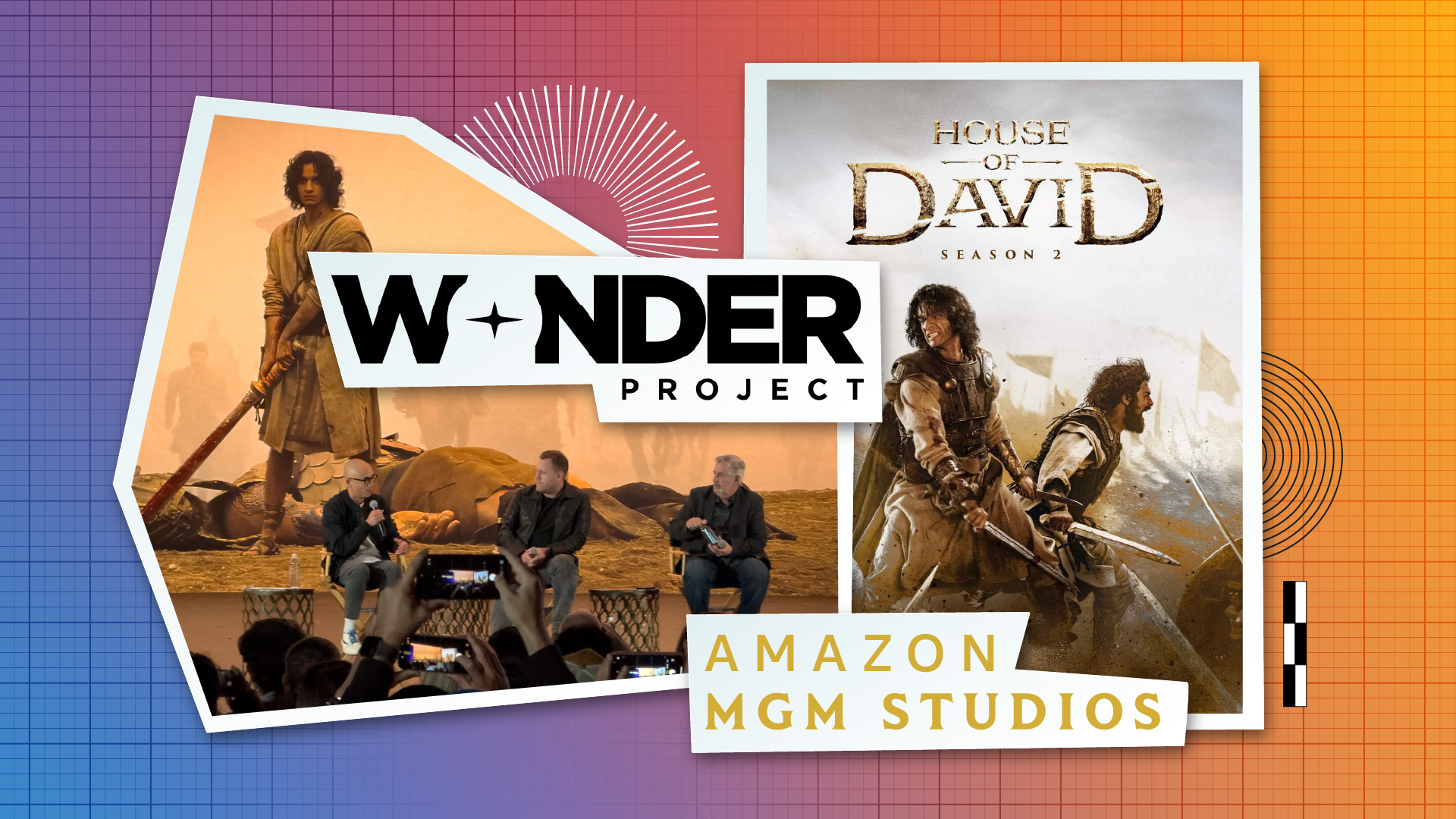
Close-ups of horses charging past the lens - AI, based on show assets but too dangerous to film practically
Wide battle shots - Blending practical extras with AI-generated crowds
Smoke and fire effects - Notoriously difficult for AI but improving rapidly
Erwin called out elements as shots flashed across Stage 15's massive screen, demonstrating how thoroughly integrated the techniques had become. Many shots layered traditional VFX on top of AI-generated bases, or vice versa, creating a fusion that played to each technique's strengths.
The production also tackled virtual production asset creation—generating over 150 shots worth of environments for LED wall backgrounds. According to del Conte, traditional Unreal Engine environment builds typically require 10-12 weeks and cost between $15,000 to $200,000. The team discovered they could build structural bones in Unreal within a week, then use AI to add photorealism through style transfers, dramatically compressing both timeline and budget.
The normal blockers—the cost and the time it takes to build an environment—are going to fall away very quickly.
Chris del Conte
From Cave Paintings To Cinema-Ready
The trajectory Erwin demonstrated at the Culver Cup illustrated how rapidly the technology evolved. In June 2024, early test generations looked rough—useful perhaps for distant background elements on LED walls, but nowhere near final quality. By September 2024, the team began successfully upscaling AI content to 4K HDR for Season 1's Goliath origin sequence, a mythological backstory that played to AI's then-limitations with slow-motion, ethereal imagery.
Season 1 used AI selectively for 73 shots, primarily in sequences where the technology's characteristics fit the creative intent. Season 2 planned AI integration from the start, allowing the production to generate what Erwin calls "new principal photography"—a digital second unit running parallel to live-action shooting.
For every VFX shot in the show, we're generating 20 times that.
Jon Erwin
The production generates batches of AI content and gives it to editorial to sift through, similar to traditional footage. Only shots that make the cut get upscaled to final quality and integrated with additional VFX work as needed.
Tools, Training, And The Daily Grind
Erwin's path to AI integration began with curiosity about tools his production designer was using during Season 1 filming in Greece. Within 30 minutes of sitting down to learn the basics, he felt the same excitement as holding his first camera as a young filmmaker.
I called every lawyer at Amazon and just bludgeoned them until they said yes.
Jon Erwin, on getting approval for AI-generated shots
The legal and technical challenges required proving visual chain of title (similar to script copyrights) and developing reliable upscaling pipelines to 4K HDR.
The production stacks multiple AI tools together—Erwin mentioned Midjourney, Runway, Kling, Magnific, and Topaz in various contexts—combined with traditional VFX tools like Adobe After Effects and Unreal Engine. No single tool provides broadcast-ready results alone, but stacking them creatively achieves what Erwin calls "superpowers."
What I've learned is that the amount of time you put in matters. A lot of people wish to win, very few have a wish to prepare to win.
Jon Erwin, quoting Bear Bryant
The discoveries that went into Season 2 came from the team training together daily, treating AI like stunt performers who drill constantly before applying skills to productions.
The Democratization Promise
For Erwin, whose career began as a freelance camera operator at age 15 (he neglected to mention his age to ESPN at a University of Alabama football game), the parallels to digital camera democratization are obvious. The RED ONE camera and similar tools allowed filmmakers outside traditional production centers to compete at professional levels.
My last name's not Nolan or Favreau. But I can't wait to see [AI performance capture] being democratized to where emerging filmmakers can access scope and scale and their imagination is really the only limitation.
Jon Erwin
He envisions filmmakers shooting in rehearsal spaces with iPhones, piloting digital assets that provide cinema-scale production value—essentially making films before greenlight to de-risk productions and arrive on set fully prepared.
Del Conte shares the optimism about expanded access:
Shows that may have a limited budget, and these days every show has a limited budget, can now make that work and get more content on screen.
Chris del Conte
The production employed 600 people on "House of David" at a budget Erwin describes as "pretty night owl" compared to what others thought possible for the show's scope. AI didn't replace crew—it enabled the production to say yes to more ambitious storytelling.
The Bleeding Edge Continues
The Culver Cup showcase—moderated by Nikao Yang from AWS Startups—served as both a technical demonstration and a signal to the AI startup community in attendance. Following Erwin and del Conte's presentation, a second panel featuring founders from Luma AI, Krea, and Hedra explored what comes next for generative tools in production.
Both seasons of House of David are now streaming on Wonder Project, the faith-based and inspirational content service that launched October 5, 2025, on Amazon Prime Video for $8.99/month. The service was co-founded by Erwin and former YouTube and Netflix executive Kelly Merryman Hoogstraten.
Erwin acknowledges the road ahead remains uncertain:
Based off last year, I don't even know if there's any way to predict where the world's going to be in 18 to 24 months in our industry. But I can guarantee you it'll be exciting.
Jon Erwin
For filmmakers considering AI integration, his advice centers on replacing fear with curiosity: "Learn everything you can. I don't have time not to." And for Amazon MGM Studios, the willingness to let a production "bleed on the bleeding edge" provided the test case proving AI can integrate into commercial production at scale—253 shots at a time.