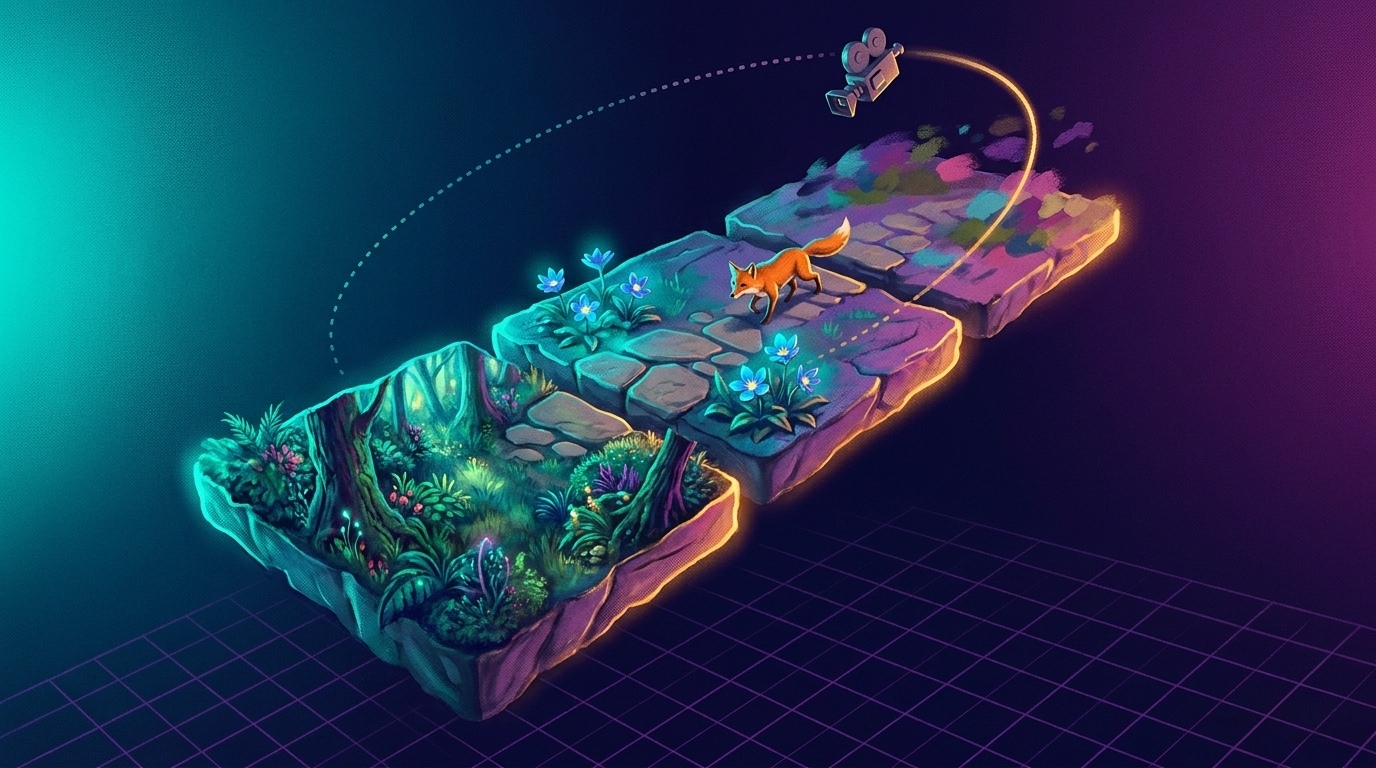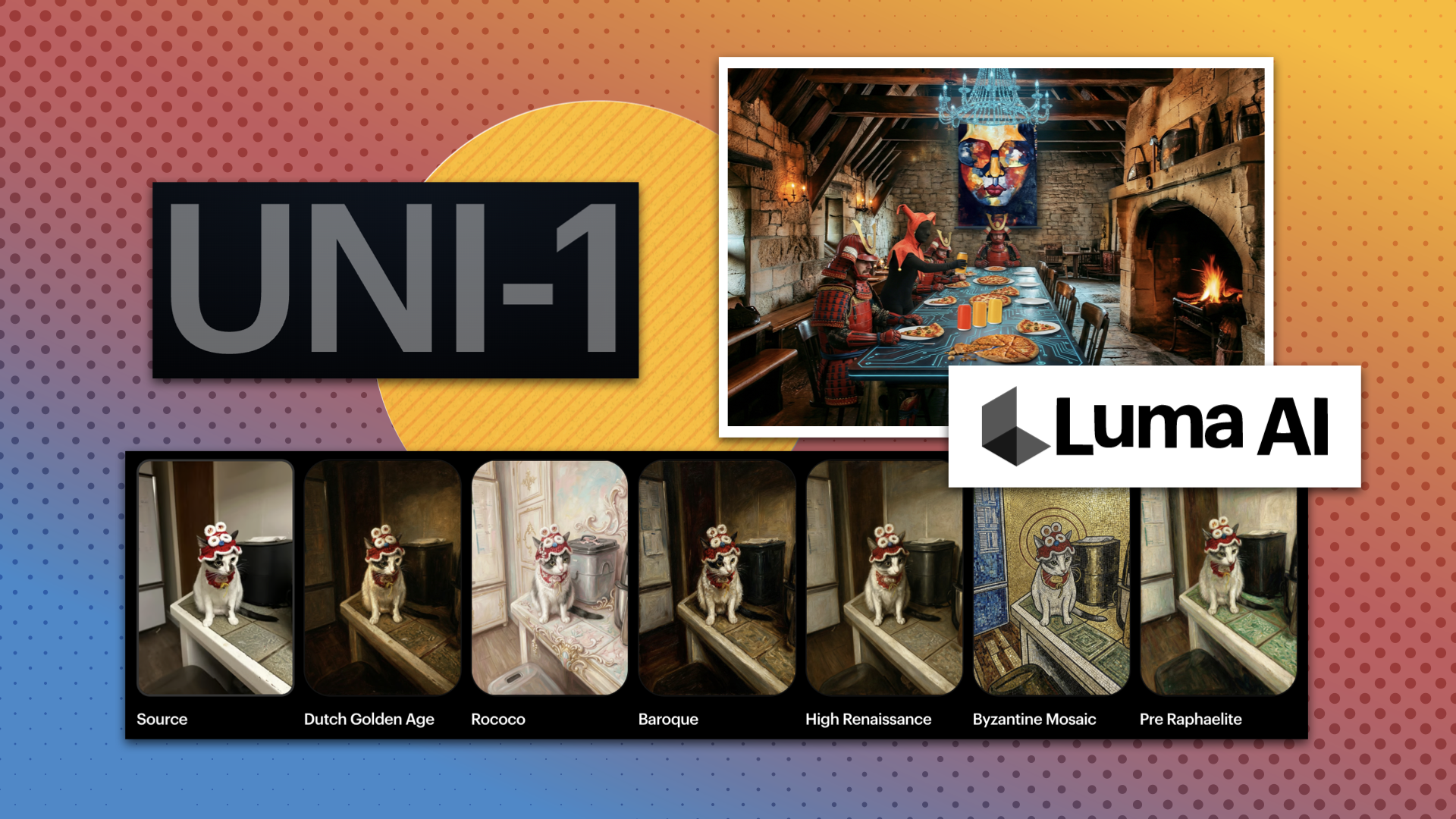
Luma Labs launched Uni-1, their first unified understanding and generation model, combining understanding and generation in a single model for the first time. Rather than separating the tasks of understanding images and generating them, Uni-1 combines both in a single decoder-only autoregressive transformer. The result: a model that thinks and renders in the same forward pass.
The architecture enables structured reasoning before and during image synthesis. Uni-1 represents text and images in a single interleaved sequence, acting as both input and output. This unified approach achieves leading performance on RISEBench (Reasoning-Informed Visual Editing) and ODinW-13 (open-vocabulary dense detection). CEO Amit Jain describes the capability as enabling models to "think in language and imagine and render in pixels or images," which Luma calls "intelligence in pixels."
Luma's journey has been linear: scene reconstruction, then 3D generation, then video diffusion. Uni-1 is the next step. As the company notes in their announcement, "generation without understanding has a fundamental ceiling." This model removes that ceiling by building understanding directly into the generation process.
Thinking and Rendering: How Uni-1 Works
The architecture is a decoder-only autoregressive transformer that represents text and images in a single interleaved sequence. Uni-1 can perform structured internal reasoning before committing to visual output. This means the model doesn't just generate pixels. It reasons about what should exist in a scene, how elements relate spatially and temporally, and what cultural context matters.
The model demonstrates three core capabilities:
Intelligent: Common-sense scene completion, spatial reasoning, world knowledge, and the ability to research and present information