Nuke Stage Is Coming to macOS With Genlock Across Macs and iPhones, Plus $499 Education Licenses
VP Land
Nov 10, 2026 · 3 min read
Foundry announced it is bringing Nuke Stage to macOS, adding Apple ProRes support plus genlock and synchronization across multiple Mac render nodes and iPhones, with early access expected in 2027. Foundry is aiming the change at individual creators, students and large-scale studios, giving Mac-based teams a way to run in-camera visual effects (ICVFX) playback from Apple hardware, and is adding discounted education licenses for qualified institutions.
macOS early access is expected in 2027. Studios can try Nuke Stage through Foundry's self-serve trial while they wait.
Genlock reaches M5 Pro and M5 Max Macs. Foundry names the MacBook Pro with M5 Pro and M5 Max and the Mac mini with M5 Pro.
Qualified institutions get a $499 education bundle. One Nuke Studio license plus one Nuke Stage Render node costs $499 / £305 / €370 per collective seat, billed annually.
DMX lighting and output mapping target faster stage setup. Enhanced metadata tracking also records on-set creative decisions.
Mac render nodes and iPhones will sync on the same Nuke Stage setup
Foundry's Nuke Stage software is an end-to-end virtual production and ICVFX tool that plays back photorealistic environments onto LED walls in real time.
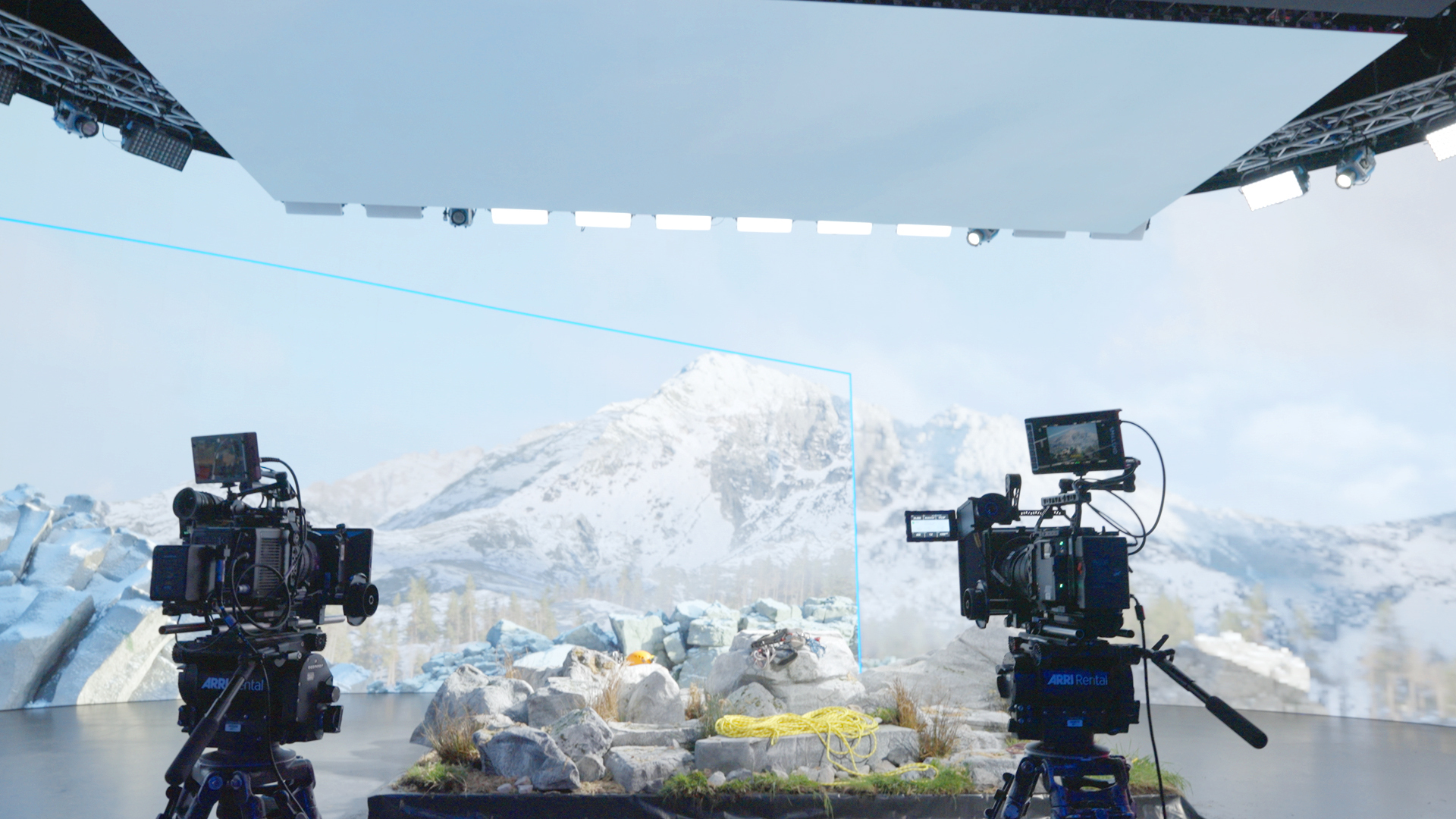
Two cinema cameras face a mountain environment displayed on a virtual production stage. Image: Foundry
It combines media-server playback with visual effects creative control, and Foundry emphasizes fidelity, color and creative control for in-camera finals.
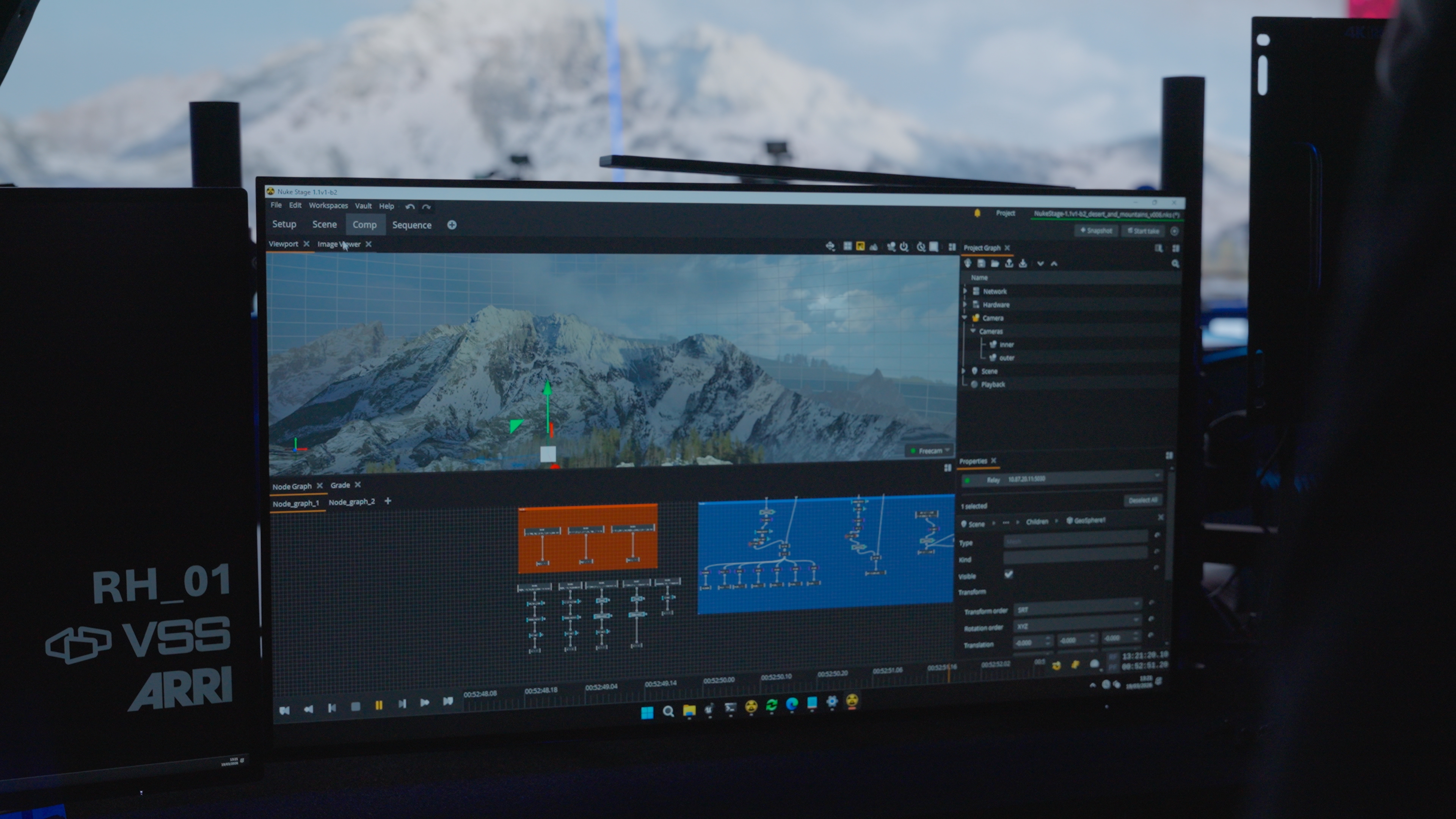
Nuke Stage displays a mountain environment above its node-based controls on an on-set monitor. Image: Foundry
On macOS, teams will be able to work with Apple ProRes and run genlock and synchronization across multiple Mac render nodes and iPhones.
Foundry names the MacBook Pro with M5 Pro and M5 Max as supported genlock hardware.
"Bringing Nuke Stage to the Mac makes small-scale ICVFX technically and financially feasible for a much wider range of productions," said Christy Anzelmo, Foundry's Chief Product Officer.
Anzelmo said Nuke Stage "was designed to work across a wide range of hardware configurations," and that macOS support lets studios build "connected content creation, ICVFX, and compositing pipelines across the Nuke ecosystem."
On the compositing end of that ecosystem, Foundry's Nuke 17.0 release added native Gaussian splat support and a USD-based 3D system.
Ahead of early access, developer Foundry is taking registrations for updates on the Mac release.
A $499 education bundle pairs Nuke Studio with a Nuke Stage Render node
Foundry is offering discounted Nuke Stage education licenses to qualified institutions. Each collective seat bundles one Nuke Studio license and one Nuke Stage Render node for $499 / £305 / €370, billed annually.
Nick Jushchyshyn, a program director at Drexel University, said virtual production lets students be imaginative in their filmmaking whether or not they can shoot on location.
He added that "Nuke Stage dramatically simplifies virtual production workflows," and that students "will be able to gain practical experience."
DMX lighting control and output mapping target faster stage setup
Alongside the platform and licensing news, Foundry detailed three Nuke Stage feature updates:
DMX lighting support. Crews can remotely control multiple light fixtures from a single console, switch between modes and make precise changes to specific LED fixtures, as GFXspeak reported.
Output mapping. A new mapping system defines where content renders on the wall, which Foundry says makes setup and shoot preparation quicker.
Metadata tracking. Enhanced tracking is designed to ensure every on-set creative decision gets recorded.
Prime Video introduced Prime 360, an AI-powered virtual camera system that reconstructs recorded basketball action as a 3D scene and shows replays from angles its physical broadcast cameras can't capture. Virtual view…
Chris Nichols captured a crumbling, abandoned house in Northern California's Gold Rush country on an Alexa 35, rebuilt it as a relightable Gaussian splat, added a second story it never had, and set the whole thing on…
Volinga has added 4D Gaussian Splatting support to its Unreal Engine workflow, letting animated splat captures play back in real time inside the engine.