GENERATIVE AIQwen Image 2.1 Launches With Native Transparent Layers and Multi-Reference Editing
VP LandSep 21, 2026 · 2 min read
Qwen Image 2.1 launched as an open-weight image model that combines image generation and editing with native RGBA output, subject extraction, and transparent-layer revisions. Native alpha channels could reduce the masking or background-removal work needed before using generated assets in compositing, production design, or storyboards.
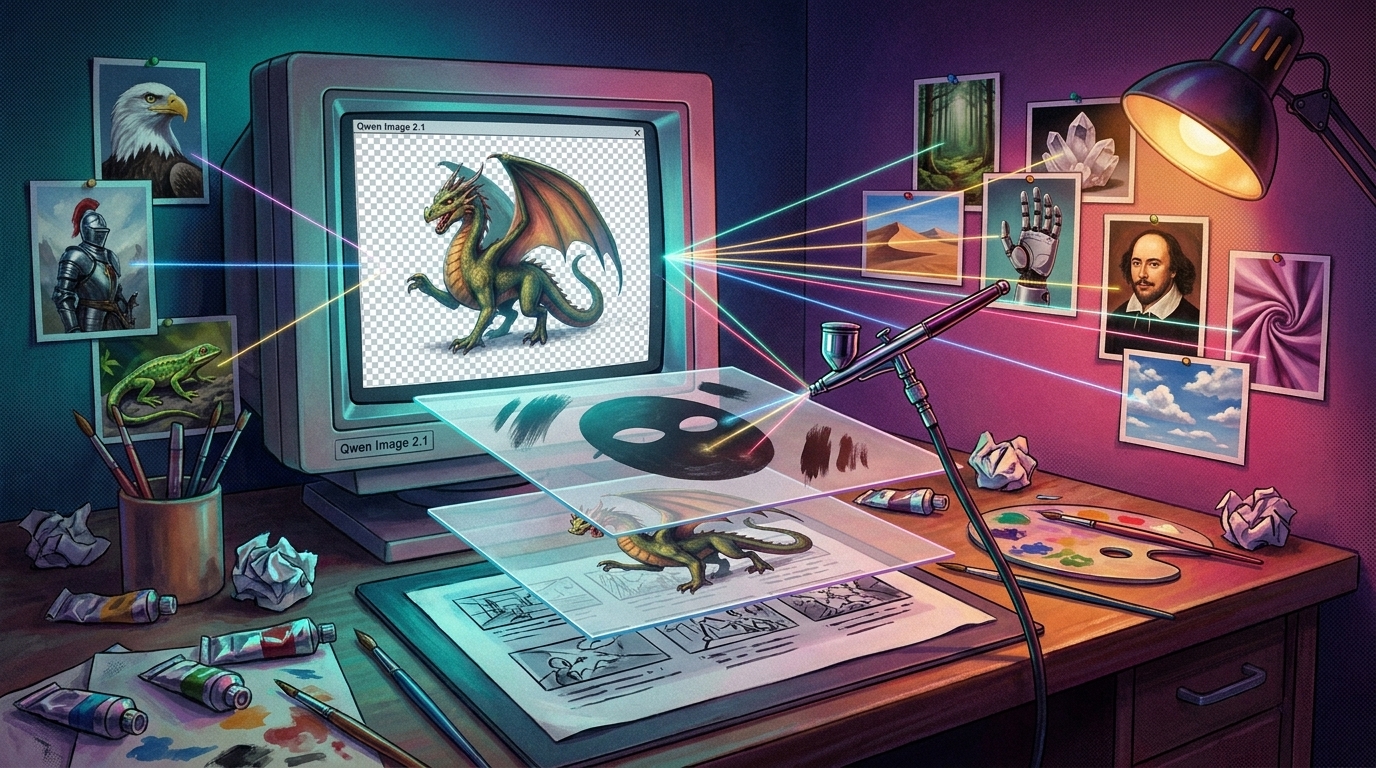
- Transparent assets are native to the model. Qwen Image 2.1 can generate RGBA images, extract subjects from RGB images into transparent layers, and edit text inside those layers.
- Up to 10 reference images can guide an edit. Qwen says the model can preserve portraits and products, which could support character, product, wardrobe, and visual references across related images.
- Generation and editing share one model. The model supports new images, local revisions, subject extraction, and reference-guided work.
- The visual generation component has 7 billion parameters. Qwen has released the model weights and resources through GitHub and Hugging Face.
Native RGBA output could reduce masking and extraction work
Qwen Image 2.1 can create images with red, green, blue, and alpha channels, giving the generated subject a transparent background. It can also take an existing RGB image and extract its subject into an RGBA layer.
That could reduce the masking or extraction work required before adding a generated prop, wardrobe concept, character element, or title treatment to a layered composition. Qwen also says the model can edit text within transparent layers, which could help artists revise graphic elements while preserving transparency.
The release expands on the layer-focused workflow in our Qwen Layers roundup. Qwen Image 2.1 combines transparent generation, extraction, and editing within the released model.
Ten references and local controls expand guided image editing
Qwen Image 2.1 accepts up to 10 reference images for generation or editing. In its model announcement, Qwen presents that capacity alongside claimed portrait and product preservation, which could support storyboard panels, product concepts, virtual try-ons, and related design variations.
The model also supports circle, paint, and mask guidance for local changes. An artist can indicate the region targeted for revision instead of specifying its location only through text.
Qwen attributes faster multi-image editing to mixed-granularity attention and reuse of the model’s key-value cache. The company also lists panoramas, infographics, virtual try-ons, and storyboards among the model’s supported outputs.
The preservation and performance statements come from Qwen. Independent production testing would be needed to establish how consistently the model maintains subjects and design details when using larger reference sets.
Model weights and resources are available through public repositories
Qwen released model resources through the Qwen Image GitHub repository and Hugging Face. Its visual generation component uses 32 Single-Stream Diffusion Transformer layers and 7 billion parameters.
The available source material confirms the release of weights and resources but does not specify hosted pricing, usage limits, commercial service terms, or deployment and licensing conditions.
The combination builds beyond the image-editing focus of Qwen Edit. Qwen Image 2.1 puts generation, editing, transparent-layer output, local controls, and multi-reference input into one open-weight model.