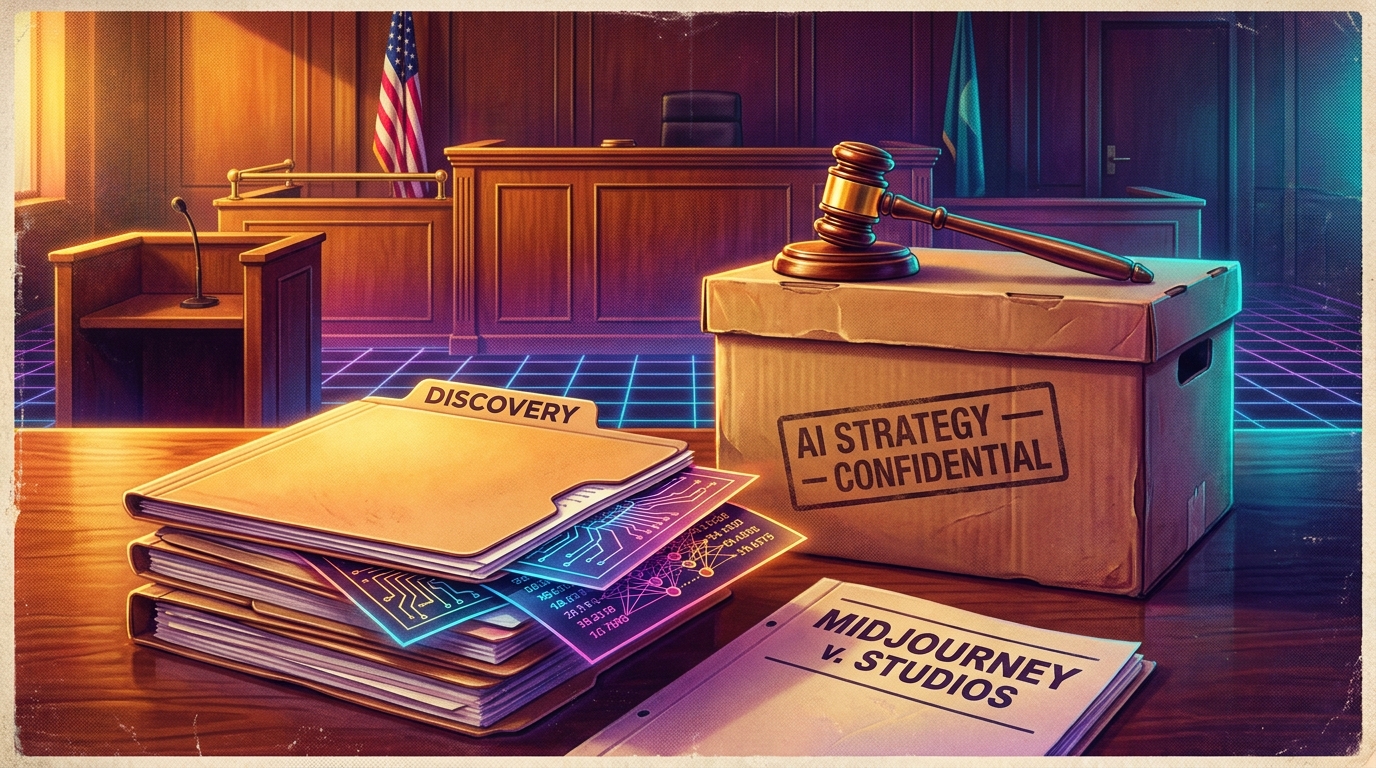
The company is seeking a wide range of internal materials, including AI business plans, research reports, training data, model weights, documents on how AI is used in movie and TV production, and board presentations discussing AI strategy.
Midjourney attorney Bobby Ghajar framed the internal material as core evidence. "If Plaintiffs are doing the very thing they seek to punish, that evidence goes to the heart of Midjourney's fair use and unclean hands defenses," Ghajar wrote in the filing.
The defense leans on fair use and "unclean hands"
Midjourney's argument pairs a fair-use claim with an unclean-hands defense, the legal principle that a plaintiff should not win relief for conduct it engages in itself. The company contends there is no principled basis for separating the studios' public-facing AI products from their internal AI training and tooling.
The studios reject the framing. Their attorney David Singer argued the case is narrower than Midjourney suggests: "Plaintiffs simply want Midjourney to stop copying their movies and TV shows and to stop distributing, publicly displaying, publicly performing, and creating derivative works," Singer wrote. The cases are consolidated before Judge Kronstadt in the U.S. District Court for the Central District of California.
The "consumer-facing" line is thin when Disney is building its own generative AI
The consumer-facing limit carries weight because at least one plaintiff is openly moving into generative AI for audiences. Disney has told trade press it is planning gen-AI creation tools that would let Disney+ users generate content, the kind of public product the current discovery order already covers.
What stays shielded is the behind-the-camera use: how studios apply AI in development, VFX, and production pipelines. That gap is what Midjourney is trying to close, because internal adoption would support its claim that AI trained on copyrighted material is standard practice across the industry.
The suit sits inside a wider pattern of studios pressuring AI vendors over IP. ByteDance tightened safeguards on Seedance 2.0 after cease-and-desist letters from Disney and Paramount.
Some vendors have taken the opposite tack. Licensing-first video companies like Moonvalley built models trained on licensed content to sidestep exactly the exposure Midjourney now faces.
A discovery win would open Hollywood's AI playbook
Judge Kronstadt's decision will set how far Midjourney can see into the studios' AI operations. If he expands the scope, filmmakers and vendors would get a rare, court-compelled look at how Disney, Universal, and Warner Bros. actually deploy AI in production, the kind of detail studios rarely disclose.
If he keeps the limit, the case stays focused on Midjourney's outputs and the consumer tools the studios ship to audiences. Either way, the ruling shapes whether internal studio AI use becomes admissible in one of the most closely watched copyright fights over generative models.