David Fincher Defends AI Use Amid Viewer Criticism of Apparent Generated Shots in His Netflix Film 'Cliff Booth'
VP Land
Nov 23, 2026 · 3 min read
David Fincher has defended using generative AI in filmmaking as viewers call out apparent AI shots in The Further Mis-Adventures of Cliff Booth, his Quentin Tarantino-scripted sequel to Once Upon a Time in Hollywood. As Deadline reported, Fincher argues filmmakers shouldn't stop iterating on a hundred-year-old medium, which puts an A-list director on record defending AI tools while his own film faces those questions.
Fincher says new tools should be used. "I'm not a Luddite, so I don't fear the unknown," he told the Los Angeles Times, adding, "Well, it exists. Should we not use it?"
Some viewers say the AI is obvious. On social media, fans have called the apparent AI use "astounding to an absurd degree," according to Deadline.
It wouldn't be his first time with generative tools. Fincher has acknowledged using them on the 4K remaster of Se7en, though he never said which ones.
The film plays theaters before it streams. It gets an exclusive two-week IMAX run starting Nov. 25, then debuts on Netflix Dec. 23, per Netflix's announcement.
Fincher argues filmmakers shouldn't put "pencils down" on a hundred-year-old medium
Fincher framed AI as part of a medium that's still young in his interview about the film. "Is everyone satisfied that we have figured this art form out enough that what we really need to do is go back to celluloid?" he said.
"How long have people painted? 40,000 years? We're talking about a thing that's a hundred years old and everyone's going, 'Stop. Pencils down. No more iterating. It's not necessary to have at your fingertips the ability to change the color of that person's eyes.'"
The remarks Deadline quotes defend AI in general and don't confirm or identify generative shots in Cliff Booth.
Brad Pitt in The Further Mis-Adventures of Cliff Booth (left) and director David Fincher. Image: Deadline
Fincher used generative fixes to remake the 'Se7en' negative for 4K
As IndieWire points out, Fincher described the Se7en 4K remaster as needing to remake the negative to deal with the thousands of tiny scratches that would show up at 4K. "It was an enormous amount of fixing," he told EW.
Generative tech also filled in gaps in some sequences. In one, a camera pan overshot its mark, but the performance in that flawed take was good enough to keep, so it was combined with an unused take and software generated the missing information to restore the intended image.
"It ends up being the most thrillingly stupid fix in the world because if you see it, we didn't do our jobs. And you probably won't see it. You probably won't be aware that it's happened," Fincher told Collider.
Viewers flag a backward wagon and other apparent AI artifacts in the flashbacks
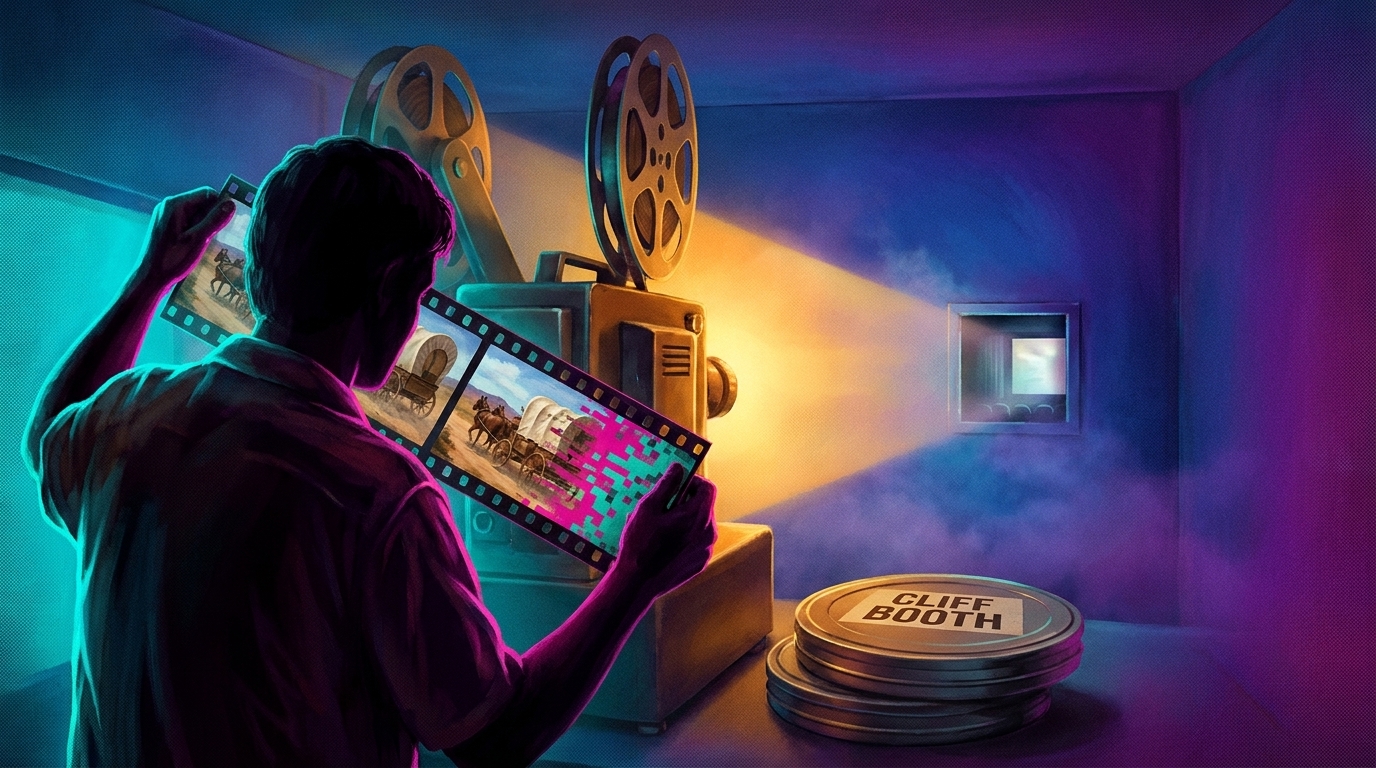
Early responses point to generative video artifacts in key flashback moments, according to IndieWire, including a shot from the trailer where a wagon looks like it was rendered the wrong way around.
One viewer said they "walked out of Cliff Booth completely gutted," per Deadline. IndieWire notes much of the surprise and disappointment comes from the controversy landing on a director known for the detail and intention in every shot.
Set in 1977, eight years after Once Upon a Time in Hollywood, the film follows Brad Pitt's Cliff Booth, now a projectionist who moonlights as a Hollywood fixer. Its IMAX theatrical run is a first for Netflix, according to the Los Angeles Times.
Maxon introduced the Agentic License, a monthly subscription arriving in November 2026 that lets an AI agent run its own headless copy of Cinema 4D or Autograph over MCP. The agent can work on a separate machine while…
Maxon launched Maxon Plus, a separate cloud subscription that generates editable 3D models from text, photos or sketches, creates textures for existing models and lets clients review 3D work in any browser. Models gen…
Snowglobe, Plot Party's 3D world engine for filmmaking, builds an editable 3D set from one line of text or one image, then lets you block actors, place cameras and send recorded takes to AI video generation, according…