Kling Image 4.0 Launches With Native 8K Output and Up to 10 Matching Images per Prompt
VP Land
Nov 18, 2026 · 3 min read
Kling AI launched Kling Image 4.0, a new image generation model that outputs stills at native 8K resolution and can return sets of up to 10 consistent images from a single prompt. Kling says it plans each set as a whole, which cuts down on generating and adjusting frames one by one for storyboards, product shoots and other work that needs matching images.
Native 8K stills. Kling claims Image 4.0 is the first model in the industry to support AI image generation at native 8K resolution.
Up to 10 images per prompt. A set keeps a consistent visual style and subject identity while varying framing, camera angles and content.
2,000 characters of text in one image. You can edit the text content and font styles inside a generated image after it renders.
Leaderboard standing, per Kling. The company cites the Artificial Analysis text-to-image leaderboard, where it says Kling Image 4.0 Preview holds a leading position in text-to-image and image editing, and ranks third in UI/UX design scenarios.
Native 8K and photographic realism aimed at film, ad and product work
The model comes from Kling AI, which designed it for filmmaking, advertising, marketing and design and lists digital campaigns, product imagery, large-format displays and outdoor advertising as uses for the higher-resolution output.
According to the company's launch press release, the 8K output renders fine detail across skin, fabric, product materials and landscapes that stays sharp in close-up views and extensive cropping.
For comparison, MiniMax's open-weight H3-Image model generates and edits images at 4K from up to 16 references.
Resolution sits alongside a push on photographic realism. According to Kling, the model aims for the look of images taken straight from a camera, with soft lighting, lifelike textures, subtle facial expressions and subjects that sit naturally in their surroundings.
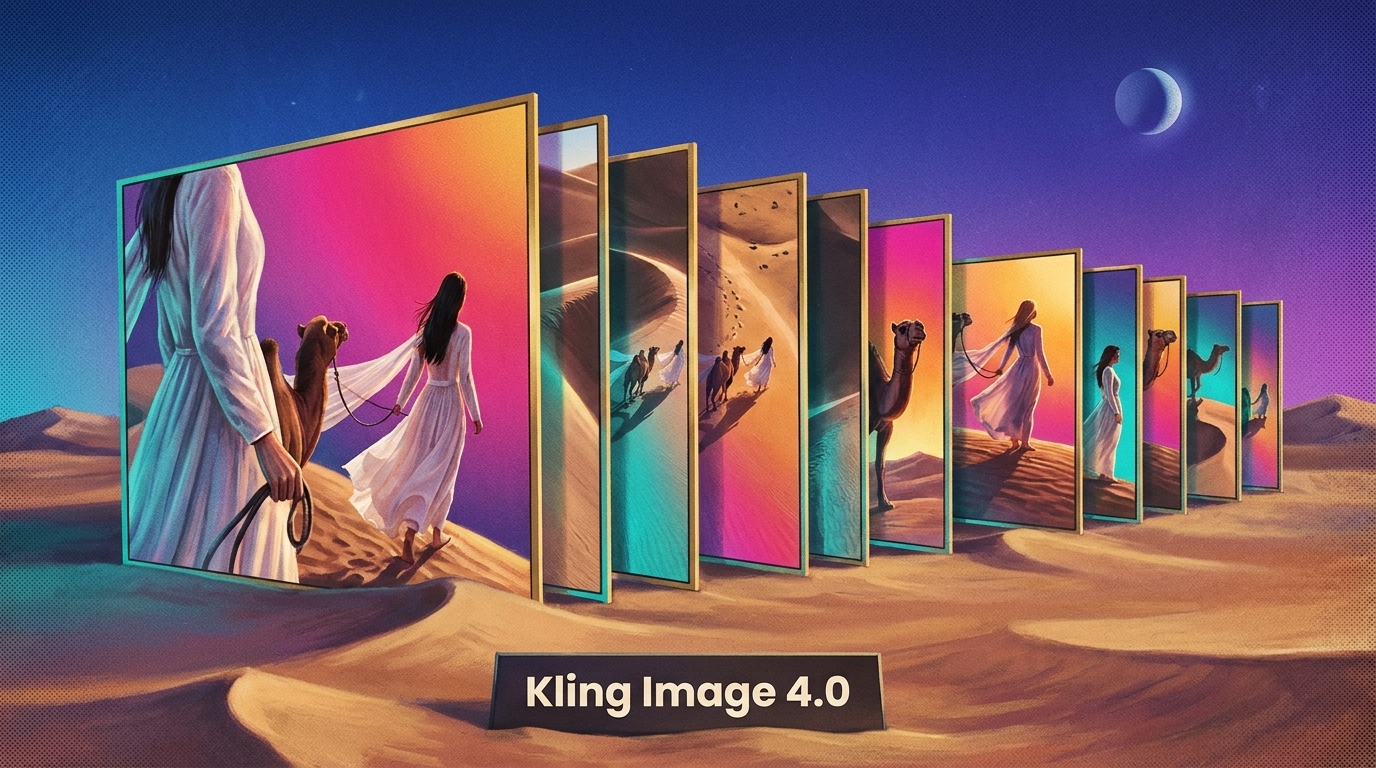
Kling AI's "When Time Stands Still" launch visual for Kling Image 4.0. Image: X (formerly Twitter)
Group shots get specific attention. Kling says the model varies facial features, body types, ages and poses across people in a frame, avoiding generated crowds where everyone looks identical, which gives creators more room to build diverse casts.
The image model follows Kling 4.0, the company's video generation model, which Kling says improves visual realism, creative control and narrative coherence. We covered Kling 3.0, which brought native 4K, multi-shot video and built-in audio.
One prompt plans a storyboard or product set as a whole
According to Kling, the model interprets the overall brief and plans the set as a whole, then adapts it to the task:
Storyboards. It plans shots and narrative flow across the frames.
E-commerce. It shows products from different angles and highlights key selling points.
Presentations. It organizes layouts and information across visuals.
The company also cites improved instruction following and more precise control over image composition, aimed at turning complex briefs into single images or complete visual sets.
The model also builds long-form e-commerce product pages and brand website visuals that present a complete page in one generation, as Jiemian reported via Sina. Kling says text and images in those layouts can be edited on separate layers, which makes revisions easier.
Text rendering covers 2,000 characters, 70-plus fonts and seven languages
Kling Image 4.0 can place up to 2,000 characters in a single image and, per Kling, keeps small text legible on posters. You can choose from more than 70 preset fonts or upload a font reference image to guide the style.
Kling says the model follows instructions for text placement, typography and visual effects, from artistic lettering to multi-level poster layouts. Supported languages for in-image text are English, Japanese, Korean, Spanish, Portuguese, simplified Chinese and traditional Chinese.
Adobe previewed local MCP integrations that will let creative professionals direct their own third-party AI agents to edit native project files in Photoshop, Illustrator, Premiere and After Effects, arriving in privat…
Adobe added Relight to Photoshop Desktop, a generative AI feature that changes an image's lighting with up to three interactive lights you place and tune before generating, according to Adobe Research's MAX roundup. P…
Krea launched a beta of Krea Bots, AI agents that take on entire creative projects and adapt to a team's taste as people collaborate with them, per its announcement on X. Each bot handles one craft inside a shared tea…