Meta launched Muse Wonder and Muse Wonder Full, a new model family the company describes as frontier models for coding and long-running agent work, and its official Muse Wonder announcement shows Muse Wonder building a playable 3D kitchen game from customizable image inputs. For developers and creators prototyping games, apps, and interactive pieces, the release targets multi-step software projects where a model has to track requirements through repeated rounds of testing and revision.
- Two models with different access. Muse Wonder is available through the Meta Model API and Muse Code, while Muse Wonder Full is available to Muse Code subscribers.
- Meta's demos are vendor examples. We have not tested any of the demonstrations Meta published with the launch.
- Memory and persistence are the core features. Meta calls them Active Memory and Active Focus, covering context carried across conversations and sustained work toward a goal.
- Consumer Muse access comes later. Meta says Muse Wonder will power experiences in Muse, rolling out to subscribers first. The company has not given a date.
- Performance and safety claims come from Meta. The company says the models reach state-of-the-art results on agent, memory, and coding benchmarks, and a full safety report is still to come.
Muse Wonder targets coding projects that run through repeated testing and revision
Meta frames coding as the place where the models' capabilities come together. According to the company, building software requires tracking requirements, making changes across a codebase, and cycling through testing and revision, and it trained both models on "diverse, long-running tasks" to keep progress going through that process.
Meta says both models deliver frontier coding performance for projects "from small applications to complex software." It measures sustained execution with SWE-Marathon, which tests work on long-running software projects.
The Meta newsroom post also highlights coding along with game and app development. Meta's published demos lean toward interactive, personalized output:
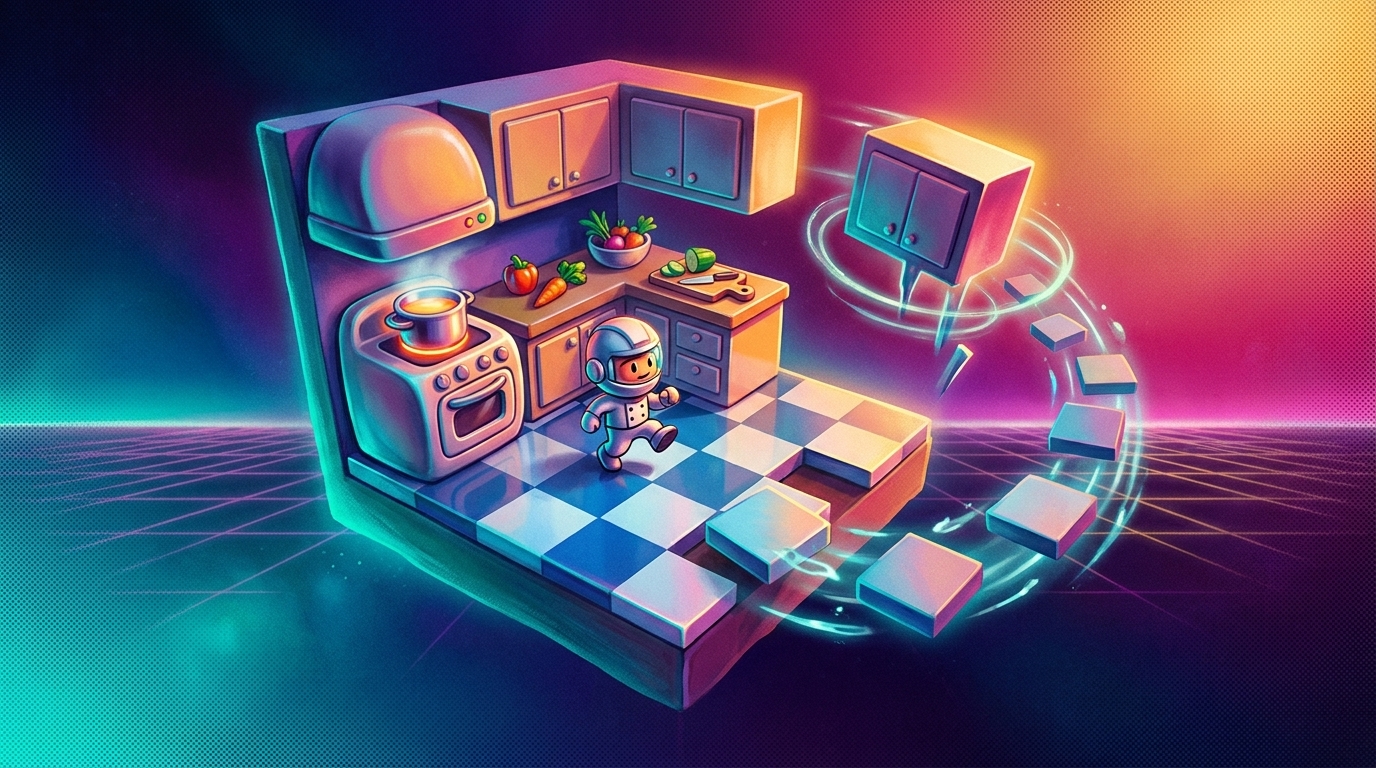
- A playable 3D kitchen game built from customizable image inputs
- Custom swag designed and ordered from real photos on a personal Instagram profile
- A running plan built by working directly in a browser and across apps
- A wedding seating chart prepared from a list of complex matching requirements
None of the demos listed above involve film or video generation. They center on playable prototypes, custom interactive artifacts, and multi-step planning.
Meta's launch post on X, from the finkd account, describes Muse Wonder as a family of frontier models for "personal and professional agentic work."
Active Memory and Active Focus carry context and goals, and Meta claims gains on unfamiliar tasks
Active Memory, per Meta, carries important context about the user across conversations and retrieves the details relevant to the current task. Active Focus covers how the model keeps working toward a difficult goal by trying alternative approaches, working through blockers, and adapting to new information.
Meta says the model also asks for clarification when needed and checks in before taking important actions. Meta evaluates focus with a benchmark it calls FocusBench.
In Meta's comparison, Muse Wonder Full performs better on unfamiliar tasks than the Muse Spark 1.3 trend would predict for its in-distribution score, which Meta attributes to larger, stronger base models.
Meta says that versatility especially matters for personal agents, which need to handle many combinations of goals, tools, and constraints. The comparison comes from Meta's own chart.
Consumer Muse access and artifact generation come later, with a full safety report still pending
Muse Wonder, which Meta describes as a frontier model family for agentic and coding work, is separate from the agentic Muse Image model we previously covered alongside Meta's Muse Video preview.
Meta says Muse Wonder will also power artifact generation and processes that require more intelligence. The company plans to use it to develop specialized models for everyone using Muse, without a timeline.
On safety, Meta says Muse Wonder has its strongest safeguards to date against CBRN (chemical, biological, radiological, and nuclear) and cyber misuse, while keeping frontier cyber capabilities available for defensive use. The company calls it its most aligned model to date and says a full report with additional safety evaluations is forthcoming.
Meta's announcement does not list pricing for either model. Developers can try the coding workflow through the Meta Model API or Muse Code.