Producer Ryan Kavanaugh Breaks Down Where Doug Liman's $70M AI Hybrid Film Bitcoin Spent Its Money
VP Land
Aug 7, 2026 · 9 min read
Doug Liman's Bitcoin was scheduled as a 72-day physical shoot across 213 locations in roughly 18 countries. The production shot it in 21 days on one gray stage instead. Producer Ryan Kavanaugh of KavBro Pictures says the savings came from compressed time, while every actor and department head was paid in full.
Outside coverage has focused on the film as a $70 million AI-made movie. Kavanaugh's breakdown shows where that money went, what the film would cost if it started today, and how a 100-person AI artist team builds the world around actors after they leave the stage.
In this episode of Inside the AI Studio, we talked with Ryan Kavanaugh of KavBro Pictures, producer of Doug Liman's Bitcoin, about the film's budget, its gray-stage production, and the pipeline studios now hire his team to run.
Pre-production took $15 million and seven months. A 50-person creative department built every first frame and location to spec before shooting, which Kavanaugh considers essential for AI footage that looks right.
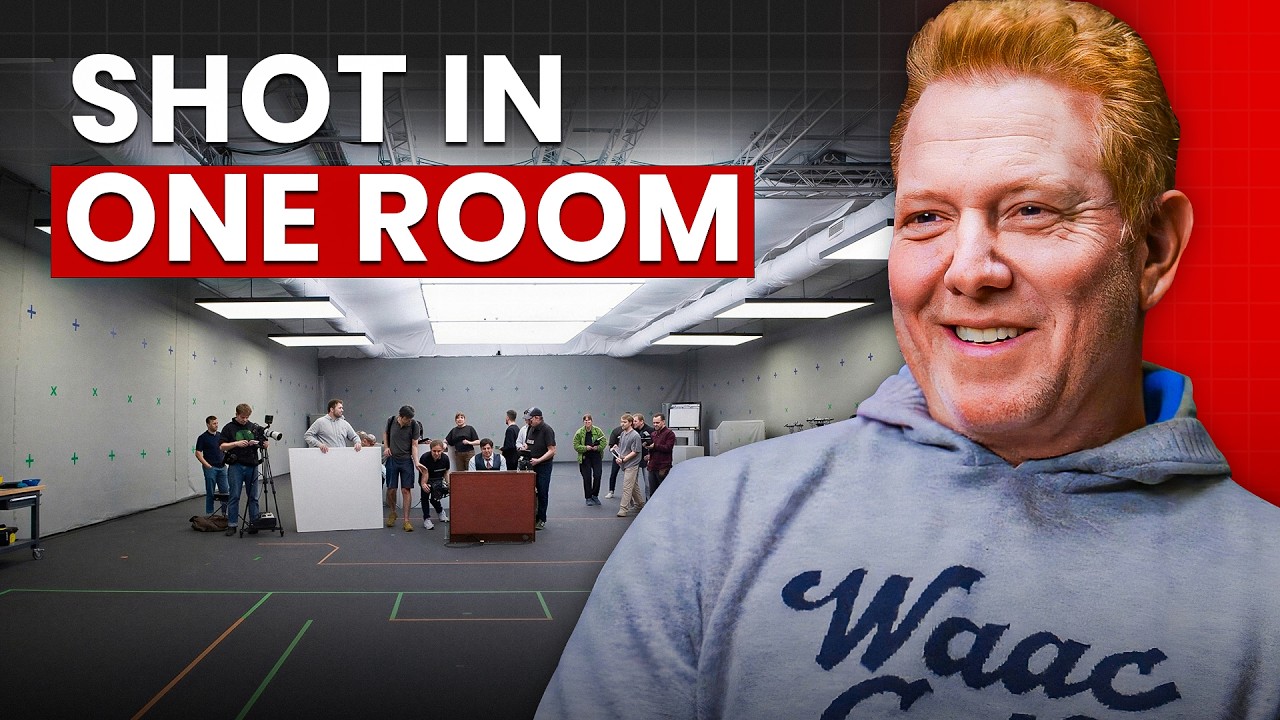
One stage covered 213 locations in 21 days. Actors performed on a gray stage under fixed lighting while an AR overlay showed the crew the photoreal location, and setups took 5 to 20 minutes.
Payroll stayed intact. Actors, the director, and department heads got "full freight," and the film used over 130 day players, more than on any previous Liman movie, according to Kavanaugh.
Starting Bitcoin today would cost $20 to $25 million below the line. The system built during the film now automates much of that prep, which Kavanaugh says could shrink pre-production to 30 days or less.
Studios are buying the pipeline for certainty. His team has over a dozen work-for-hire projects and uses photoreal previews to show studios what a film will look like before greenlight.
A $150 million first budget pushed the production to build its own AI team
Kavanaugh found the story through an AI business he owned outside the movie industry. He hired writer Nick Schenk to tell the true story of a man who may or may not be Satoshi, and who stood against what Kavanaugh calls "the corruption and greed that had taken over Bitcoin."
The project has been reported by Variety under the title Killing Satoshi. Kavanaugh got Liman attached, assembled a cast, and planned to finance the film independently.
Then the first budget came back at $150 million. Kavanaugh wanted to keep control of the film and realized that would not happen at that number.
He went back to his AI contacts. He had been reading about deals with companies like Runway, and he took meetings across the field.
Every meeting ended the same way, he says, with the conclusion that "they are never gonna get it, at least not in the short term. And it's not because of tech." Kavanaugh argues the companies all had tools that could theoretically work, and that the missing piece was production craft.
People look at it as pure tech and AI is not pure tech. AI is kind of 50%, I'll call it tech or generation. But it's 50% art.
Kavanaugh points to studios bringing in AI chiefs without hands-on physical production backgrounds. Those leaders have not sat through a broken camera, a light that won't work, an overlit shot in post, or an actor who gets sick and throws off the schedule.
Kavanaugh says the tech companies can get to first frames and a video, "but it's gonna look wrong." So the production hired its own AI artists, built its own workflow, and bought and built out a studio in London. The team now has 100 AI artists.
Pre-production cost $15 million and set the visual spec for every frame
Kavanaugh describes seven months of pre-production with a 50-person creative department, a stage of the film's $70 million budget he calls "absolutely necessary."
By his approximate figures, the below-the-line budget fell from somewhere above $120 million to $40 million, and $15 million of that $40 million went to pre-production.
Kavanaugh explained why every location had to be locked before a single performance was captured.
I don't care who says differently, I don't believe any time in the near term you're gonna be able to make an AI movie that looks good without having every first frame, every location build, down to spec, down to architectural perfection. So we had to spend $15 million of our budget to do that.
He expects other AI films to fall short for that reason, "not because they didn't have the right artists or the right tools, but because they didn't prep it right."
The production treated the spend as R&D. Kavanaugh says the resulting program now holds 60 patents and has a storyboard studio, a first frame studio, and a location studio, all driven by natural language.
Department heads sit with the director from day one and adjust storyboards and locations until they match the director's vision. As long as a location is right "from a spec perspective," surface changes like a wall color can wait until after the shoot.
The program also builds the schedule, the sides, a shot-by-shot plan, and the VFX breakdown. It coordinates actor and crew availability with the AI workload, and it re-triggers the plan automatically when something changes.
With that system in place, Kavanaugh estimates pre-production could take 30 days or less, and he puts the below-the-line cost of starting Bitcoin today at $20 to $25 million. On one new project, he says, "the script isn't even locked."
One gray stage stood in for 213 locations across about 18 countries
The stage at the center of Bitcoin's AI-driven production is sparse. Kavanaugh describes a large gray studio with many cameras and "a very specific set of lighting that doesn't change."
That lighting is built for the AI, with gray blocking and "a lot of different shapes around the walls" that the team has refined to make sure the capture comes out right.
Before any shot, the location is blocked. A proprietary AR system sits over the stage so the crew can see the photoreal set: where the table goes, where the back wall stands. None of it physically exists.
Two actors in a conversation scene might sit in two chairs that likely won't appear in the final film. Everything else is gray, and the director still picks close-ups, wides, tracking shots, and moving shots, because the camera is capturing performances.
"The director still has to capture the action, still has to capture the interaction," Kavanaugh says. The AI team then takes the location and first frame and builds the world around the actors.
The program also flags which props should be practical. If an actor holds an iPad, Kavanaugh says the system may tell the crew to use a real one, because rebuilding it in AI could be expensive, tricky, or look wrong.
The results on the schedule:
Setups ran 5 to 20 minutes, with 20 minutes the longest.
The leads shot out in 19 days.
All 130-plus day players were shot in less than two days.
The crew numbered around 80, by Kavanaugh's count.
Production time fell 70% while payroll stayed intact
Kavanaugh stresses that the cuts did not come out of payroll. The cast, which Variety reports includes Pete Davidson and Casey Affleck, got "full freight," as did the director and department heads.
The day player count topped 130, which Kavanaugh says is more than Liman has had on any film, including Bourne and Mr. and Mrs. Smith. Kavanaugh returned repeatedly to where the savings actually come from.
But what I keep trying to tell people is the savings isn't in people, it's in time. The department heads are more important than ever.
In his description, the workflow looks "very much like an animated workflow." Department heads do most of their work in pre-production and post, and are less involved on the shoot itself.
In post, lighting, camera, set design, and the cinematographer coordinate with the AI artists through the program on what needs to be done. Kavanaugh says his AI artists are all trained in production, adding, "I think we're the only ones so far to do that."
Throughout, Kavanaugh says, "the vision's the director's vision."
By his numbers, production time dropped 70%. Post, he says, is "probably the same, if not a little bit less."
Photoreal previews let the director rework the film before and after the shoot
Bitcoin's AI stage production had storyboards, first frames, and locations, but not a full animated previs. Kavanaugh says the program now produces one in days, and goes further by generating a version of the whole movie to watch.
That version is not release quality. "We're not trying to replace actors," Kavanaugh says, but the director can watch a scene in photoreal form and change a performance note or a scene based on it.
"We call it the 100% certainty you never had before," he says.
He contrasts that with the conventional model, where a $100 million film gets made, shown to a test audience of 18-year-olds who say "it sucks," and then gets "$2 million trying to fix it." With a generated draft, he argues, filmmakers can test a concept "before you go spend a dollar."
The speed carries into post. The team showed 10 minutes of Bitcoin, not totally complete, at Cannes two weeks after shooting, before the film had a cut.
Kavanaugh compares that with Avatar, where he estimates Jim Cameron waited probably a year for backgrounds and post-rendering before he could see much of anything.
The flexibility shows up mid-shoot too. Liman came in one day wanting to swap a scene set at Nobu for an upscale version of the London restaurant Sexy Fish with a Cirque du Soleil act in the middle, which he called Koi Koi.
Kavanaugh described what that change took.
So we had to plug it in, run everything, redo it. But we could do that. And within hours, without having to go find set designs and prop, we were able to do that. And that would've probably been a $5 to $7 million shoot to do practically.
For the production, he says, the new scene cost the same as two people sitting at Nobu. In another case, a lead's phone call from a desk in Antigua became a satellite phone call on an Antarctic expedition in a snowstorm.
Kavanaugh is clear about the risk. "You also have to have a director who can keep it under control because they could literally spend all day spinning out of control of what they wanna do."
Mid-budget original films are the target market for the pipeline
Kavanaugh says the team never planned to become a production services business. Studios and producers came through, asked if the team could make their films, and the company now has over a dozen projects in various stages.
Studios want proof points before they commit, according to Kavanaugh. One project takes place in Formula 1, and the studio worried a small budget would disappoint audiences used to big F1 spectacle; the team showed what it would look like, and the studio moved forward.
In other cases, the team has delivered an entire previs movie, and filmmakers have come back with rewrites or a greenlight "subject to the following."
Some of the projects come from well-known filmmakers and talent who have had projects stalled for three years. In Kavanaugh's words, these filmmakers tell him "the studio said they'd do it for $30, but I can't figure out how to get it down less than $70."
Original, unproven IP in the mid-budget range rarely gets made anymore, he argues. Kavanaugh sees that gap as the opening for the pipeline.
There's a lot of very talented people that have stories to tell. And that's what Hollywood was built on, not sequel, prequel, tentpole, rinse, repeat.
His own company plans to make two or three movies a year alongside the work-for-hire slate. In Kavanaugh's model, the money moves into prep and post, the shoot shrinks to weeks, and the payroll stays intact.
The full conversation with Kavanaugh, including more on the gray stage and the program behind it, is in this episode of Inside the AI Studio, shot at AI on the Lot; every past guest is on the series page.
Christy Anzelmo says AI has reversed the way visual effects artists work. Instead of building an image step by step and refining as they go, compositors now start from the result they want and trace back to the data o…
Caroline Ingeborn thinks the AI industry sold creatives the wrong idea when it pushed them to become prompt engineers. The chief operating officer of Luma argues that skilled filmmakers should talk to an agent the way…
AI models can take an image, generate an audio track, cut it into a video, and lip-sync a character in one automated pass. What they still can't do, according to Justine Moore, is judge whether any of it is good.