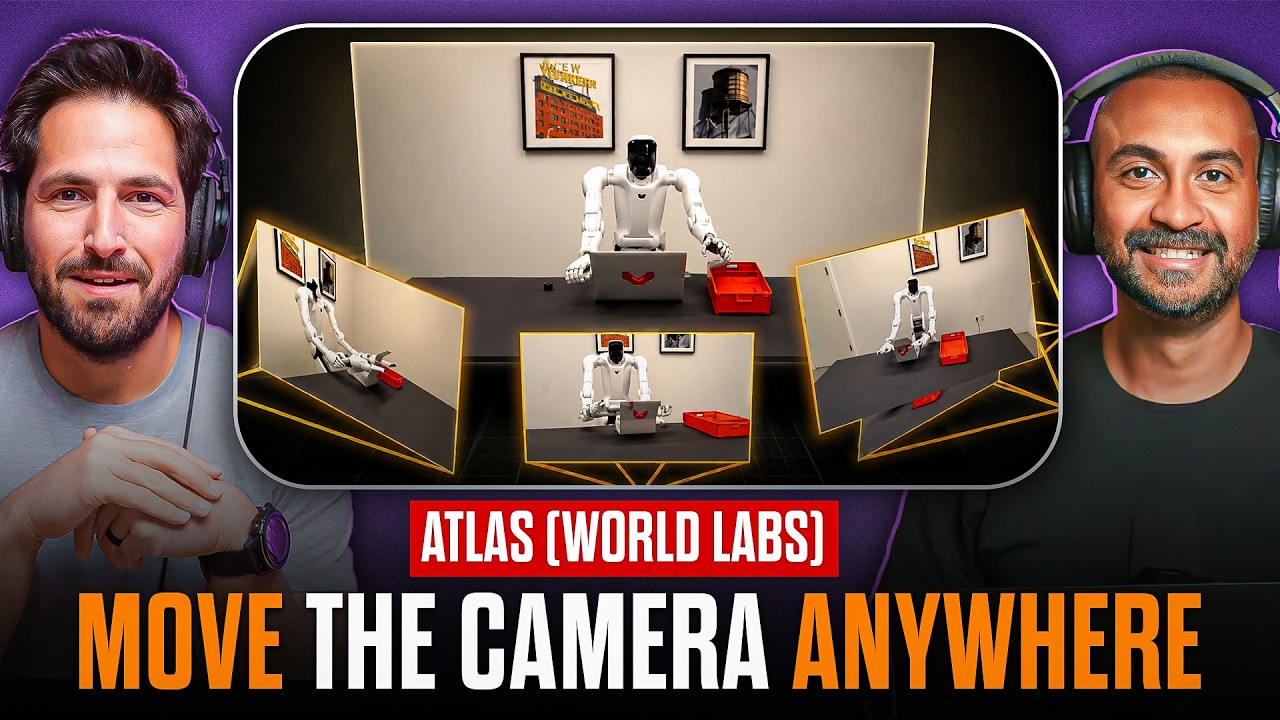
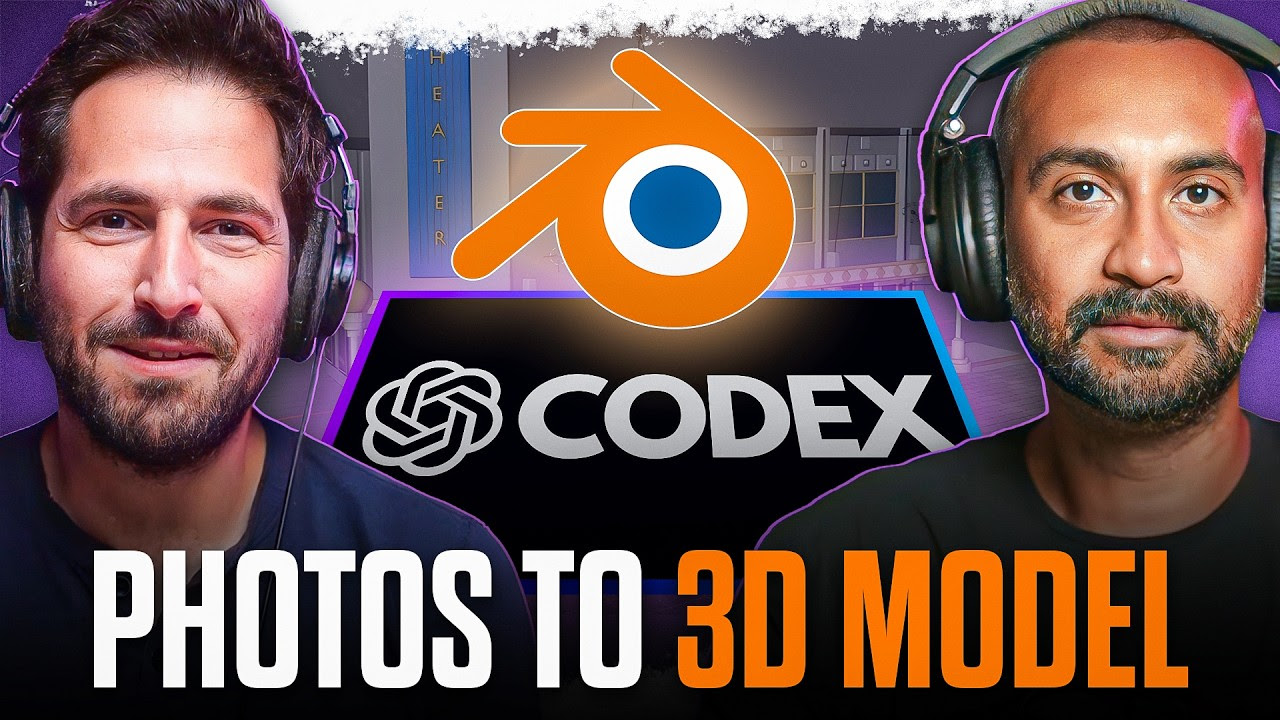
GPT-6 Astra can take a one-line goal and reconstruct a real city in Blender, building the street grid and individual structures without a single reference file handed to it. We pointed it at downtown Miami, let Codex run for 26 hours straight, and watched it research the city on its own. We also put Astra's video editing to the test, dug into DaVinci Resolve 21.1's new AI agent access, and traced how an Italian brain rot meme could end up deciding AI copyright.
Jump to:
01:04 GPT-6 Astra builds cities in Blender
09:54 The LAX model and how accurate it got
16:29 DaVinci Resolve 21.1 AI agent access
18:55 Boris FX Silhouette adds MCP
27:40 The brain rot copyright fight
Quick Take
The question running through this episode is simple. If a model can research a city on its own and rebuild it structure by structure, what is left for the 3D artist to do? Astra's Blender work looked detailed and accurate in the hero areas but still needed a finishing pass and optimization. Its video editing did not move past what we could already get from other agents. The gap between those two results tells you where agent-driven tools help right now and where they still stall.
What We Tested: GPT-6 Astra Built Accurate Miami and LAX Models in Blender From Prompts Alone
We gave Codex a single goal using its don't-stop-until-done mode: build a 3D model of downtown Miami. It ran for 26 hours straight. GPT-6 Astra is OpenAI's newest model, and 3D work in Blender has been the demo flooding our feeds.
No reference files, all research. We did not hand it a single image. It sourced maps, diagrams, Wikipedia entries, and reference photos on its own, then laid out the street grid and started modeling buildings, including South Beach.
You can point it at the hero areas. We told it to focus on Biscayne, so those buildings came back detailed and accurate. The Intercontinental even carried the building and city logos. It modeled the American Airlines Arena, the art museum, and the science museum on command.
It also rebuilt the old Miami Herald building, which has been demolished, from images we found of it.
The LAX build was current. From text prompts alone, Astra cross-referenced airport scan data against the reference images it pulled to check that the roads lined up. The data was current enough that Terminal 4 reads as demolished and Terminal 5 as gone, matching the real rebuild, while the new Bradley extension is there.
Elsewhere, Matt Schumer built a full Manhattan in Unreal Engine over about a week, with all the buildings modeled out.
Addy's take: the meshes are the real shift. Earlier generated geometry came back as garbage that only held the rough shape. Now the edge loops and faces line up cleanly in Blender.
Joey's argument: the geometry still breaks in spots, but fixing it is trivial. You point at the weird part, ask for a fix, and it is done.
3D modeling survives as a 10x-modeler skill. Our read: this gets you most of the way, but you still need someone who knows Blender and Unreal to finish and optimize the scene. The viable path is being a 10x modeler who can have the model built, refine it just enough, and take the paid gig. The tools that struggle still need better references. A pass at the Culver Theater came back rough because there are not enough photos of it online to work from.
What We Explored: DaVinci Resolve 21.1 Opens AI Agent Access, and Scripting Still Beats Computer Use
We also tested Astra on video editing, and here the results flattened out. Assembling timelines, picking shots, analyzing footage: none of it came back better than what we already get from Claude or 5.6.
The editing demos oversold it. One making the rounds built a full podcast episode with a synthetic avatar, B-roll, and a script. In our own attempts, automatic B-roll assignment still misses the context, so we want to retest that claim before we believe it.
Resolve 21.1 is the notable update. DaVinci Resolve added what Blackmagic Design calls AI assistant integration, with native support to connect Claude, Codex, or ChatGPT directly, plus 20 new API endpoints per the documentation.
Joey's argument: you could already drive Resolve this way through its scripting backend. The real change is accessibility, letting people who are not running coding agents connect a standard assistant. Opening up the color page and Fusion to agents would be the bigger unlock.
That access gap is the throughline. Blender and Resolve respond well because the scripting and API are there. Adobe keeps Premiere largely walled off, so agents fall back to slow, clunky computer use to click buttons.
Addy's take: Boris FX Silhouette 2026 added an MCP server, which opens its rotoscoping and paint work to an agent. Whether a model can hit that hand-painted precision is the open question.
A demo of Astra painting a portrait in an image editor, Photoshop or Microsoft Paint depending on who watched, looked impressive, though computer use like that still runs slower than a direct API or MCP connection would.
A separate depth-of-field render in the Three.js web library appeared to be Astra's work, likely representing the shapes as code rather than clicking through an app.
What We Debated: A Brain Rot Meme Character Could Set AI Copyright Precedent
We dug into why an AI meme character might decide the future of copyright. Tung Tung Tung Sahur, one of the Italian brain rot characters, came from Indonesian TikTok creator Noxa.
The Roblox game Steal a Brain Rot, made by Spider Games, a Louisiana LLC, and Speedy Simulator Gaming, a Wyoming LLC, used the character, and it blew up. A French agency, Mementum Lab, which represents Noxa, sent a cease and desist claiming IP rights. Licensing talks collapsed, the character went back up, and the game studios sued first in California.
The legal question is authorship. Under current US law, work generated by AI without enough human involvement is not copyrightable. The game studios argue the character is AI-generated and therefore fair game. Noxa's side argues there was real human authorship behind it: the name, the backstory, the voiceover, the visual design, and a combination of roughly seven prompts and iterations using tools like DALL-E.
The precedent everyone cites is the monkey selfie, where a photo taken when a monkey pressed the button got no copyright because there was no human author. As we put it, with generative tools we are the monkeys pressing the button. The counterexample is the first AI-copyrighted artwork, a single piece of American cheese made with inpainting, where fragments were selectively modified and arranged through human authorship.
Addy noted the real pressure is money.
You can make a ton of money putting that character on stickers, on toys, and there's so much merchandising opportunity. So who has rights to that money?
Addy's counter: the character reads as AI slop, so this particular case may not hold up. Noxa's side may drop the claim and pursue a trademark that travels better internationally.
Where we landed: cases like this push creators to stay in the loop rather than generate and walk away, which is why documenting the chain of authorship matters.
Bottom Line: Access and Authorship Decide Everything
Three tests, one throughline about where agent tools actually do the work.
- 3D modeling. Astra builds accurate cities in Blender from prompts alone, but the finishing and optimization still need a human who knows the tools.
- Editing. Agent editing is only as good as the app's API. Resolve's scripting head start keeps it ahead of a walled-off Premiere, and 21.1 mostly makes that access easier.
- Copyright. Whether an AI character is protectable turns on proving human authorship, and a viral meme may be the case that sets the bar.
The same thread runs through all three. Open access decides whether an agent can actually do the work, and documented human input decides whether the output is yours to own.
Links from This Episode
Tools & Platforms
Projects & Demos
News & Analysis
WATCH THE FULL EPISODE ON YOUTUBE →