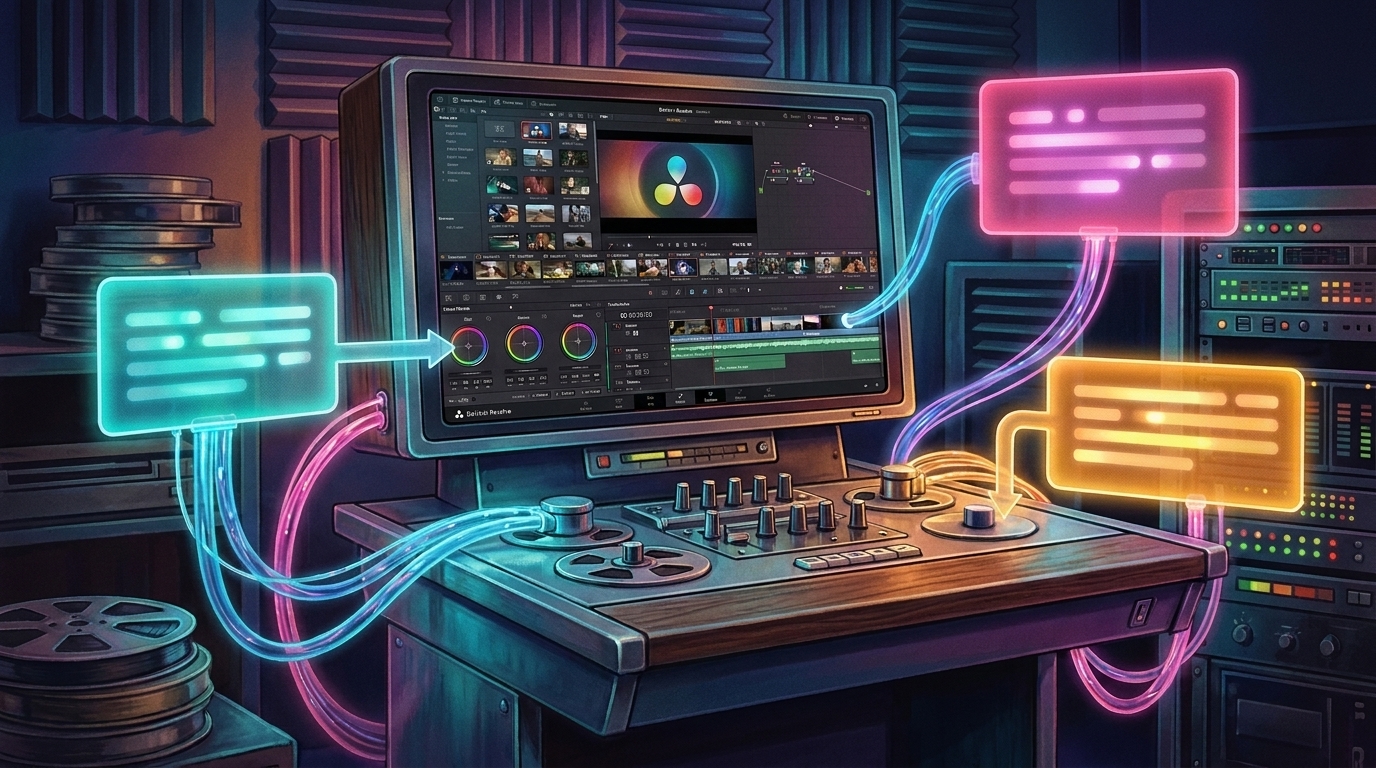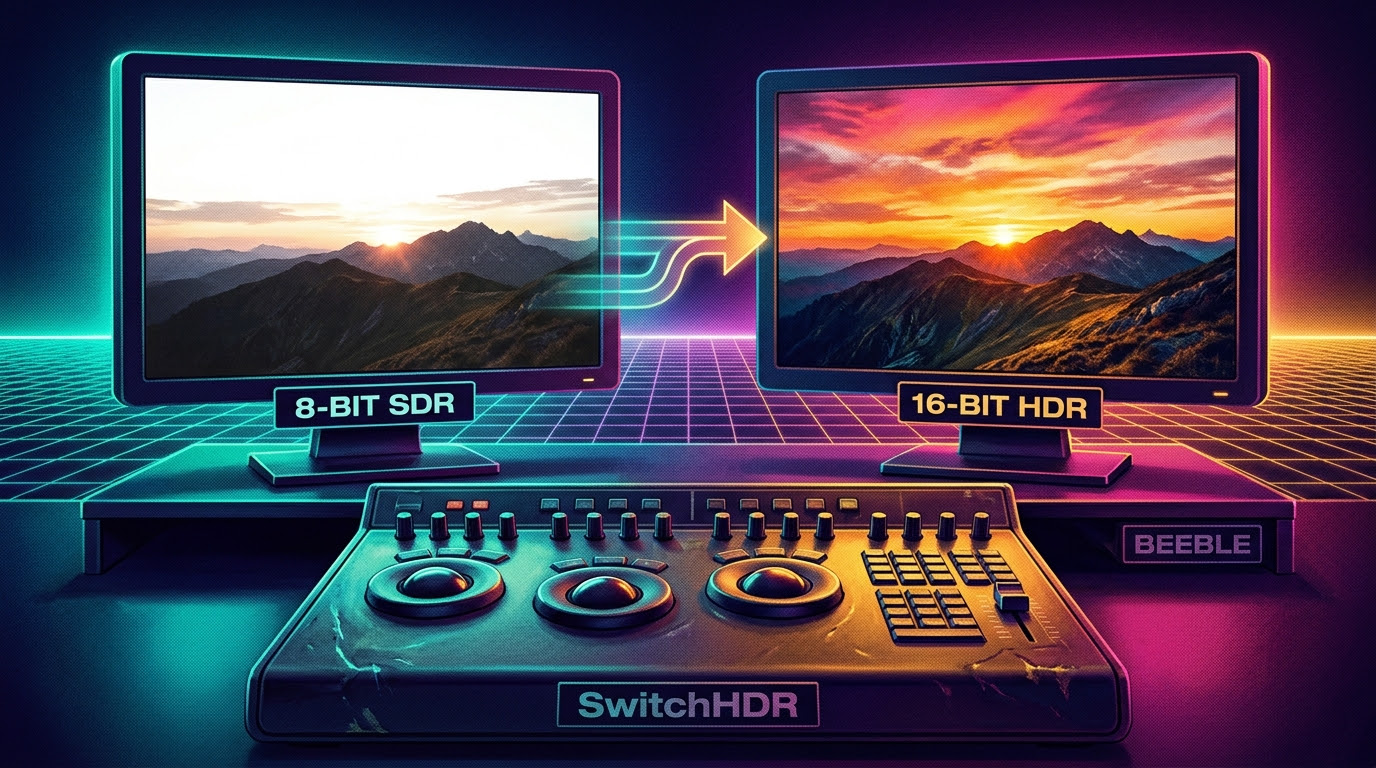
Beeble released SwitchHDR, a model that reconstructs true 16-bit HDR from ordinary 8-bit SDR footage. Instead of stretching the existing signal, it infers the high-dynamic-range scene, rebuilding clipped highlights and pulling clean detail out of shadows that have collapsed into sensor noise.

The output is not a look or a filter. SwitchHDR writes a 16-bit EXR sequence in scene-linear ACES AP0 (ACES2065-1), the same interchange space grading and VFX pipelines already run on. It targets DITs, colorists, and VFX artists who need genuine dynamic-range recovery rather than a tone-mapped approximation.

Reconstruction guided by real HDR, not a signal stretch

Conventional SDR-to-HDR conversion stretches an 8-bit signal to fill an HDR container, which amplifies banding and noise and cannot invent detail that was never captured. SwitchHDR takes a different route: it analyzes the 8-bit frame to find where the signal clips and collapses, then reconstructs scene radiance guided by its training data.

According to Beeble, the model is "trained on real high-dynamic-range footage, not synthetic exposures or tone-mapped approximations." That distinction is the pitch. The recovered highlights and shadows are inferred from how real HDR scenes behave, so blown skies and crushed shadow regions come back with plausible structure instead of smeared gradients.

It also holds up in motion. The model processes a sequence as a whole and maintains frame-to-frame consistency, which Beeble says avoids the shimmer, flicker, and ghosting that frame-by-frame recovery tends to introduce.

Masks and prompts steer the recovery by region

SwitchHDR is directable rather than one-shot. Colorists can constrain recovery with luminance-threshold masks that set separate cutoffs for shadows and highlights, and any area outside a mask stays pixel-for-pixel faithful to the source.

The model also accepts separate text prompts for highlights and shadows, letting an artist specify what a recovered region should become. Beeble's examples pair a "sunset sky" prompt for a blown-out highlight with a "weathered wooden texture" prompt for the shadows in the same frame. That keeps the reconstruction under the operator's intent instead of leaving it to the model to guess.

  • Region control. Threshold masks isolate shadow and highlight zones so recovery only touches the pixels that need it.

  • Intent control. Highlight and shadow prompts tell the model what detail to rebuild, not just where.

  • Container output. Results land as 16-bit EXRs ready to drop into a DaVinci Resolve grade or a VFX pass.

It slots into Beeble's existing on-prem stack

SwitchHDR extends a lineup Beeble has been building around AI relighting and post-production repair. It complements SwitchLight 3.0, the relighting engine inside the on-prem Beeble Studio app we covered, which runs 4K relighting on a studio's own GPU. The company expanded from isolated subjects to whole scenes with SwitchLight 2.0, and moved into motion with SwitchX, its first video-to-video model.

SwitchHDR is available through Beeble's web app at app.beeble.ai/sdr2hdr, alongside SwitchX, SwitchLight Mobile, and Beeble Studio.

Where dynamic-range recovery fits the grade

For post teams, the practical use is footage that was captured or delivered in SDR but needs to live in an HDR or ACES finish. Archival material, 8-bit camera files, and mismatched deliverables all arrive short on the highlight and shadow information an HDR grade wants, and SwitchHDR aims to rebuild that headroom in a form the pipeline already accepts.

The scene-linear ACES output is what makes that claim concrete. Teams standardizing on the ACES workflow that Netflix and the Academy Software Foundation have been documenting can pull a SwitchHDR EXR into the same color-managed chain as native HDR captures. Whether the reconstructed detail survives a critical grade on real productions is the test that matters, and it is one colorists will run shot by shot.

Reply

Avatar

or to participate

Keep Reading