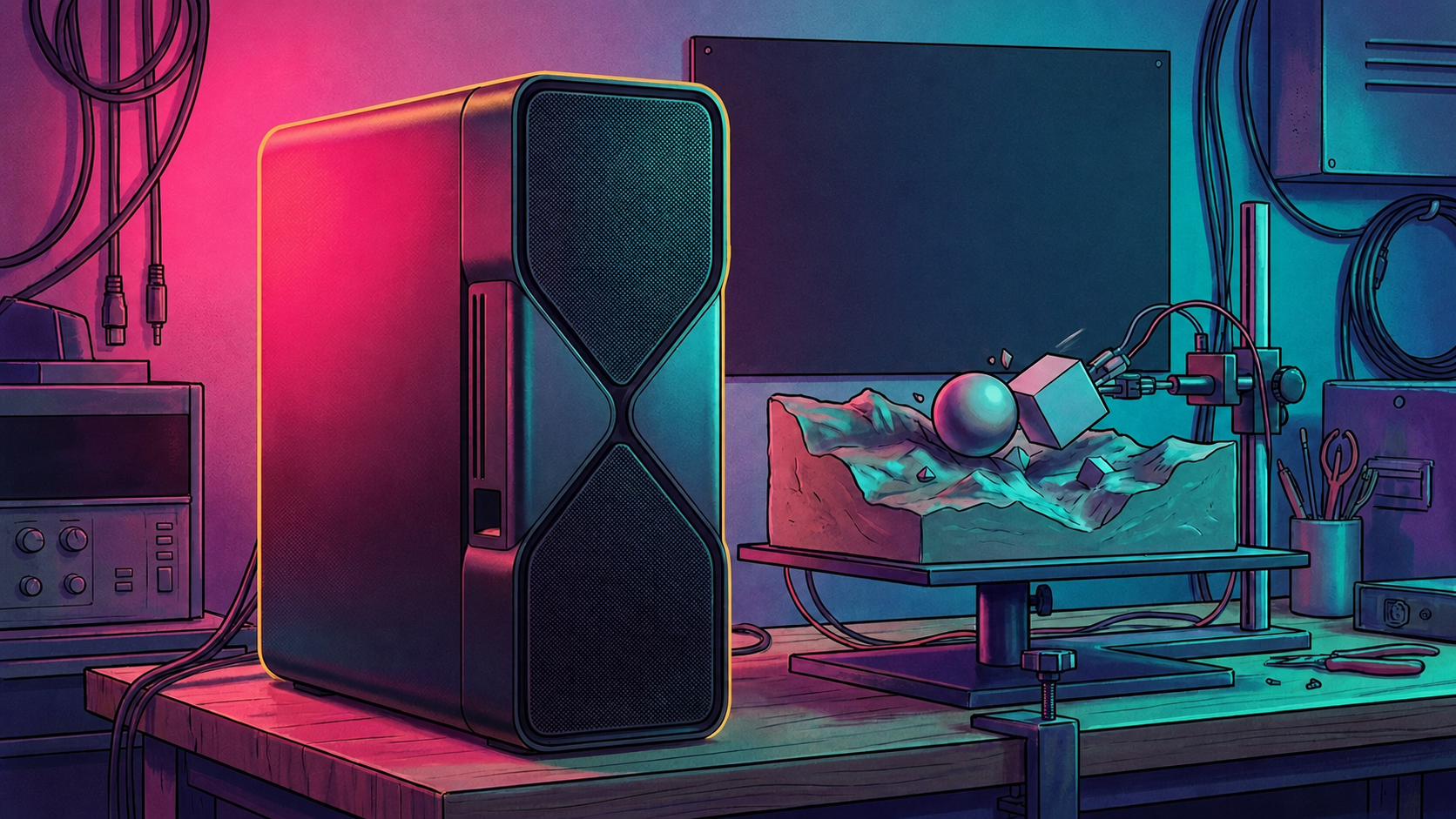
That matters because the Agent Toolkit stack is not a single application. It combines the Nemotron 3 Ultra model with OpenShell, NemoClaw blueprints, and Omniverse libraries. NVIDIA describes each piece as open:
Nemotron 3 Ultra is the 550-billion-parameter model tuned for DGX Station hardware.
OpenShell is an open source runtime intended to sandbox agents and apply defined policies.
NemoClaw provides open blueprints for assembling custom autonomous agents from the model, harness, and runtime.
Omniverse libraries expose physics simulation and 3D asset workflow functions as tools an agent can call.
The practical proposition is a stack that technical teams can inspect, adapt, and keep within their own infrastructure.
NVIDIA says a ConnectX-8 SuperNIC provides up to 800GB/s of bandwidth and can link two DGX Stations. The company has published playbooks for using two systems to run larger models or support more concurrent users. It also says local operation can be set up in three steps in about 30 minutes, without an internet connection.
DGX Station is available to order from ASUS, Dell Technologies, Exxact, GIGABYTE, HP, MSI, and Supermicro. NVIDIA did not announce pricing.
NemoClaw makes Blender’s simulation tools callable by an agent
The creative-software angle arrives through a NemoClaw blueprint that integrates Omniverse libraries into Blender. It gives an agent callable RTX sensor-simulation and physics tools within an artist’s existing scene, allowing the agent to initiate simulation work rather than merely suggest steps in a chat window.
The setup follows a broader shift toward AI agents operating applications through explicit tool connections. We covered Foundry’s Griptape integration, which brought agents into Nuke, Blender, and Maya through the Model Context Protocol.
Aximmetry’s MCP server offered another version of the idea, letting agents build and adjust virtual-production scenes from a plain-language request. NVIDIA’s approach ties that application-level access to its own local model, runtime, and DGX Station hardware.
The studio question is governance, not only speed
For studios working with unreleased assets, scripts, or client material, local execution addresses a basic operational constraint: whether creative data has to leave the building for an agent to be useful. A DGX Station running an offline model, with OpenShell enforcing policies and Blender exposing limited callable tools, gives teams more control over where that work happens and what the agent is allowed to do.
The substantive test is whether the tools remain reliable on production scenes. NVIDIA’s published specifications establish the hardware capacity and the software components, but pricing and performance with real studio workloads remain open questions.