The Clean Model Solution
Bryn Mooser detailed the journey that led his companies, Asteria and Moonvalley, to build Marey, a visual intelligence model trained exclusively on licensed data.
"About two and a half years ago, I started to go as I was thinking about how do you build a studio of the future," Mooser said. He met with every major AI company and learned three things quickly: the technology is transformational, the companies building it don't understand filmmaking, and worse, they don't care about the entertainment industry.
Early AI video tools scraped content without permission and offered products that were "useless tools for us," Mooser said. Studios couldn't use them without triggering legal issues.
Mooser saw an opportunity. If AI was inevitable and transformational, someone needed to build it in a way that solved the copyright issues studios were simultaneously suing over and depending on.
We've always been thinking about how to do that. And there's two sides of it. One side is filmmakers. So how do you build tools that clearly can show where you get rid of this tech-supremacist video thing, but you take the underlying technology, you plug it into different parts of the production pipeline?
Bryn Mooser, CEO of Asteria, Co-Founder of Moonvalley
The other side was addressing filmmaker concerns. Some feared job loss. Others objected to training on their work without permission. Building a model on licensed data addressed both issues.
Studios have spent two years assembling AI strategy teams only to have legal departments block implementation. Clean models trained on paid licenses offer a path forward.
"That's why we built our model only on data that we paid to license and we know where everything came from because we know that we can defend the copyright," Mooser said.
But he questioned whether studios will take the time to do it right or simply open the floodgates and abandon the 120-year fight for copyright protections.
The Data Organization Crisis
Peter Leeb asked the room how many people keep files on Google Drive or Dropbox. Most hands went up. How many have files on random unlabeled servers? More hands. How many have everything labeled, annotated, and cloud-accessible for machine reading? Zero hands.
"If you're not doing it, the next level's not doing it, and the next level," Leeb said. "Everyone's finding these pieces right now, but they're still living in complete silos of information."
Studios own massive libraries that could power proprietary AI models, but the content sits scattered across drives, formats, and storage systems with inconsistent metadata. PDFs, text documents, and video files exist in silos that prevent the unified access AI systems require.
Every organization needs to take a leap. Every production, studio, sports league needs to take the next leap, and it requires investment, both financial investment and human resource investment in order to build the right house to leverage all of these tools.
Peter Leeb, VP of Commercial at Veritone
Leeb emphasized this will take years of methodical work. Organizations need to normalize and standardize data with proper guardrails, security, and compliance before employees can leverage AI to double or triple their output.
The most valuable content isn't just finished films. It's the 99% of cutting room floor material: multiple camera angles, long takes, unfinished VFX, behind-the-scenes footage, and everything else studios already own but can't access.
Mooser added that early AI companies made a critical mistake by scraping finished films from studios like MGM and Amazon. Models learn better from diverse production data: cutting room floor material, long takes, multi-camera coverage, and assets with depth and alpha channels.
"When you're able to really figure out on the studio side how to leverage that clean data that hasn't been accessed by Google and OpenAI and everybody else, that's this very powerful unlock," Mooser said.
Terrazas noted the irony: studios have spent more time debating whether AI actors like Tilly Norwood will replace talent than actually organizing their data to build competitive advantages.
Tax Credits and Efficiency Gains
Will French brought the conversation to concrete savings. His company built the Virtual Film Office, an AI system that processes tax incentive information across 100-plus global programs.
Film incentive accountants previously spent six hours per week researching jurisdictions, rates, application requirements, and audit guidelines. The Virtual Film Office, built on OpenAI's large language model, answers natural language questions in any language and returns results in three seconds with full documentation.
"Now we've got that down to less than one hour a week because it's faster," French said. The tool is free and open to the public. More filmmakers can now access tax incentives that were previously too complex to navigate.
The bigger transformation comes from audits. Tax incentive audits typically take six months, delaying when productions receive refunds and forcing them to pay substantial interest costs during the wait.
We're building a system that's going to prepare every transaction, every line item expense, every receipt that is incurred in connection with producing a film, and make it auditable with all the documentation right there connected to it. So audits, which typically take about six months in the film industry, that'll happen now in two days.
Will French, Head of Film and TV Finance, Fallbrook
French estimated the system will save productions hundreds of thousands of dollars by eliminating delays and reducing interest payments.
"AI is going to bring efficiency to the marketplace and save everybody time and money," French said. "Everybody will benefit across the board."
Story Data Layers and Franchising
Scott Greenberg positioned Othelia Technologies as a semantic data model that organizes story elements rather than generating content.
"Othelia is a story data layer," Greenberg said. "We really help with scaffolding for story and help organize the story data."
The system breaks down scripts into ontology: characters, relationships, events, locations. It tracks how changes ripple through the narrative. If a writer in season three of a series changes a character relationship, the system shows the impact across storylines, production requirements, and franchise continuity.
Greenberg emphasized chain of title as essential. Productions can't perfect chain of title without knowing who created each element and how it was made. As studios explore franchising IP across formats (film, VR, games, social content), organized story data becomes critical for tracking assets and managing rights across productions.
"At the end of the day, we're talking about film here, but business is changing," Greenberg said. "YouTube is a thing. Social is a thing. There are multiple places to monetize. But it's your IP and how you can tell your stories multiple places."
Democratization and New Voices
Bryn Mooser traced his career through technology-driven democratization moments. When the Canon 5D allowed filmmakers to put cinema lenses on a DSLR camera, it created a generation of documentarians. His second film shot on the 5D earned an Oscar nomination.
"I watched an entire generation of filmmakers become the filmmakers of today because of this technology," Mooser said.
AI represents a similar inflection point for animation and VFX-heavy filmmaking.
When you democratize documentary with the 5D or democratize music with a laptop, AI can democratize studio-level films. So animation, heavy VFX, that's a tremendous opportunity.
Bryn Mooser, CEO of Asteria, Co-Founder of Moonvalley
Mooser runs Asteria as both a teaching hospital and a production studio. The company employs 40 of the top AI-native filmmakers, people who have spent two years working through the night to figure out what the technology can do. When established filmmakers visit, Mooser watches them sit next to AI-native artists and ask to be shown techniques.
"Somebody's going to make The Toy Story," Mooser said. "Somebody's going to make District 9. Somebody's going to make an animated movie that costs a handful of millions of dollars, and it's going to make $300 million at the box office. And that filmmaker is going to own it."
Roles Are Changing, Not Disappearing
Peter Leeb described new positions emerging across organizations: puppet masters, orchestrators, people who understand how to connect workflows using AI tools.
"I think we're seeing it a little more in sports right now of organizations and people with organizations raising their hand that said, 'I can just create all of this based on our intellectual property rights, but I've just built the following six things in a fraction of the time that's going to generate $100,000 tomorrow,'" Leeb said.
He compared it to the early days of social media when no clear role existed. People who understood the tools and their business applications created their own positions and eventually ran marketing departments.
Todd Terrazas noted that jobs shift rather than disappear. Digital wranglers didn't exist before digital cinematography. DITs emerged when film loaders became obsolete.
"Smaller teams with many more shows," Terrazas said. "Jobs just shift."
Scott Greenberg emphasized that perfecting chain of title creates new archivist and historian roles. People who spent years asking for digitization budgets have become the most important employees as data transforms from liability to asset.
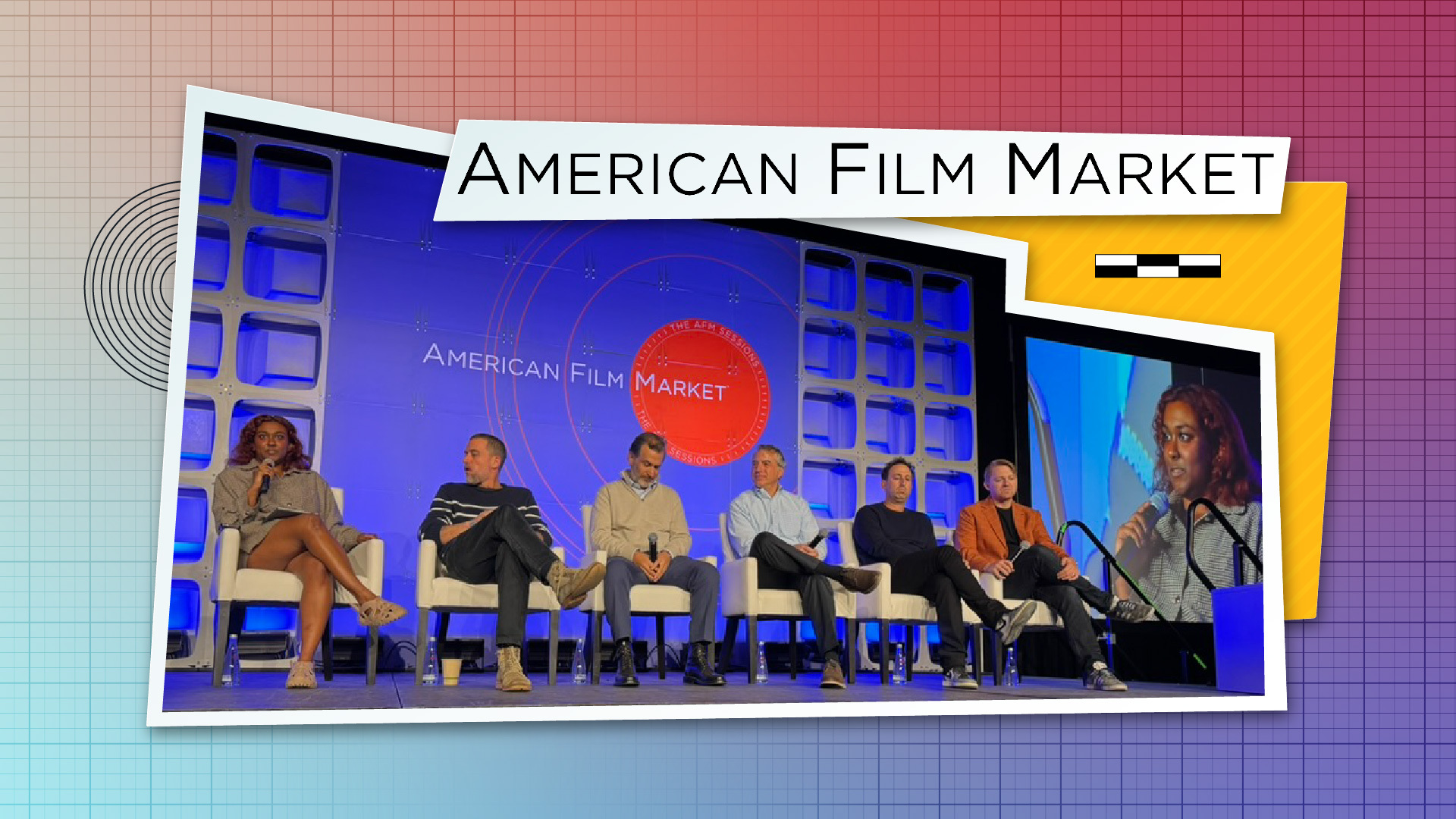
Rachel Joy Victor, moderating, framed the education requirement clearly: "It's optional to use AI in your work, but it's not optional to learn about AI."
Will French offered three truisms about technological change:
Nobody likes change. Change is scary. Two is that if you don't know how to use artificial intelligence, your competitor probably does, and you're likely to be replaced somehow. But number three is that every time there's a massive technological breakthrough like this, it ends up breaking down barriers to entry.
Will French, Head of Film and TV Finance, Fallbrook
The result is a bigger, more creative industry with more opportunities for people who previously couldn't access production tools.
What Stays Human
Bryn Mooser rejected the Tilly Norwood conversation entirely. Tilly Norwood, an AI actor that circulated through trade press, represents a misunderstanding of what audiences value.
"There's nobody who's pitching an AI sports guy on the Dodgers or somebody on an AI player on the Knicks," Mooser said. "You would never put an AI guy on a sports team because there's a thing that you love about knowing that it's a person who has real stakes and real humanity."
The same applies to actors. Audiences want to know who they're dating, how much they earn, why they're injured, and what they think. That human connection defines both sports and entertainment.
Artists are real. Actors are real. They are great at what they do. And we want to know all that stuff. So this idea that we can replace actors is like a fantasy of Silicon Valley tech assholes. And they don't get what we do here.
Bryn Mooser, CEO of Asteria, Co-Founder of Moonvalley
Mooser advised the room to stop wasting time debating replacement scenarios that aren't viable businesses.
Todd Terrazas noted that major companies like Google and OpenAI arrived two years ago claiming they would transform Hollywood, then largely abandoned the sector.
"They came in two years ago saying, 'We're going to change Hollywood.' And then they're not spending that time to do the enterprise work because I think what they've realized and what everybody in this room knows is it's fucking hard to make movies," Terrazas said. "And you have to love making movies to make those movies."
Looking Forward
The panel closed with predictions for what will matter looking back from 2050.
Peter Leeb predicted the term "AI" will disappear entirely. The technology will be abstracted into every product, system, and device. Panels about AI won't exist because the focus will return to human creativity, business, and storytelling.
Scott Greenberg saw democratization empowering small producers to build libraries and sustainable businesses globally, similar to the studio system of the 1950s through 1970s before consolidation.
Bryn Mooser offered both utopian and dystopian scenarios. In the best case, the moment represents the birth of a new type of cinema, comparable to the emergence of Spielberg, Lucas, and the New Hollywood generation.
"For the first time ever, you can democratize who gets to make an animated film and who gets to make a Star Wars," Mooser said. But he warned that studios face an existential challenge. When the industry stopped shooting on film, Kodak disappeared. When rental moved online, Blockbuster disappeared.
It is on the studios to figure this out as quick as they possibly can because they are built for an old world. And the opportunity is in this room of investors and filmmakers because we have the advantage for the first time ever against the studios.
Bryn Mooser, CEO of Asteria, Co-Founder of Moonvalley
Todd Terrazas focused on accessibility and personalization. Better storytelling will always matter, but the future depends on telling stories for highly engaged fandoms rather than mass audiences.
His hope: "All I hope is that we're not living towards a dystopian of idiosyncrasies. Go out, educate yourselves, and learn more about the technology."
The message from platform builders was consistent: the technology works, the applications are clear, and adoption depends on studios organizing data, filmmakers learning tools, and the industry choosing whether to do it right or abandon the structures that protect creative work.