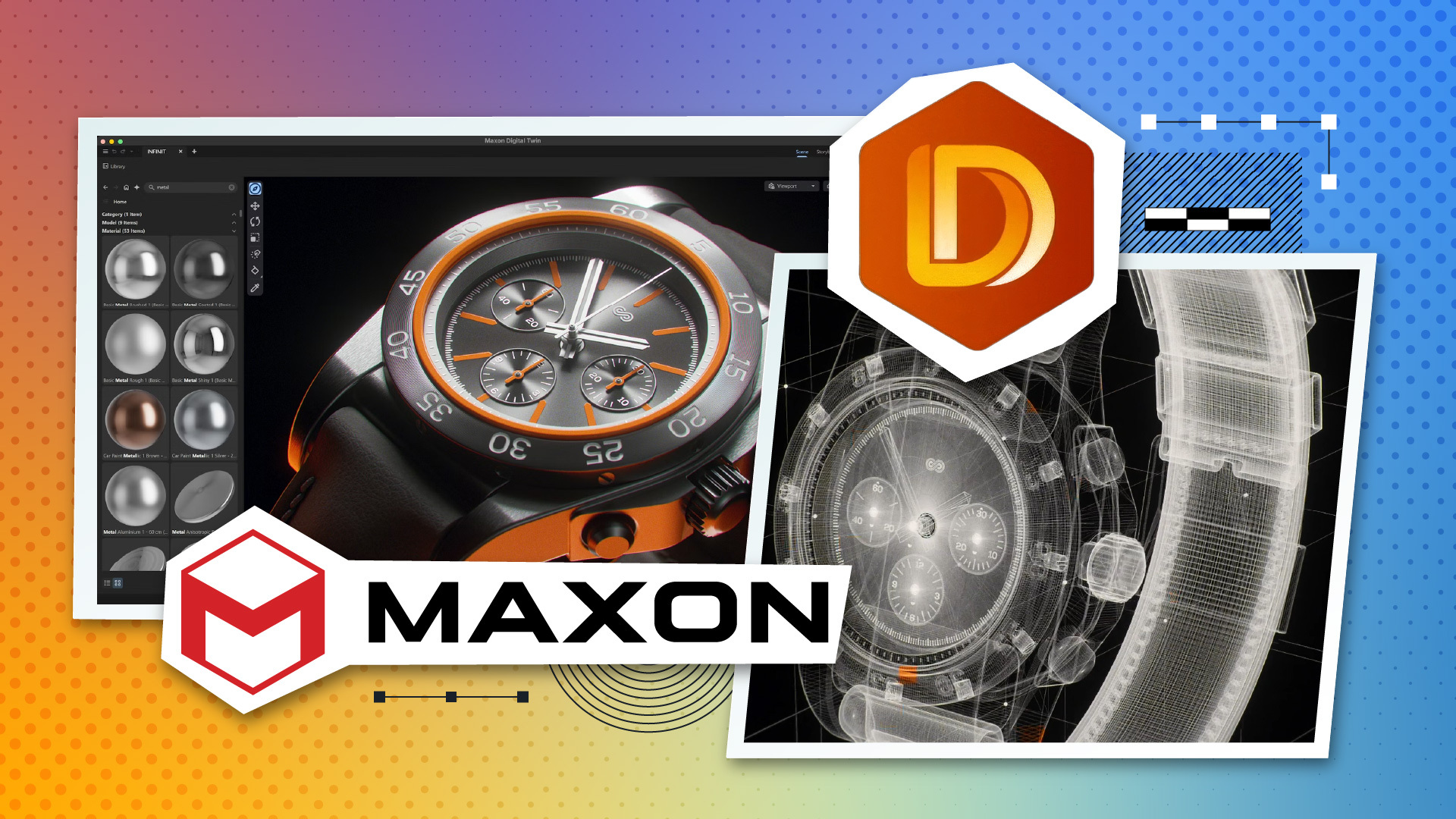
Maxon has unveiled Digital Twin, an upcoming standalone application designed to help marketing teams create and manage photorealistic product imagery across multiple channels. The tool, previewed at CES 2026, aims to solve a common pain point in brand marketing: maintaining visual consistency when the same product needs to appear across ads, videos, eCommerce listings, packaging, and print materials.
How Digital Twin Works
The workflow starts with a CAD or 3D model of a physical product. Digital Twin then provides controls for refining materials, textures, lighting, perspective, and environmental interaction to achieve photorealistic results. The output is a reusable digital asset that can be composited into different backgrounds and environments while preserving the product's accurate appearance.
Single source of truth - Teams maintain one authoritative digital version of a product that adapts across formats rather than recreating assets for each channel.
Environment flexibility - Digital products can be placed into user-provided backgrounds with accurate lighting, shadows, reflections, and perspective matching.
Design tool integration - Built to work with popular creative applications, including AI-enabled graphic design software and third-party AI tools.
No AI training - Maxon explicitly states Digital Twin does not learn from user content or artist work. AI integrations are optional add-ons, not core functionality.
Target Market: CPG Marketing
Maxon positions Digital Twin squarely at consumer packaged goods marketing teams. The use case centers on brands that need identical product visuals across dozens of touchpoints, from social ads to retail displays to video content.
The pitch is efficiency: instead of coordinating photo shoots for every new campaign or market, teams can generate variations from a single digital asset. Maxon claims this approach can compress production timelines from weeks to hours, though real-world results will depend on implementation.
What Digital Twin Is Not
Maxon took care to clarify several points in its announcement:
Not an AI agent - Despite AI integration capabilities, Digital Twin itself is a rendering and asset management tool built on Maxon's existing 3D technology.
Not a replacement for existing products - Cinema 4D, Redshift, and other Maxon tools remain unchanged. Digital Twin is positioned as a separate, standalone application.
Not mandatory AI - Users can work entirely without AI features. Integration with AI tools is optional and at the user's discretion.
Built on Maxon's 3D Foundation
Digital Twin leverages Maxon's decades of experience in professional 3D across film, advertising, broadcast, and design. The rendering technology that makes products look convincing in arbitrary environments comes from the same foundation that powers Cinema 4D and Redshift.
The CES preview demonstrated perspective matching, realistic reflections, and accurate light interaction, capabilities that determine whether a composited product looks integrated or obviously pasted in.
What's Next
Digital Twin remains in development with no announced release date. Maxon plans to share additional details about integrations and timing in future announcements. For marketing teams currently managing fragmented product asset pipelines, the tool addresses a genuine workflow problem. Whether it delivers on the efficiency promises will become clearer once it ships.